Online Reporter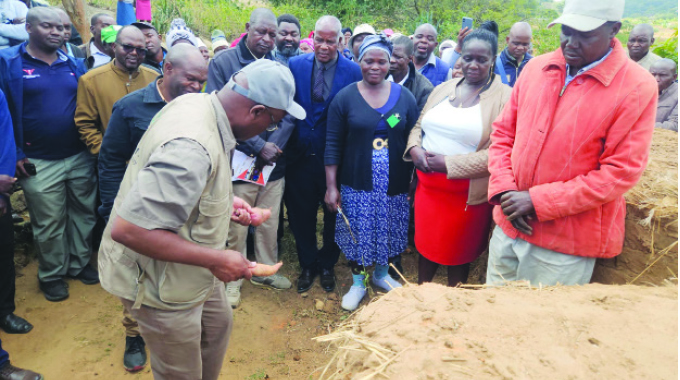
Precious Manomano
Herald Reporter
The impact of sweet potatoes on the Zaka community has been transformative, reshaping lives and enhancing livelihoods.
Through the Presidential Sweet Potato Vines Programme, local farmers have experienced significant economic growth, enabling them to secure better housing, education for their children and improved health standards.
The crop has not only provided a vital source of nutrition, but has also opened doors to lucrative markets in cities like Bulawayo, Harare and Hwange.
As farmers increasingly embrace innovative agricultural practices, the sweet potato has emerged as a powerful tool for community development, fostering resilience and collaboration among residents, while paving the way for future opportunities in local and export markets.
Mrs Muchaneta Mataruse, a dedicated farmer from Ward 3, embodies the transformative power of sweet potato farming.
“Sweet potatoes have changed my life. Before this programme, I struggled to make ends meet. Now, I have built a home, sent my children to better schools and I am able to support my community in ways I never thought possible.
“This crop has not only fed my family, but has also empowered us to dream bigger,” she said.
Muchaneta’s success is a testament to the potential of the sweet potato, especially the German 2 variety, which is renowned for its high yield and resilience.
She expressed her aspirations with enthusiasm.
“We envision our sweet potatoes on tables in countries far and wide. We want to show the world what Zaka can produce. It’s not just about selling; it’s about creating a legacy for our children,” added Muchaneta.
The ripple effect of this agricultural success story is fostering a renewed sense of hope and resilience. Communities are coming together to support one another, pooling resources and knowledge to further enhance their farming practices.
“We have formed cooperatives to share tools and techniques. When one farmer succeeds, we all succeed,” said Muchaneta, highlighting the spirit of collaboration that has emerged among local farmers.
With over 4,169 million vines distributed to more than 83 000 farmers across Zimbabwe, the programme has significantly
Ms Kundai Washamira, an extension worker who has played a pivotal role in educating farmers on best practices, elaborates on the training initiatives.
“We went from struggling to thriving, and now we’re producing more than we ever thought possible. Our farmers lacked knowledge on effective cultivation techniques.
“We have implemented workshops on soil management, pest control and fertilisation strategies. It’s inspiring to see farmers who once had little confidence now taking pride in their harvests,” she said.
The economic benefits of this sweet potato boom are profound and far-reaching.
Farmers report earnings in thousands of dollars, which they reinvest into their farms and local communities.
“With the income we are generating, we can now afford better education for our children and improve our health standards. It’s a cycle of growth that uplifts everyone involved,” she said.
As Zaka’s farmers harvest their abundant crops, they are also setting their sights on larger markets. Sweet potatoes from Zaka are making their way to bustling cities like Bulawayo, Harare and Hwange, where demand for fresh, nutritious produce continues to rise.
Agricultural Rural Development Advisory Services acting director Mr Leonard Munamati said that the market is hungry for quality sweet potatoes, adding that the country is ready to meet that demand.
He emphasised the importance of market access.
“We are working to create connections between our farmers and larger markets. The fruits of their labour deserve to be showcased in places where they can fetch better prices.
“Our farmers are not just growing crops; they are building a brand that represents quality and resilience,” he said.
The farmers are not merely content with local sales, they are earmarking their produce for export markets, aiming to extend their reach beyond Zimbabwe’s borders.
The sweet potato farmers of Zaka are not just cultivating crops; they are sowing the seeds of a brighter future. With each harvest, they enhance their livelihoods, contribute to food security, and set a benchmark for agricultural success in Zimbabwe.
As they continue to thrive, they stand as a testament to the power of community, determination, and innovation in transforming lives.
Their journey from subsistence farming to becoming significant players in both local and international markets illustrates a hopeful narrative of resilience and opportunity, paving the way for future generations.