admin
admin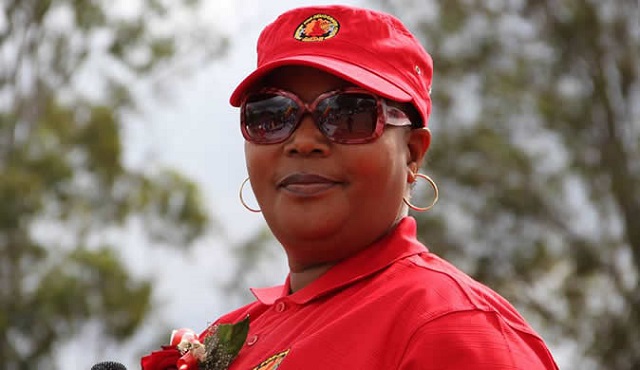

Micheal Mhlanga
The tragedy that accompanied Morgan Tsvangirai to his grave inspired this article, specifically the grievous attack on a defenceless woman despite my radiant political reservations on Thokozani Khuphe’s political capacity.
Notwithstanding all that, she still resembles a mother, my sister, my daughter and any woman in our society and as men we ought to consign our politics and rethink how we would have felt if she were our own wife, or mother, even sister, worse off your own daughter. To state the least, the violence on Khuphe by men was an orthodox parade of lost masculinity by a bunch of chickens. I was nippily reminded of my late grandfather’s ricochet that “a man who beats a woman can’t fight other man”- ligwala lendoda.
To that gloom, I introspected on the state of women in Zimbabwe’s politics inquiring on the strides made and possible opportunities for my daughter should she aspire to tread on that terrain.
I would not want to be that archetypal father who would scare off his “Angel” by framing politics as a “dirty game” for as much as it is, I get more concerned by why old men and women choose to get dirty in the first place-that’s where pap is. To me, ghastly and petrifying events past and present challenge me to offer my perspective which will inform other fathers whose daughters deserve an equal opportunity to competitively uptake politics in the same vein, safe, educated and respected.
In an attempt to unpack that one thing rings a bell in my mind right now, the surviving pool of women in our home politics emerged from the liberation struggle as either chimbwidos or assistants of high ranked officials.
For some, after years of celebrating their history, we had to rethink the truth behind what we always believed. We are still unanswered on whether she really shot down a helicopter or she was busy serving the struggle in other fronts – as Richard Mahomva argued on that subject; “the struggle was fought in different fronts, hers was that weapon” maybe we ought to regard her as that, but still, such a history demotes women as less contributory to the liberation but “loose”- its scornful and as on that I will selectively admit that #wearetrash as long as we men curate such distasteful historiography.
Think of your daughter when you participate in scorning a woman.
However, probing or answering contestations of liberation struggle gendered perspectives will only limit us to discussing the “Then” facet yet as a moving society we are grappled with the “now” phenomenology which requires remedies of not repeating or retorting historical blemishes, we risk losing the future plot and informing ourselves on how to deal with persistent problem that still harms women and discourages them from being competitive humans in politics.
Our politics is still unfavourable to women and Khuphe’s experience is one amongst many horrors in politics that we should use to question our role and perception as men towards female competition. Allow me to prematurely ask… “Is the future really female?”
Drawing lessons from history we cannot deny the existing, albeit limited strides we have made in embracing the female competitor in our politics.
Memory serves us that the gradual increase of female representation in Scandinavia used to be the model that everyone looked to in the past, when the Nordic countries were alone in enjoying the highest rates of female representation.
This Nordic model has now been replaced by what Danish political scientist Drude Dahlerup has called the “fast track” model, which is evident in Zimbabwe which has experienced dramatic jumps in female parliamentary representation primarily through the adoption of electoral quotas. Since 2013, Section 17(1)(b)(ii) of Zimbabwe’s Constitution now needs to be accompanied by other institutional factors which will not limit our daughters to political cheerleaders who can be easily whisked away by “boys clubs” politics and be easy targets of power pushovers.
To this point, I am still convinced that Khuphe’s misfortune is a result of political witlessness ensured by an oppressive gendered past.
Her manoeuvring around power wrangles was restricted by inadequate political education and basic power or dominance tutelage hence her flimsy political strategies. For a moment, let us ignore the horrendous abuse inflicted on her since Morgan was alive and on Tuesday, and view her as a representation of unschooled politicians disenfranchised by a predominantly hegemonic patriarchal society.
One thing certain is that women do not need to be recruited into political structures, as they automatically move from the private domestic environment to ensuring that, community needs are met. In other words, they are born into a society which is construed in such a way that they take responsibility. Perhaps another way to avoid Khupe’s predicament is to give our daughters access, from an early age, to opportunities that prepare them for political leadership.
Extra opportunities should be created, for training them, so as to ensure that they would be ready to play the leadership role when the time arises.
Admittedly, women tend to take responsibility, too early in life, and as such, their development, politically, require special attention, as responsibility for families and communities do not give them time for personal development through networking and other informal means of learning that boys like Nelson Chamisa were exposed to. Khupe has no chance against a well-oiled Chamisa whose political career started when he was barely 20 years, with a stretching history of informal political education at home and school which positioned him in dominance – that’s the nature of our society, boys are taught dominance and bout their way up or in when they are still young.
Chamisa is not expending any new dominance trick, any boy who has herded cattle before knows the behaviour of ingqwele (herders’ champion wrestler). For Khupe it’s about the book, for Chamisa it’s about enough understanding of power and control which is what politics is about. In such a case, the woman will lose- truth is sour I know, but I don’t want my daughter to suffer the same fate.
Antiquity taught us that, when societies go through transformation, old beliefs, attitudes and values, tend to remain dormant, but unconsciously influence people’s manner of relating. Women in Zimbabwe have to contend with a triple burden of patriarchy, sexism and tribalism.
A traditional, strong patriarchal value system, favours sexually, segregated roles and traditional cultural values militates against the advancement, progress and participation of women in any political process.
Until this day our society still slots men and women into the roles of domination and submission, respectively. For women in particular, the element of tribalism becomes an added burden. A woman leader is expected to be polite and feminine in her speech and manners. The more authoritative, assertive and powerful a woman is, the more she is easily labelled as being aggressive.
With such a society, these realities call for the decolonisation of the mind and the change of attitudes. This indicates the fact that, the intention to do well, irrespective of nobleness, in purpose, does not guarantee that such goodness would bear any fruits. It calls for consciousness, education for change, moral and the political will for the greater step to be taken. It is increasingly clear, to me, that our society needs more than just to transform, but also revolutionary efforts so as to fully realise our democratic goals.
The conspiracy of silence about traditional values and cultural practices which disempowers women, is a betrayal of the struggle for gender equality.
The limitations and obstacles, to women attaining a political role, not only deny them their democratic rights, but also undermine democracy.
Much as women’s organisations are strong, in driving current issues, they are not doing enough to invest in making calls and lobbying for women to support each other. This is despite the fact that, more women are making in-roads to Parliament in big numbers.
Women’s representation in Parliament yield positive outcomes. For instance, women have elevated issues which regular male agenda would not raise.
For instance, issues of child care, no violence against women, hunger in families and even push for law reform, which are either not advancing or sustaining male hegemony.
Sadly as well, in Zimbabwe, like in most developing democracies, poverty and unemployment are feminised. It goes without saying that the social and economic status of women in society, has a direct influence on their participation in political institutions and elected bodies.
There is sufficient evidence to show that women’s development correlates with their representation levels. It is high time that consume dosages of Taiwo Olufemi’s prescription: Africa Must be Modern.
Let me invite a Tanzanian Professor, Anna Tibaijuka: “Women have tried to enter politics trying to look like men. This will not work.
“We have to bring our differences, our emotions, our way of seeing things, even our tears to the process”.
“No country can boast of being free unless its women are free”.
Yikho khona lokhu!



 Online Reporter