Taking Stock
Kudzanai Sharara
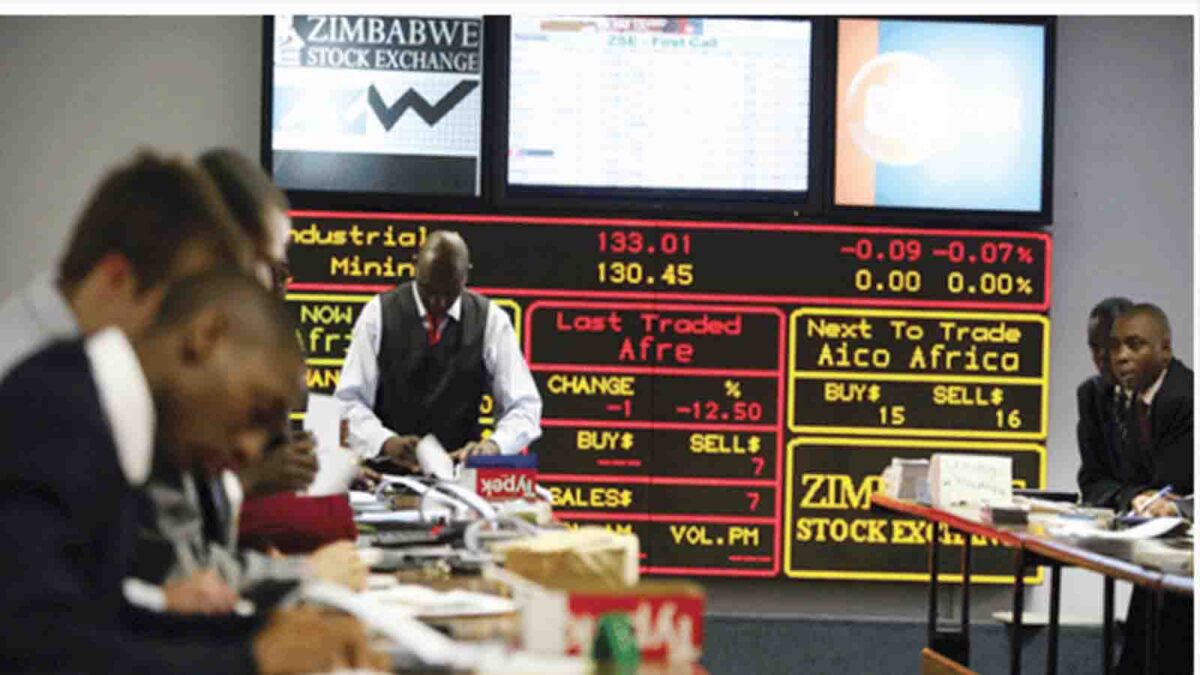
The week ending Thursday, October 29, 2026, painted a starkly contrasting picture of Zimbabwe’s twin capital markets.
While the Zimbabwe Stock Exchange (ZSE) stumbled under the weight of macroeconomic recalibrations and heavy losses in key counters, the Victoria Falls Stock Exchange (VFEX) basked in the glow of a broad rally.
The week also saw a flurry of cautionary statements that signal a structural shift in the market’s DNA, with the VFEX cementing its position as the venue of choice for ambitious, dollarised corporates.
The ZSE: A week of losses and liquidity crunches
The ZSE All Share Index closed the week at 487,23, a significant drop from the previous week’s close of 493,92.
This bearish sentiment was largely driven by a devastating performance in a few heavyweight counters.
The most dramatic fall was on Wednesday, October 28, when the index plummeted from 493,92 to 489,68, dragged down by Delta, which shed a massive 11,5 percent to close at 3 705,02 cents despite a huge volume of over 4,2 million shares changing hands.
However, the volatility was not limited to Delta.
On Monday, CBZ took a 7,69 percent nosedive to 3 000 cents, and FBC dropped 8,75 percent to 1 200 cents, showing a distinct weakness in the financial sector.
By Tuesday, CBZ had recovered some ground, jumping 6,66 percent, but the volatility remains a concern.
Perhaps the most telling indicator of the market’s internal struggle is the volume of non-trading on the ZSE.
On Monday and Wednesday, stalwarts like Afdis, BAT, Cafca and NMB recorded zero volume.
Even on Thursday, while the index recovered slightly to 487,23, counters like Afdis, CFI, and FBC remained stagnant with zero trades. This lack of liquidity is a persistent headache for the ZSE, making price discovery difficult and trapping investors.
Interestingly, turnover on the ZSE was punctuated by massive block trades.
On Wednesday, a single trade in Delta accounted for over ZiG157 million in value, completely dwarfing the activity in other counters.
This suggests that while retail or smaller institutional activity is drying up, large block trades are dictating market direction.
The VFEX: A bull run in US dollars
Conversely, the VFEX All Share Index had a flat week, rising marginally from 274,01 to 274,30.
While the index-level gain appears modest, the underlying performance of individual counters was strong, revealing a depth of investor appetite for USD-denominated assets.
The financial services and retail sectors led the charge. On Wednesday, Simbisa Brands surged 4,1 percent and FCB jumped 4,5 percent.
On Thursday, the momentum continued with Innscor up 10,7 percent and FCB again rising 4,5 percent.
However, the week’s standout performer was Caledonia, which jumped 13,2 percent on Wednesday and a further 5,3 percent on Thursday to close at 3 500 cents.
The VFEX’s recovery on Thursday was broad-based, with 10 counters trading, compared to just three on Wednesday.
This indicates a growing maturity in the VFEX, moving away from being a one-trick pony to a more diversified exchange.
The migration trend: A structural shift
The biggest news of the week came from the corporate filings, which underscore a definitive trend: the ZSE is bleeding its most valuable assets to the VFEX. The circular from Tanganda Tea Company Limited is a watershed moment.
The company’s board has recommended a voluntary delisting from the ZSE and a listing by introduction on the VFEX, citing the need to align its listing currency with its USD-denominated operations and to benefit from lower trading costs (2,32 percent on VFEX vs 4,15 percent on ZSE).
The EGM is set for November 13, and if approved, Tanganda’s last day of trading on the ZSE will be November 18.
The proposed VFEX migration stems from a fundamental mismatch between its operating reality and listing currency.
The company adopted the US dollar as its functional currency in October 2023, and the bulk of its revenue from tea, macadamia, avocado and coffee exports is hard-currency earned, yet its shares remain quoted in ZiG on the ZSE. This creates persistent valuation distortion and currency translation risk unrelated to the business’s underlying performance.
The board also cites compelling cost advantages: round-trip trading costs on the VFEX are approximately 2,32 percent versus 4,15 percent on the ZSE, and VFEX tax incentives include a 5 percent withholding tax on dividends for foreign shareholders and an exemption from capital gains tax on share disposals.
Beyond currency and cost, the migration enhances Tanganda’s profile and capital access, positioning it to attract foreign, diaspora and US dollar-based institutional capital.
This matters as the company funds its next growth phase, including avocado oil extraction, macadamia cracking and solar projects requiring hard-currency funding.
The US$8 million rights offer strengthened the balance sheet, with cash rising to US$5,18 million. Shareholders vote at an EGM on November 13 with the special resolution requiring a 75 percent majority; if approved, ZSE trading ends November 18 and VFEX trading begins November 23, at an estimated transaction cost of US$60 600.
Tanganda is not alone. Dairibord Holdings has issued a cautionary statement confirming its intention to migrate to the VFEX, while Ariston Holdings has also announced its board’s approval for a similar move.
These announcements are significant. They confirm that the VFEX’s value proposition — USD reporting, tax incentives for foreign investors and lower transaction costs — is resonating with Zimbabwe’s leading exporters and agribusinesses.
For the ZSE, the loss of these counters is a double blow. Not only does it reduce the depth of the market, but it also strips the ZSE of companies that are fundamentally robust and dollar-earning.
The ZSE is increasingly becoming a bourse for domestic, ZiG-denominated businesses, which, despite the current stability, exposes it to currency volatility and inflation risks.
Corporate actions and market speculation
The week also provided some speculative opportunities. Tigere REIT issued a cautionary statement regarding negotiations to acquire three income-producing assets.
The REIT sector on the ZSE, however, remains lacklustre. Tigere’s price wobbled throughout the week, dropping from 109,88 to 103,74 before recovering to 104,00. On the VFEX, investors continue to watch Padenga and Seed Co International, both of which have shown remarkable year-to-date gains of 152 percent and 68 percent respectively. Padenga’s performance is particularly notable, closing the week at 160 cents.
Looking ahead
As we move into November, all eyes will be on the Tanganda EGM. A “yes” vote will trigger a wave of capital reallocation and likely accelerate the VFEX migration trend. For ZSE investors, the week’s lesson is clear: the market is bifurcating. The ZSE faces a structural headwind as its largest, most profitable companies seek greener pastures on the VFEX.
While the ZSE still offers value in some domestic counters, the lack of liquidity and the relentless exodus of quality assets is a formidable challenge for the exchange’s future.
The VFEX, conversely, is thriving, proving that in a dollarised economy, the exchange that trades in the currency of business will ultimately win the war for listings.