admin
admin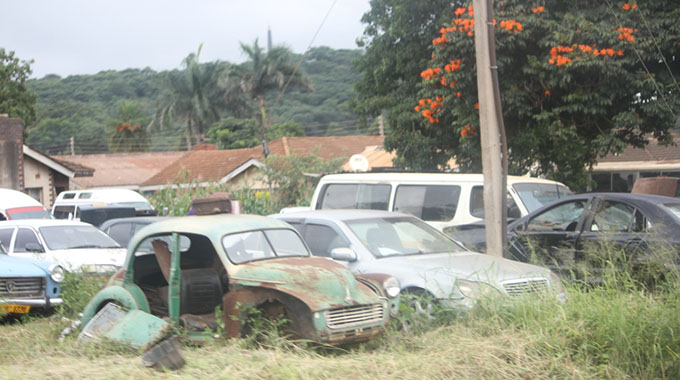
Tanaka Mahanya Features Writer
In some sections of our society, owning a car is a status symbol.
It is often linked to success and being organised. The more expensive the car, the wealthier the person is deemed.
Others simply go for style and will choose brands like BMW, Mercedes Benz, Audi and VW Golf which are high maintenance and beyond their means.
However, with fuel challenges currently being faced in the country, the exorbitant price of spare parts —which are being charged in US$, some cannot afford to repair the “toys” dumping them at open spaces near shopping areas and car parks in residential areas.
In many cases, the owners who bought the cars during the multi-currency era, never return leaving their once loved possessions depreciating and losing value.
When some cars are abandoned at shopping centres and at other public spaces, one wonders if these are not the same assets they would have celebrated upon purchase?
A visit to some high density residential areas of Harare revealed parking lots have been turned into scrap yards for broken down vehicles and car shells.
At Warren Park 1, the parking area which is supposed to be used by shoppers now houses more than 10 broken down abandoned cars within a space of 100 metres.
“When the cars break down, they are taken to mechanics at the shopping centre, hoping that they will be restored to their original status. But some of the cars have been there for years as they are beyond repair,” said a resident Chad Zembe.
The abandoned cars have flat tyres, covered in dust, mud and fallen leaves.
Most have broken windows replaced with plastics to prevent the rain from damaging the inside.
Others are not registered. Those registered have defaced identification numbers.
Although there are many car types in the unmanned fleet, kombis dominate.
In Warren Park, abandoned cars are filled with rubbish, tins, waste paper and empty bottles. One commuter omnibus and a few other cars, weeds and creepers have started growing an indication of the time they have been there.
The abandoned cars have become shelter for small animals, rats, snakes, cockroaches and mosquitoes.
They become a breeding place for flies and mosquitoes during rainy seasons.
“We are short of parking space as these abandoned cars have taken over. Sometimes, particularly during weekends, there is congestion with most families coming to do their shopping,” said Ashy Chimwenza, a mechanic at the shopping centre.
The abandoned cars also inconvenience those with legitimate claims to the occupied space.
Suburban Clinic in the same suburb patients often face challenges as the car park has been turned into a dumping and mechanic zone.
As a resident Memory Rwodzi puts it: “Ambulances sometimes have to go round the dumped cars. Council should immediately act on this. It is getting out of hand.”
In some cases, abandoned vehicles attract vandals, may be used for drug drops or prostitution and as shelters by the homeless.
“There is a ‘chigunduru’ who once lived here, but he was later chased away because residents thought he was a criminal.”
It is in these vehicles where musombodhiya drunks go about their business without disturbances.
Council sometimes clamps abandoned cars in the area but as soon as they leave, more are brought for repairs, making the whole effort fruitless.
Just after Warren Park 1 Shopping Centre, along the main road leading to Kambuzuma, the situation is equally terrible.
Public parking spaces have more broken down cars than those in good condition.
Harare’s central business district (CBD), is not left out as people abandon their cars on roadsides too.
Two cars have found a home at the corner of Samora Machel and Mbuya Nehanda just opposite Total Service Station and council seems not to be moved by their presence. Other cars are abandoned at filling stations.
A filling station attendant in town identified as Tatenda Maodza said some people fail to raise enough money for parking and when they do, the charges would have multiplied.
The cycle continues, until the cars start depreciating in value and the owners lose interest in them.
However, some abandon their cars after they have bought new ones. They seem not to realise that their cars are taking a lot of parking space which could have been put to good use.
Cars are known to depreciate steadily as they get older, but even at the end of their life, they still have value.
Whether it has been abandoned, confiscated, crashed or sold to the scrap yard, a car contains thousands of valuable parts for recycling.
Some have made lots of money in recycling car parts to create completely different products.
Authorities say they are concerned about these neglected assets.
Harare City Council spokesperson, Mr Michael Chideme, told The Herald that they have a strategy meant to remove all abandoned cars off the streets.
“There is a resolution taken by Council to tow away and auction the vehicles and it is starting soon,” without giving specific dates.
Most of City of Harare’s projects tend to suffer a still birth, as they do not follow up on the operations.
The habit of abandoning unattended vehicles is not unique to Zimbabwe.
In Capetown, South Africa, the municipality is in the process of amending their traffic by-law which is silent on such vehicles.
They are currently consulting on finer details but the major proposal is a prospect of impounding cars not given due care by their owners. In Australia, once a report has been made of a dumped vehicle, council will remove it at a cost to the owner.
The owner will bear the cost of any newspaper advertising required by council in advising for the removal of the abandoned vehicle.
The decision on whether a vehicle is fit for destruction or not will be based on the age, condition and market value of the vehicle and whether or not the vehicle has a registered keeper. The same can happen in the country if people are responsible and authorities take their roles seriously.
The abandoned cars have clearly fallen within larger sets of problems involving motor vehicle regulation, social disorder, and the illegal disposal of bulky, hazardous waste and garbage in Harare.


 Online Reporter