Online Reporter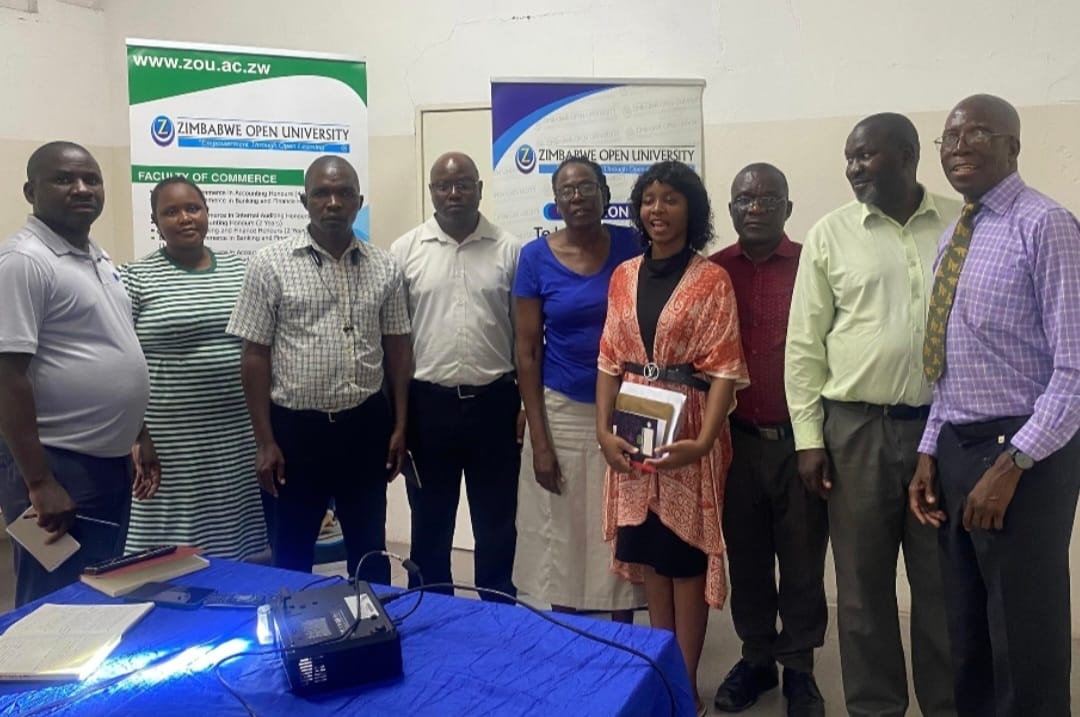
Meluleki Moyo
THE world of research and scholarship has been urged to prioritise its core mandate, as the demand for impactful research and publications continues to grow within a competitive knowledge economy.
The call was made during a publications workshop organised by the Zimbabwe Open University (ZOU) Matabeleland North Region in Hwange on Friday.

The academic symposium, which aimed to equip participants with essential skills in academic writing and publishing, was held against the backdrop of developing means of generating knowledge in line with the Heritage-based Education 5.0 doctrine.
It brought staff and students together to explore effective strategies for producing impactful scholarly work.
Speaking during the event held at the university’s campus in the mining town, the ZOU Mat North Regional Director, Dr Douglas Gasva, underscored the importance of academic research.
“Academic research is critical in higher education as it is the epicentre of knowledge building. In this information and knowledge-driven world, new findings are key and essential to personal, institutional and national development. Besides simply putting your name online, publishing ensures that you share your knowledge with others. Remember, if you publish, you are less likely to be forgotten,” he said.
Serving as the primary channel through which new knowledge is disseminated to the global academic community, academic publishing has proven to be the cornerstone of scholarly communication. By publishing research, scholars contribute to the collective pool of knowledge, enabling others to build upon, critique and refine ideas.
Thus, providing a platform for scholars to share their findings fosters a dynamic exchange of ideas that drives innovation and shapes the future of research.
Facilitating the event, the ZOU Mat North Research and Innovation Chairperson, Dr Victor Chaboneka Ngwenya, reminded attendees that publishing is the only passport to academic immortality.
“As has been the tradition since the 20th century, especially through the reasoning of Davis (1904), it’s either you publish or perish. Authors never truly die, their work remains as long as it continues to be referenced,” he explained.
“As academics, we need to rise to the challenge and make an impact within our communities, as research is the heartbeat of every higher education institution under the Heritage-based Education 5.0 initiative. Let us find joy in publishing with accredited journals to avoid the tragic loss of scientific knowledge,” he urged, referencing his own extensive publishing record.
In his thought-provoking publication titled African Professors Must Stop Counting Publications – And Start Building Nations, Asiedu (2025) argues that in Africa’s lecture halls, brilliance is abundant, yet inventions are scarce.
Many academics focus on publishing for prestige while pressing societal problems multiply. This situation calls for African universities to reconsider their purpose, aligning research with the continent’s developmental needs and fostering a connection between research, innovation, industry and community needs.
Similarly, Zimbabwe’s Heritage-Based Education 5.0 highlights the vital role of research and publication within universities, framing them as pillars of innovation and industrialisation. The model integrates research with teaching, community service and heritage-based practices to address local challenges and promote development rooted in indigenous knowledge systems.
Aiming to decolonise education by encouraging the co-construction of knowledge between academia and communities, the approach ensures research contributes to solving societal issues while validating cultural heritage. Institutions are thus encouraged to focus on producing knowledge and publishing findings that align with the country’s cultural, economic and developmental goals—moving away from Western-centric philosophies of knowledge.