Online Reporter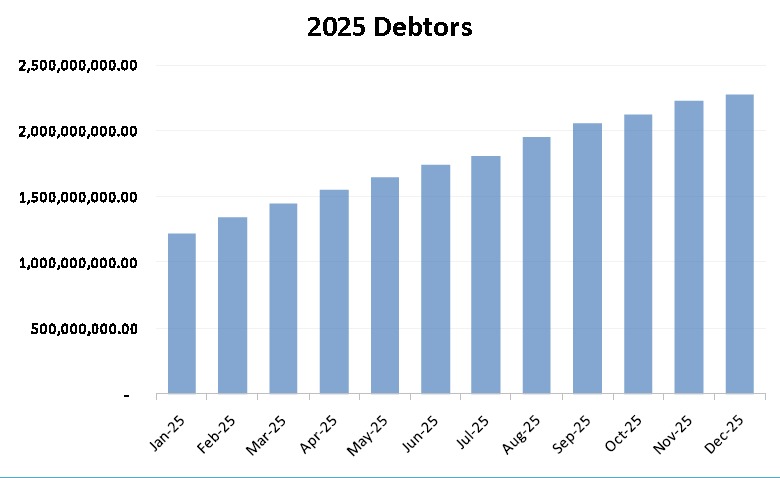
Nqobile Bhebhe
THE City of Bulawayo has proposed engaging retail and food outlets as revenue collection agents in a bid to strengthen debt recovery and improve cash inflows amid rising consumer arrears.
The strategy, contained in a recent council report, is part of a broader set of measures aimed at improving collection efficiency and addressing the growing backlog of unpaid municipal bills.
According to the report, the local authority intends to integrate its billing system with selected retail and food outlets, enabling residents to settle municipal bills through those businesses.
“That Council engages retail and food outlets as agencies to collect revenue on behalf of Council. That Council engages other service delivery stakeholders for business synergies in debt recovery,” reads part of the resolutions.
The move comes as the municipality grapples with escalating consumer debt and widespread payment delinquency among ratepayers.
Council data shows that debt owed to the local authority rose sharply during 2025, reflecting both economic pressures on residents and challenges in revenue collection.
“As at December 2025, total outstanding USD-denominated consumer debt amounted to US$133.8 million. Of the 183,404 billed accounts, 147,440 accounts (approximately 80%) are in arrears exceeding 30 days, indicating a high level of payment delinquency and underscoring the urgency for enhanced debt recovery interventions.”
Despite the significant rise in debt, the municipality noted that the pace of accumulation has begun to slow.
“While the debt stock continues to rise, the rate of increase has moderated — from approximately 10% in February 2025 to 2% by December 2025 — indicating a slowing growth trend.”
Authorities attribute the moderation partly to ongoing debt recovery measures implemented by various council departments.
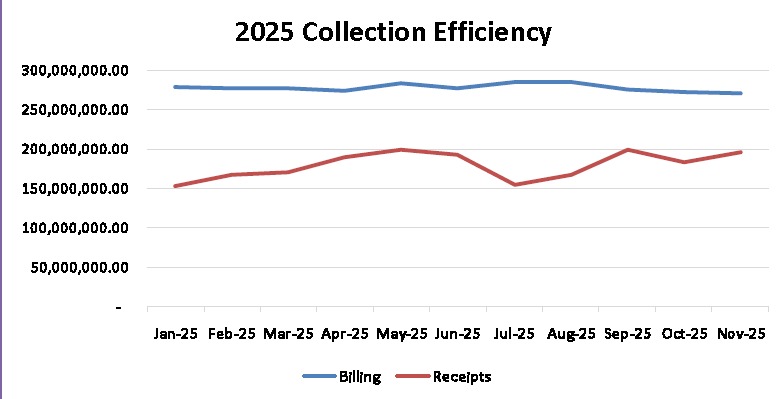
Collection efficiency, a key indicator measuring the proportion of billed revenue that is successfully collected also improved during the year.
“Collection efficiency improved steadily from 55% in January 2025 to 73% by November 2025.”