Raymond Jaravaza
Bulawayo Bureau
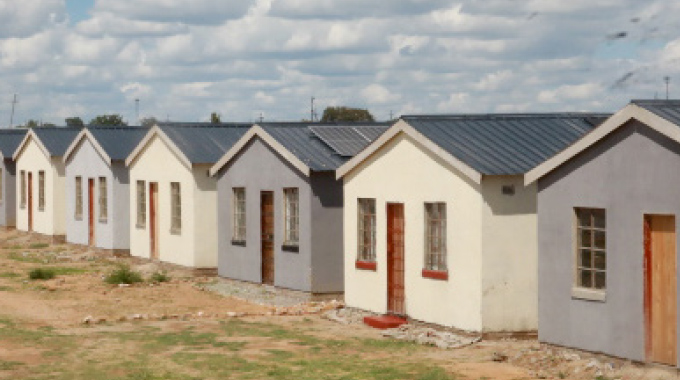
HUNDREDS of civil servants under the Accelerated Presidential Housing Scheme are now proud homeowners at Emthunzini, on the outskirts of Bulawayo, marking a major milestone in the Government’s drive to deliver affordable and decent housing in line with Vision 2030.
The four-roomed houses, constructed by Hawkflight Properties and Maharba Properties, are fully serviced with water, sewer reticulation and electricity, transforming what was once a dream into a lived reality for many low-and middle-income public sector workers.
The project, targeting civil servants on a zero-deposit model, is expected to deliver about 4 000 housing units, shared equally between the two developers. Financing is being provided through the National Building Society (NBS), backed by National Social Security Authority (NSSA) pension funds.
For many beneficiaries, the scheme represents an escape from years of renting and housing insecurity.
“I have been dreaming of owning a home for years since I joined the civil service 10 years ago, but the prohibitive prices charged by land developers made it impossible,” said Mrs Primrose Ncube, a teacher at a primary school in Old Pumula.
“When I heard about the Accelerated Presidential Housing Scheme and the affordable administration fee, I could not let the opportunity slip. Many people have lost money in bogus housing schemes, but this one gave us confidence because no one would risk using the President’s name in a fake project,” she said.
Another beneficiary, Mr Sibusiso Ngwenya, beamed with pride as he showed off his new home.
“Today, I am a proud owner of a four-roomed house with water, electricity and a working sewer system. I used to pay US$200 in rentals for a two-bedroomed house, which is more than what I will now be paying monthly for the next 15 years,” he said.
“My biggest fear was renting for the rest of my life, but this scheme has given us dignity and security.”
Beneficiaries say the houses were built to acceptable standards and supported by proper infrastructure.
“A lot of civil servants have moved here permanently. The sewer system was finally connected after a visit by the Minister of Local Government and Public Works, Daniel Garwe, last year,” said Ms Sandisiwe Gumbo, another beneficiary.
Last year, hundreds of housing units around Bulawayo were connected to water and sewer services after the Bulawayo City Council (BCC) and Umguza Rural District Council agreed to share reticulation infrastructure following Government intervention.
The move resolved a long-standing dispute between the two local authorities, which had left homeowners in parts of Umguza’s urban settlements relying on Blair toilets and boreholes despite living within the metropolitan zone.
Under the Presidential Proclamation 15E of 2004 and subsequent Statutory Instruments, Bulawayo and Harare were designated metropolitan provinces with boundaries extending up to 40 kilometres
In Bulawayo’s case, the city is surrounded by Umguza District, complicating expansion amid rapid population growth and rising housing demand.
Previously, BCC had accused Umguza RDC and land developers of constructing houses near council boundaries while expecting Bulawayo to provide services without agreed terms. Suburbs such as Mbundane and Emthunzini became flashpoints, remaining unconnected to sewer infrastructure for years.