


 Online Reporter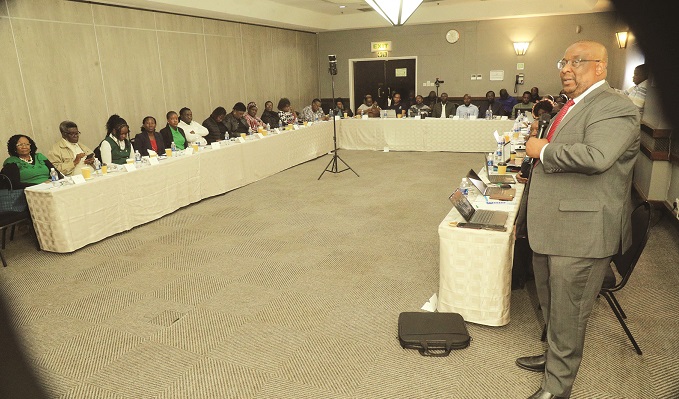
Prince Mushawevato
ACROSS Zimbabwe, the construction industry is booming.
New homes are being built in burgeoning suburbs, while contemporary commercial buildings are redefining city centres.
But behind the bricks and mortar lies an urgent challenge, that of traditional building methods which are taking a heavy toll on the environment.
Deforestation, land degradation and carbon emissions are mounting, largely due to outdated practices and policies that no longer meet the demands of a changing climate.
As the effects of climate change become more visible and costlier, a growing coalition of experts, Government agencies and development partners is pushing for a radical rethink of how the country builds.
The aim is to shift towards a greener, more sustainable built environment that conserves resources, protects ecosystems and supports healthier, climate-resilient communities.
At the centre of this transformation is the Green Building Council Zimbabwe (GBCZ), working in partnership with the United Nations Human Settlements Programme (UN-Habitat) to develop a green building rating and certification tool specifically tailored for Zimbabwe.
This tool will guide the country’s transition towards climate-resilient and resource-efficient building practices. Currently, Zimbabwe’s construction sector operates under by-laws dating back to 1976 — an era when climate change considerations were largely absent from policy discourse. This legislative lag has created a fundamental misalignment between contemporary environmental challenges and the regulatory tools available to address them.
Stakeholders argue that these outdated regulations hinder progress towards a sustainable future.
Speaking during a session for the Senate’s Thematic Committee on Climate Change recently, Mr Alexandra Chireshe, head of office for UN-Habitat and project manager for the Harare Sustainable City Initiative, underscored the need for urgent change.
“There is need to change habits and systems to use resources sustainably,” he noted. “Changing habits, in my view, encompasses changing policy and legislation because habits do not change when they are not guided by policy and legislation.
“As UN-Habitat, we have joined hands with the Government of Zimbabwe to see how best we can assist them in this journey, to change policy and legislation.”
UN-Habitat has partnered with the Government to support this policy shift, which includes promoting high-rise buildings over land-intensive single-storey structures, as well as advocating for the use of alternative materials such as steel and plastic in place of traditional bricks and timber.
These measures aim to reduce deforestation, land degradation and sand poaching.
Added Mr Chireshe: “The project we are working on in Harare is designed to showcase that you can have a countrywide impact in this area if policy is changed.
“We are focusing on three things, namely, waste, clean energy and the built environment. We have brought resources, expertise and we are willing to show you what we have done in other countries that we have worked with on this project.
“So far, Zimbabwe is the only country in Southern Africa that we have chosen to showcase what can be done in the built environment with regard to waste management and use of energy.”
In recent years, Zimbabwe has faced severe climate change-induced disasters, including the devastating Cyclones Idai in March 2019.
Recognising that the built environment contributes 40 percent to global carbon emissions, prioritising legislative reforms is now considered crucial.
GBCZ’s ongoing initiative, funded by the Swedish International Development Cooperation Agency (SIDA), aims to increase access to clean energy for urban and peri-urban dwellers. UN-Habitat is implementing pilot projects in four high-density areas of Harare — Belvedere, Mabvuku-Tafara, Epworth and Highfield — designed to demonstrate sustainable solutions in action. These projects integrate waste management, clean energy and innovative construction techniques.
“In all these areas, we are putting up infrastructure that showcases very good use of energy, waste recycling, what you can do to turn it into money, but more importantly impacting the built environment, showing improvement on how you make your bricks and design your buildings,” said Mr Chireshe.
In Tafara, the UN-Habitat team has built a complete solar-powered structure at a dumpsite to convert waste to clean energy, operating entirely off the national electricity grid.
Similar facilities are planned for the other identified areas.
Broadening awareness
“We brought two technicians from Bangladesh for them to elaborate on how they are managing similar projects. They have a project in Bangladesh where they produce compost with organic waste from the market or households,” added UN-Habitat urban energy specialist Mr Isaac Mwangi.
“Awareness creation is important. Without knowledge, from household levels to authorities like the Environmental Management Agency, nothing much can be done. They need knowledge on separating waste and dealing with it. We also have projects that are targeting schools so that we catch them young.”
The UN-Habitat team confirmed that while the project began in Harare, it will eventually spread throughout the country.
“We need people from various sectors to be involved, including the Government, so that we register success,” said UN-Habitat architectural specialist Ms Chipiwa Nemaunga.
“It took Kenya 10 years to fully adopt green building practices, but we can learn from them and do it faster.
“We were involved in building and implementing green building codes in other countries, including Rwanda, Uganda and Tanzania, and we can learn from these examples. Kenya, which has also come up with its own green building certification, is another example.”
Legislative support
The push for greener building practices has gained traction in Parliament, with Mrs Prisca Mupfumira, chairperson of the Senate’s Thematic Committee on Climate Change, emphasising the need to address emissions from the construction sector, which is often overlooked in national climate conversations.
“I do not think many people know the impact of carbon emissions from the built environment,” she said.
“Many people only know about emissions from cars and tobacco.
“Awareness and education on the subject is important. As legislators, we are ready to support you in all ways possible, especially on guidance on legislation so that we are in sync with what is happening all over the world.
“Climate change is not just about education and health; this building component, which is key, has never been discussed and needs our attention.”
Ms Angella Kabira, principal natural resources officer in the Ministry of Environment, Climate and Wildlife, expressed her satisfaction.
“The issue of bricks has led to destruction of the environment, gullies being created, trees being cut and water polluted,” she said.
She added that the ministry was working on a national biodiversity strategy and action plan, through which they were mandated to implement obligations under the Convention on Biological Diversity.
“Through green building, we are going to address the issues of deforestation, water use and water management, and biodiversity laws. We have been working hand in hand with the UN-Habitat and will continue doing so.
“We are not saying do not build but the bottom line is to use sustainable means in building. The message needs to be packaged well so that the public understands it,” she said.
GBCZ chairperson Dr Mike Juru said more workshops for all key stakeholders, down to the grassroots level, will be held.
Besides senators, they have also engaged members of the National Assembly through the Environment, Climate and Wildlife portfolio committee.
“Our next engagement will be with local authorities. The aim is to educate them on the profound impact of building practices on climate change and to advocate for the enactment of supportive laws,” said Dr Juru.
He stressed the urgency, referencing UN-Habitat research indicating that 75 percent of buildings expected by 2050 are yet to be constructed.
GBCZ’s long-term plans include integrating climate change adaptation into educational curricula at all levels.



 Online Reporter