admin
admin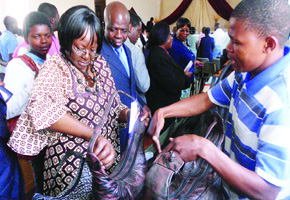
Speaking during an exhibition and workshop for the Bulawayo’s chamber of small medium enterprises, the Minister of Small and Medium Enterprises (SMEs) and Co-operative Development, Sithembiso Nyoni said given a chance, small scale businesses could wake Bulawayo from its slumber because they were not capital intensive compared to the big companies that closed shop.
More than 80 companies closed down or relocated from Bulawayo to other cities and more than 20 000 people, some who are now into informal trade were left jobless.
“It is unacceptable and immoral for SMEs not to have premises when factories closed down and are waiting for people to occupy.
“Factories are lying idle and if SMEs are given the premises to grow their businesses, I am hopeful we might revive our industries,” said Minister Nyoni.
She challenged the Bulawayo Chamber of SMEs to approach the local authority and negotiate for bigger and better places for SMEs.
“A Government policy on infrastructure has been put in place so you can now approach local authorities and negotiate and make arrangements because it is now your right. I challenge the chamber to advocate for bigger and better places for SMEs,” said Minister Nyoni.
“SMEs should be aggressive and advertise their products especially in the wake of the forthcoming United Nations World Tourism Organisation congress to be held in Victoria Falls next year.”
She also said sanctions were not a curse to citizens, but presented people with an opportunity to prove that Zimbabweans could survive without donations and outside help.
Speaking at the same occasion, Bulawayo chamber of SMEs chairman Mr Emmanuel Bonde encouraged SMEs to desist from donations and mobilise resources to alleviate liquidity challenges.
“We are facing a number of challenges that have hindered our progress. SMEs contribute about 60 percent to the economy of this country but inadequate working space and capital, stringent bank loan conditions, high rentals and cheap imports are affecting our viability.
“We are calling on the Government and stakeholders to assist in providing us with working space, solar energy and generators,” said Mr Bonde.
One of the small-scale businesspeople who were exhibiting their products, Mrs Ester Sibanda said the Government should also help them acquire licences.
“I am in the bakery, bead and leather industry and I have struggled to improve my business because I have no licence. We are appealing to the responsible authorities to assist us get licences so that we can grow our businesses and improve the livelihoods of our communities,” said Mrs Sibanda.
The day was held under the theme “SMEs, the backbone of economic growth and empowerment”.
Many companies in the city are on the brink of collapse and there is urgent need to help these companies survive.
The delay in disbursing the $40 million Distressed Industries and Marginalised Areas Fund (Dimaf) is worsening the situation for Bulawayo companies.
When the Dimaf deal was signed last year, Government and Old Mutual pledged to deposit $20 million each into the fund meant to assist ailing Bulawayo companies.



 derick.khumalo