admin
admin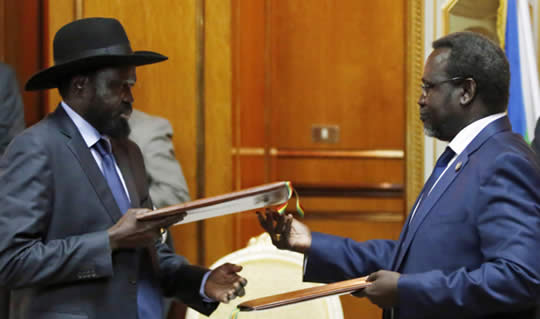

South Sudan’s army and rebel forces have blamed each other for violating a ceasefire, just hours after a truce aimed at ending a five-month conflict in the world’s youngest country came into effect. Rebel military spokesman Lul Ruai Koang told Reuters news agency the army launched attacks in Unity state and Upper Nile state, shelling rebel positions a few hours before the ceasefire started, before continuing the attacks into yesterday morning.
“The latest violations of the agreement to resolve the crisis in South Sudan shows that (President Salva) Kiir is either insincere or not in control of his forces,” Koang told Reuters.
South Sudan government forces also accused the rebels of violating the truce with army spokesman Philip Aguer saying his forces had been attacked in two positions in oil-producing Unity State, one of them near Bentiu, where an ethnic massacre in April raised fears of a potential genocide.
“They attacked only six hours after the ceasefire came into effect,” Aguer told Reuters, although he said the government’s SPLA army was able to repulse both assaults.
The Juba government said its troops had been given strict orders to respect the peace deal.
President Kiir’s spokesman, Ateny Wek, told AFP: “The orders have been given to the army to start observing arrangements for the cessation of hostilities.”
Kiir and former vice-president and rebel leader Riek Machar met in the Ethiopian capital Addis Ababa on Friday and agreed to halt fighting within 24 hours.
The agreement came after massive international pressure on both sides to stop the five-month conflict marked by widespread human rights abuses, a major humanitarian crisis and fears the country was on the brink of a genocide and Africa’s worst famine since the 1980s.
The war – which began last December after the government foiled what it called a coup by Machar – has claimed thousands of lives, with more than 1.2 million people forced to flee their homes.
The conflict has also sucked in neighbouring Uganda, which has a large number of people working in the capital Juba, and sent troops in December to South Sudan to fight along side government forces.
Violence has taken on ethnic undertones, with rebels loyal to Machar’s Nuer tribe and soldiers from Kiir’s ethnic group, the Dinka, engaging in revenge killings.
Kiir and Machar had agreed to a ceasefire in January, but that deal quickly fell apart. – Al Jazeera.


 Online Reporter