Online Reporter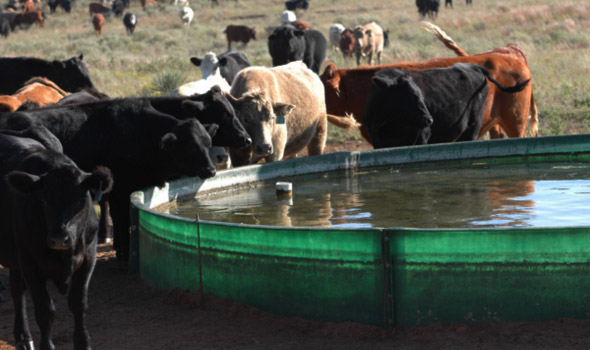
Lovemore Kadzura
Post Reporter
THE majority of livestock farmers across the country still have adequate drinking water for their animals, which is available at a reasonable trekking distance, despite the late and normal rains received in the 2024/2025 season, recent statistics have revealed.
In Manicaland Province, 86 percent of the 142 043 cattle-owning households have reported that they still have enough water for their animals.
This is against the 84 percent recorded at national level, statistics from the 2024/2025 Post-Harvest Survey released by the Zimbabwe National Statistics Agency (ZimStat) show.
Twenty-two percent of the cattle in the province are still in good condition, while 76 percent are rated fair and seven percent are in a poor state.
Farmers are mainly feeding their cattle with natural veld and crop residue, with a few turning to commercial supplements and on-farm formulated feeds.
Fifty-three percent of farmers are accessing drinking water for their cattle from less than 1km away, while 40 percent trek up to 3km and one percent trek above 5km to access water for their cattle.
The survey, carried out jointly with the Ministry of Lands, Agriculture, Fisheries, Water and Rural Development, covered 58 000 farming households across eight rural provinces.
It also revealed that 1,2 million households owned cattle, with Midlands owning 19,2 percent of the total herd and Masvingo 17,8 percent, accounting for the largest shares.
It was also recommended in the survey that there is a need to rehabilitate and construct water infrastructure and promote fodder production by farmers to provide supplementary feeds.
“Feed Security and Fodder Development, scale up fodder crop production such as velvet, bean, lablab, sorghum and fodder maize. Promote hay/silage making at household and community level to reduce reliance on natural veld and crop residues, especially during the lean season.
“Invest in rehabilitation and construction of water infrastructure such as boreholes, small dams, solar powered water systems to reduce trekking distances for cattle. Strengthen farmer training on cattle nutrition, rangeland management, water harvesting, animal health and business-oriented livestock production through farmer field schools and Agritex advisors,” recommended the survey.
Top livestock producer, Mr Crispen Kadirwamwando said livestock state is not in good condition as the dry grass has lost nutrients and most farmers rely on natural grass. He also called on stiffer penalties on people starting veld fires which are destroying grazing areas.
“As it stands there is available grass for grazing, but in areas such as Manicaland the grass loses its nutrients as it dries up. All the dry grass we are seeing no longer have nutrients to provide quality feed. The condition of our stock is on the bad side even if the grazing is ok. The quality of cattle differs on the financial stability of a farmer.
“Farmers with capacity are supplementing grazing through buying winter blocks with high protein, urea, molasses and salt.
“Vaccinated and dosed cattle are looking shiny, but generally the cattle are not up to date. The grass we have is also under severe threat from veld fires that are raging across the country. Something must be done to curb veld fires as this affects our livestock further,” said Mr Kadiramwando.