

 Online Reporter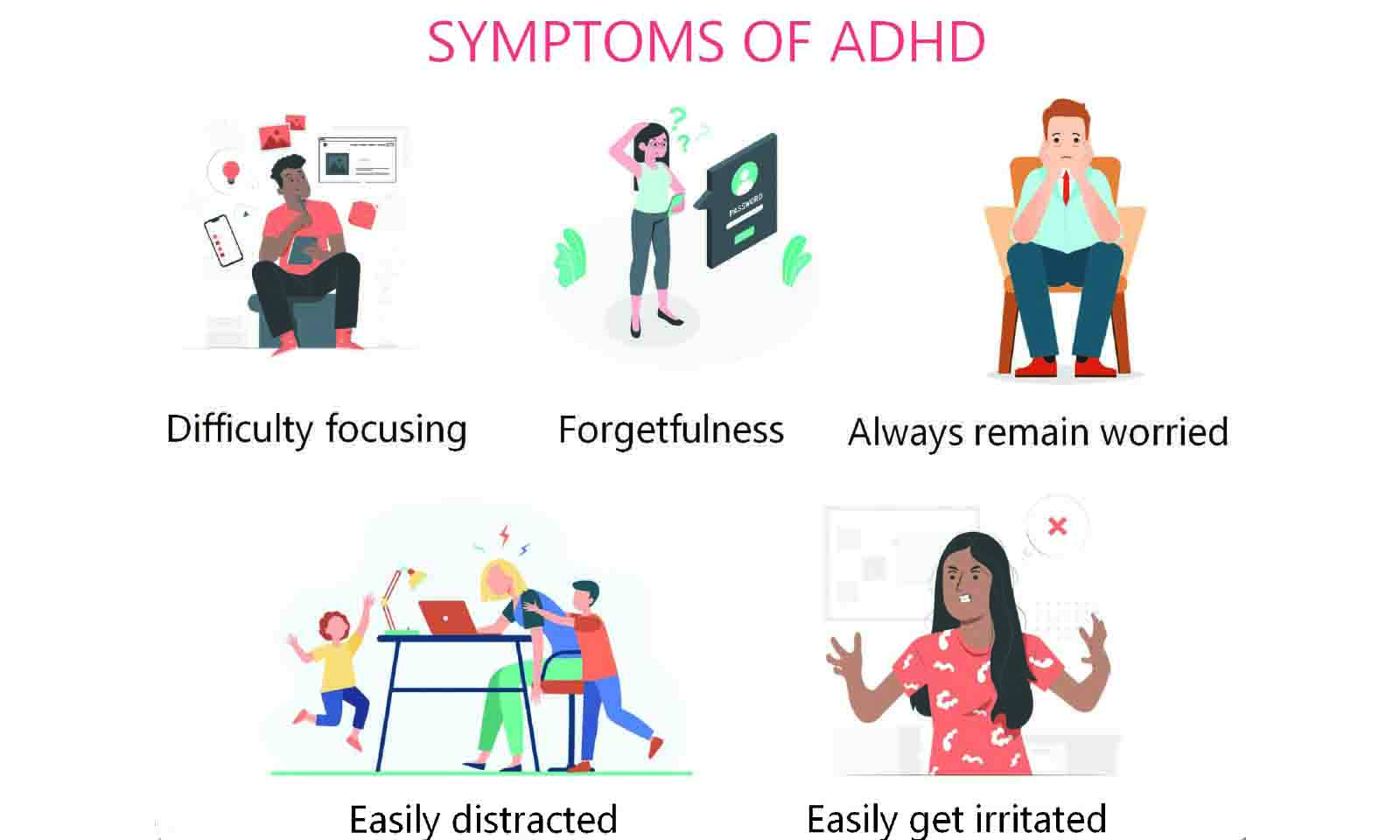
Rumbidzayi Zinyuke
Health Buzz
IN many Zimbabwean homes, a child who cannot sit still, frequently interrupts others, or struggles to complete tasks is often labelled as naughty.
Parents will often shake their heads and dismissively remark, “Uyu anemusikanzwa!” (he/she is just naughty).
However, beneath that label may lie a deeper, often-overlooked reality.
The child could be living with Attention Deficit Hyperactivity Disorder (ADHD), a neurodevelopmental condition that remains largely misunderstood, misdiagnosed, or ignored in much of Africa, including Zimbabwe.
In Zimbabwe, where mental health remains a taboo subject for many, ADHD is a hidden crisis, one that demands urgent attention, understanding, and action.
Globally, ADHD is one of the most common mental health disorders diagnosed in children.
According to recent estimates, about 8 percent of children and adolescents are affected, with boys being more frequently diagnosed than girls.
Among adults, the global prevalence is about 2,6 percent, although the actual number may be higher due to widespread underdiagnosis and misdiagnosis.
Despite these figures, ADHD continues to be misunderstood, minimised or dismissed, particularly in low and middle-income countries.
In Africa, the situation mirrors these global trends, but with additional challenges.
Studies conducted across the continent show ADHD prevalence rates ranging between 5 and 10 percent among children.
While some countries like South Africa and Nigeria have made strides in building awareness and offering treatment, others are hampered by limited data, a shortage of specialists, and almost no coordinated public education on neurodevelopmental disorders.
The effects of this silence are evident.
In Zimbabwe, conversations around mental health are often muted by stigma and misconceptions.
A child who shows signs of ADHD, such as excessive talking, impulsive behaviour, or constant daydreaming, is frequently dismissed as “difficult” or “ill-mannered.”
Girls, who typically present with more inattentive than hyperactive symptoms, are especially at risk of going unnoticed. Their struggles may be masked by compliance, and their academic or emotional difficulties wrongly attributed to personality flaws.
Inside classrooms, teachers may interpret ADHD symptoms as defiance or lack of motivation, while parents often view them through a disciplinary lens.
This results in children receiving punishment rather than the support they desperately need. For many, school becomes a source of anxiety and rejection, leading to low self-esteem, academic failure, and strained relationships.
What makes ADHD especially challenging is its invisibility. Unlike physical illnesses, it leaves no visible marks. Diagnosis requires detailed behavioural assessments and input from trained professionals, resources that are in short supply in Zimbabwe.
According to official statistics, the country has only a handful of child psychologists to serve a population of millions.
Public mental health facilities are overstretched and under-resourced, making timely and accurate diagnosis a rarity rather than a norm.
In rural communities, these barriers are even more pronounced. With virtually no access to specialists, families often turn to traditional healers or churches for help.
Cultural beliefs and spiritual interpretations of behaviour further delay or derail the path to proper care. A child with ADHD may be subjected to exorcisms or harsh discipline, deepening trauma and compounding the original condition.
Even for families fortunate enough to receive a diagnosis, the road ahead remains fraught with obstacles.
Effective treatment for ADHD typically combines behavioural therapy, parent coaching, school accommodations and sometimes medication.
However, these medications are sometimes unavailable or prohibitively expensive for most families.
On top of that, experts say myths about stimulant medication also discourage parents from exploring pharmacological options.
Despite the grim picture, there are glimmers of hope. Growing access to the internet and social media has allowed families to connect with global ADHD communities and tap into vital information.
Some schools in the country, both private and public, are beginning to train teachers on inclusive education practices and how to accommodate children with diverse learning needs.
However, such efforts remain scattered and largely inaccessible to the broader population.
The stigma surrounding ADHD remains one of the greatest barriers to progress. Many still view it as a behavioural issue or a reflection of poor parenting. This stigma does not end in childhood, adults with ADHD often go undiagnosed or are misdiagnosed with depression or anxiety.
Their symptoms, which may include difficulty focusing, disorganisation, emotional dysregulation, or impulsive decision-making, are often dismissed as personal failings.
Research shows that untreated ADHD in adults can lead to significant life challenges, including relationship difficulties, job instability, and substance abuse.
A recent study from the UK found that adults with ADHD face a higher risk of early mortality due to factors such as accidents, chronic stress, and suicide.
In Zimbabwe, these risks are compounded by weaknesses in the health sector and limited social support structures.
Adults who suspect they may have ADHD face long waiting times to see psychiatrists, and even when diagnosed, consistent treatment is rarely available.
Women with ADHD, in particular, are at risk of being dismissed or misdiagnosed due to gender bias in the way symptoms are perceived.
To change this trajectory, Zimbabwe needs a bold, multi-sectoral approach.
Public awareness campaigns are essential to dismantle myths and educate families about ADHD as a legitimate, manageable medical condition.
Teachers and school administrators must be trained to recognise and support children with ADHD, using structured interventions and empathy rather than discipline alone.
Health workers, especially those in primary care, must be equipped with the knowledge and tools to screen and refer suspected cases.
But above all, more funding is needed to bolster mental health services, train child psychologists, and improve the availability of affordable medication.
Addressing ADHD is not merely a clinical issue, it is a social and economic imperative.
When left unsupported, children with ADHD are more likely to drop out of school, struggle with unemployment, and face exclusion. But with proper support, many thrive. They become innovators, artists, entrepreneurs; people whose unique perspectives enrich society in countless ways.
The time has come to stop labelling ADHD as mere naughtiness or moral failure. It is time to see it for what it truly is: a neurological difference that requires understanding, compassion, and evidence-based care.
In every Zimbabwean classroom, there may be a child brimming with untapped potential, quietly fighting a battle no one else sees.
The question is: Will we finally choose to see them?




 Bongani Ndlovu