Online Reporter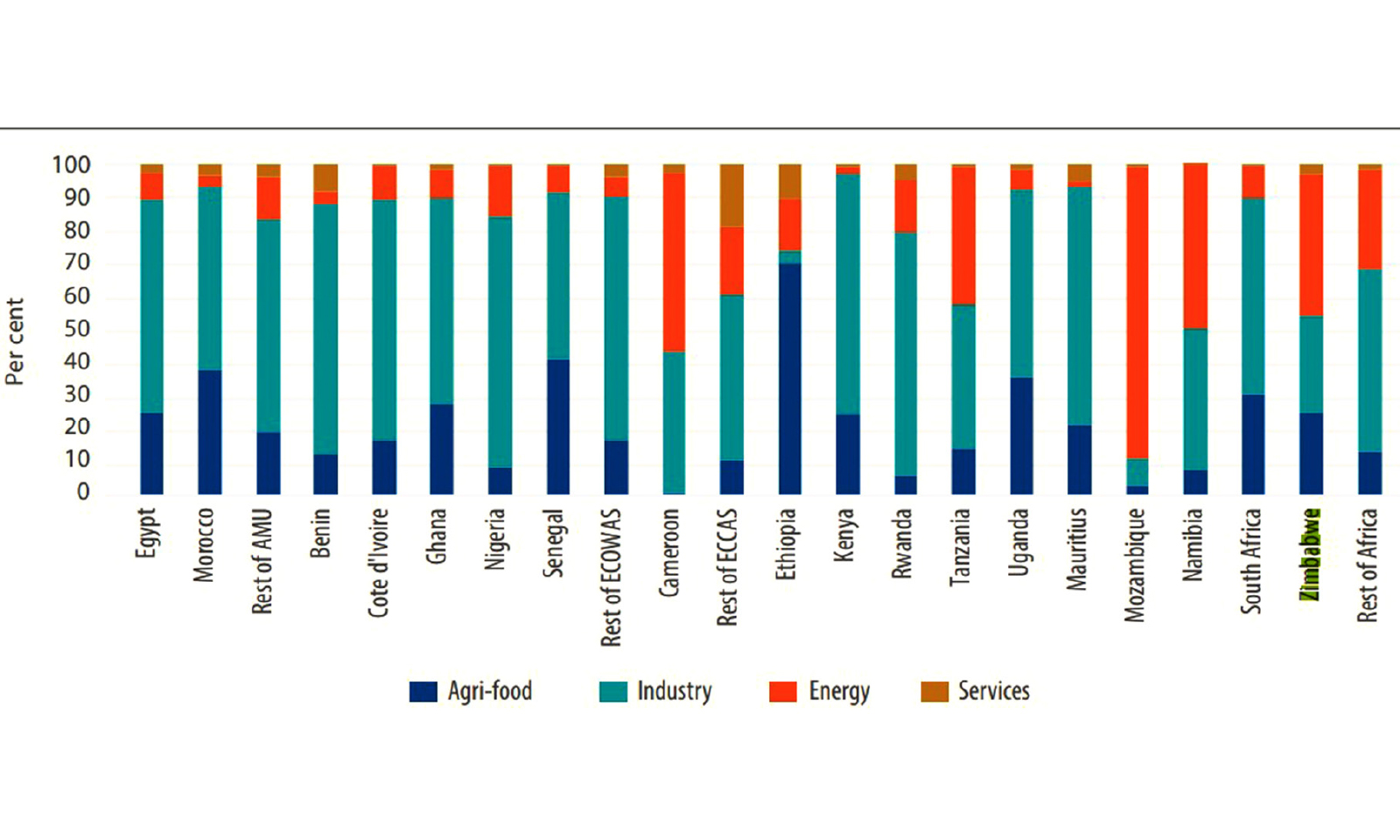
Nqobile Bhebhe
Senior Business Reporter
ZIMBABWE is expected to see a 59 percent rise in industrial exports to African markets under the African Continental Free Trade Area (AfCFTA), highlighting the potential for economic growth through regional integration, a report from the United Nations Economic Commission for Africa (ECA) reveals.
AfCFTA would improve access to markets on the continent, fostering growth in key sectors such as manufacturing, agriculture and services.
Zimbabwe’s participation in the AfCFTA is also expected to accelerate industrialisation by enabling increased value addition to raw materials and commodities.
It is projected that the industrial sector will dominate the intra-African trade gains, with Zimbabwe positioned to benefit from increased exports in wood and paper products, chemicals, rubber, plastic, pharmaceuticals, metals, manufactured goods, vehicles, and transport equipment.
The AfCFTA is viewed as a transformative initiative poised to reshape economic dynamics across the continent.
For Zimbabwe, the agreement presents significant opportunities to enhance trade, industrialisation and economic diversification.
By reducing tariffs and non-tariff trade barriers, AfCFTA is expected to substantially boost intra-African trade, particularly benefiting Zimbabwe’s industrial and agrifood sectors.
According to estimates by the United Nations Economic Commission for Africa (ECA), overall intra-African trade (exports) is projected to increase by approximately 45 percent (or US$275,7 billion) by 2045.
“It is not surprising that the most impressive expected macroeconomic benefits from the implementation of the AfCFTA agreement, considering just tariff and non-tariff barrier reductions within the continent, would be for intra-African trade.
“ECA estimates that, in relative terms, overall intra-African trade (exports) would increase by about 45 per cent (or US$275,7 billion) in 2045, while intra-African trade is expected to increase by 60 per cent (or US$58,6 billion) for agrifood, 48 per cent for industry (or US$165,6 billion), and 34 per cent for services (or US$4,9 billion), from a baseline situation without the agreement,” reads part of the report.
The Economic Report on Africa 2025 (ERA 2025) examines AfCFTA’s implementation, highlighting achievements, challenges and its potential to reshape Africa’s economic landscape.
The expected increase in intra-African trade for energy and mining, while significant at an estimated 28 percent (or US$46,6 billion), would be notably lower than in other major sectors, the report added.
The report further identifies sub-sectors with the greatest potential to drive intra-African trade expansion following AfCFTA implementation.
These include industries encompassing wood and paper products, chemicals, rubber, plastic, pharmaceuticals, vehicles and transport equipment, metals and other manufactured goods.
Agrifood grains and crops, milk and dairy products, sugar, rice, meat, and other processed foods are also included.
Tourism and transport is covered under the services sector, while energy and mining is also considered.
However, the report noted that the expected benefits of refined oil must be analyzed with caution due to environmental concerns associated with CO2 emissions from fossil fuels.
Similarly, the expanded intra-African trade in mining products should be carefully examined to promote value addition.
The industrial sector’s dominance in intra-African trade gains is evident across most African countries, with industrial product exports showing notable growth.
“In fact, even in the few countries where industry would not account for the largest share of the benefits, gains would still be sizable in relative terms (as a percentage) as exports of industrial products to their African partners would increase from Cameroon by 141 per cent, Ethiopia by 104 per cent, Mozambique by 32 per cent, Namibia by 66 per cent, or Zimbabwe by 59 per cent.”
Economist Ms Alice Chironzi noted that Zimbabwe stands to gain significantly from AfCFTA through increased trade, industrial expansion, and economic diversification.
“The projected rise in exports, particularly in industry and agrifood, highlights the country’s potential to become a competitive regional player.
“To fully capitalise on AfCFTA, Zimbabwe must prioritise infrastructural development, investment in value-added industries and policies that enhance competitiveness.
“With strategic planning, AfCFTA can serve as a catalyst for Zimbabwe’s economic transformation and sustainable growth.
AfCFTA will be the world’s largest new free trade area since the establishment of the World Trade Organization (WTO) in 1994.
Zimbabwe is among the pioneer countries that embraced AfCFTA, recognising its vast market potential estimated at trillions of US dollars and a population exceeding 1,3 billion. To maximise its benefits from the AfCFTA), Zimbabwe needs to focus on strengthening its trade facilitation, investing in infrastructure, promoting the beneficiation of its resources, and building capacity, particularly for women and youth-led businesses.
By focusing on beneficiation, Zimbabwe can increase export earnings, reduce dependence on commodity price fluctuations, and create employment opportunities for its citizens. Industrialisation enhances competitiveness, allowing locally produced goods to compete with imports within the AfCFTA market.