

 Online Reporter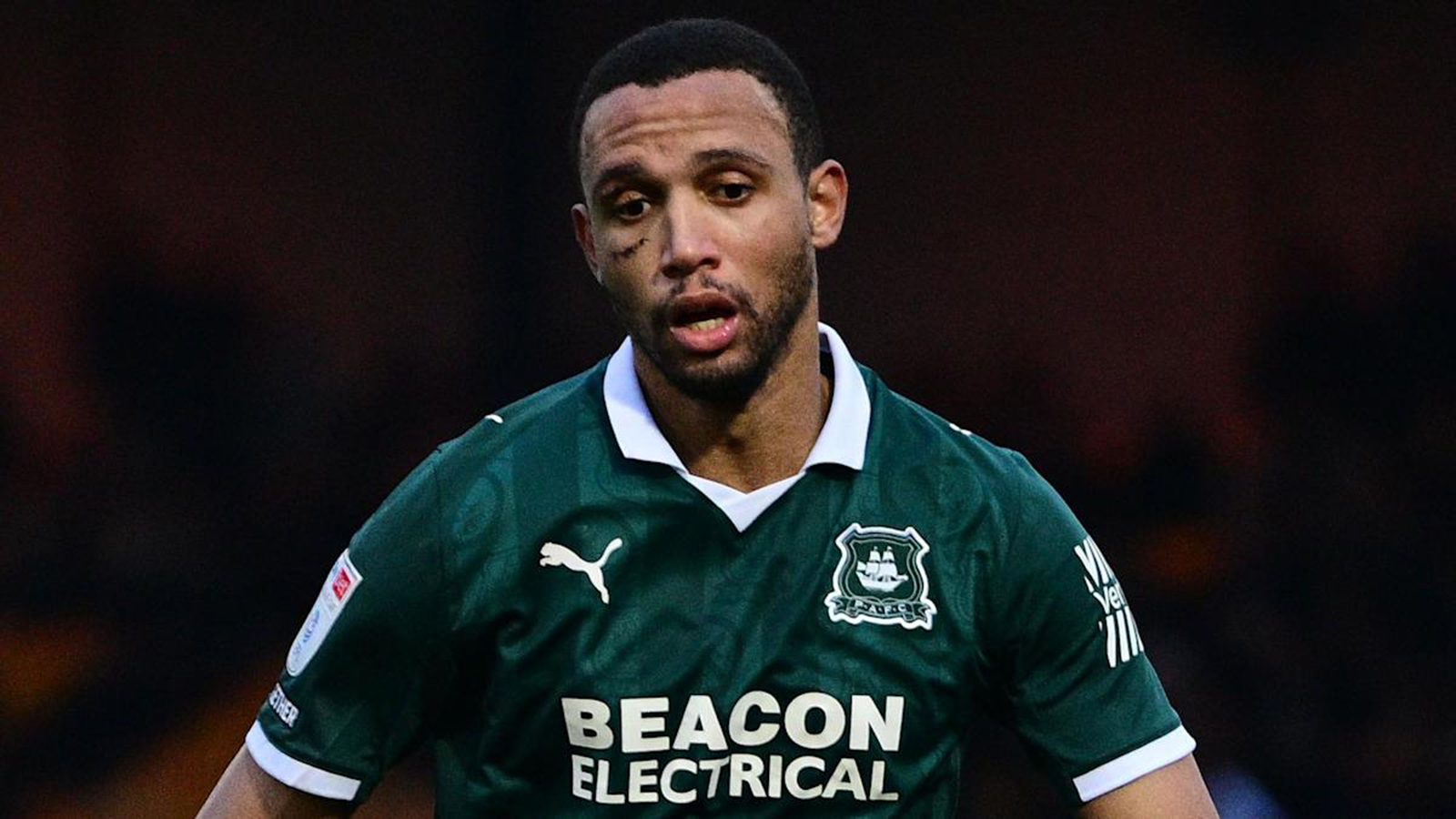
Stanford Chiwanga, Quality Editor
ZIMBABWE has spent the past two years rediscovering itself on the football pitch — navigating governance upheavals, enduring qualifying campaigns played on borrowed grounds, and hitting the reset button under a new technical direction.
Yet, when the moment of truth arrived, the Warriors punched their Afcon ticket and then competed with conviction in Morocco.
Despite narrow, heartbreaking defeats to Egypt and South Africa — matches where Zimbabwe led and showed they belonged on Africa’s biggest stage — one truth should now silence an old debate: Zimbabwe has the talent.
The real question is whether we are ready to build around the diaspora brigade — players born overseas or moulded in Europe — by embedding them as the backbone of a modern, merit-based national team. If we are serious about progressing beyond the group phase, the answer is yes.
Look at the composition and context of the Warriors’ recent squads. Brendan Galloway — Harare-born, England-raised, now at Plymouth Argyle — returned to the fold and made his Africa Cup of Nations debut against Angola, steadying the defence under pressure and showcasing the calm, technical profile honed in English football.
His journey — from MK Dons to Everton, through Premier League and Championship loans, and now League One — illustrates the value of high-performance habits acquired in Europe.
Jordan Zemura, London-born and now a first-team left-back in Serie A with Udinese, represents the diaspora’s ceiling: a Zimbabwe international operating weekly in one of Europe’s Big Five leagues.
Even when injuries ruled him out of Afcon, his European form underlined the standard Zimbabwe should normalise in full-back roles that demand athletic range, one-on-one defending and progressive carries.
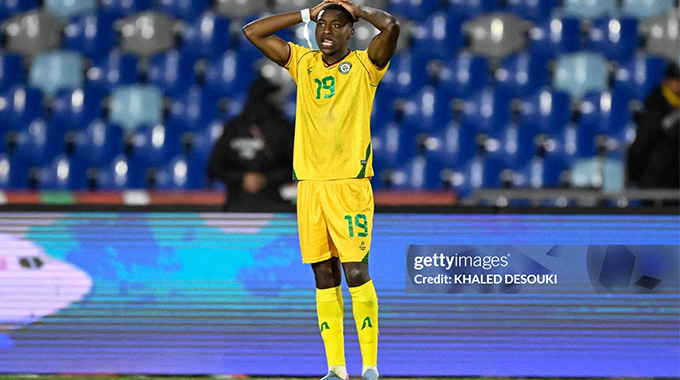
In attack, Tawanda Maswanhise offers another compelling example. Harare-born, UK-developed at Leicester City before a productive move to Motherwell, he broke into the Warriors and — crucially — delivered at decisive moments during the group stages in Morocco.
His pathway underscores how early exposure in elite development settings, followed by regular senior minutes, accelerates international impact.
Then there is Thandolwenkosi Ngwenya — South Africa-based rather than Europe-raised, but a telling case in the cross-border pipeline. A mid-season switch to AmaZulu in the Betway Premiership sharpened his game and earned him rapid national team recognition; the coach publicly praised his form and mentality during the recent campaign.
Think Daniel Msendami at Marumo Gallants in South Africa, a player who was deemed not good enough by Highlanders but now a starter for the Warriors. This is the diaspora in the Southern African sense: Zimbabwean roots, professional polishing abroad, immediate dividends for the Warriors.
Zimbabwe qualified for Afcon despite hosting fixtures on borrowed pitches and recovering from a governance freeze. That qualification, achieved largely under the foundational work of Michael Nees, was the strongest indicator that the talent base — diaspora included — can meet the continental standard.
Nees did the hard miles, meeting Liverpool’s Trey Nyoni and Isaac Mabaya, Chelsea’s Shumaira Mheuka, and others to sell a coherent project. This momentum has now passed to Mario Marinica, who inherited a squad that proved in Morocco it can go toe-to-toe with Africa’s elite.
The lesson is simple: if the technical staff articulate clear roles and Zifa facilitates logistics, Zimbabwe will progress. The corollary is equally clear: when preparation falters or administrative gaps leave players unavailable, results suffer and rankings stall.
That is why a structured diaspora strategy is not optional; it is the scaffolding that turns eligibility into selection, selection into synergy, and synergy into points.
To its credit, Zifa has begun institutionalising diaspora engagement. The Roots & Dreams initiative launched in London and Birmingham — fronted by President Nqobile Magwizi and head coach Michael Nees — signals intent to make overseas scouting continuous and transparent, with embassies enlisted to assist on passports and warn families against predatory intermediaries. That is governance done right.
But intent must become logistics: standing lists, documentation pipelines, and pre-camp medicals. Nees’ UK mission – meeting Liverpool’s Trey Nyoni and Isaac Mabaya, Chelsea’s Shumaira Mheuka, Wolves’ Leon Chiwome, Manchester United’s Camron Mpofu, Norwich’s Lucien Mahovo, and Reading’s Tivonge Rushesha — was the coach doing the hard miles, anchored by Zifa’s diaspora committee chaired by Marshall Gore.
This is how national teams modernise: by selling a coherent project to elite prospects early and often. The same outreach is already yielding wins. Sheffield Wednesday’s Sean Fusire opted for Zimbabwe over England; he was swiftly facilitated for passport processes and integrated into camps.
That decision was not inevitable; it was earned by direct engagement and a believable pathway to caps and tournament football. Multiply that pipeline and you have a sustainable diaspora spine.
If Zimbabwe is serious about building around the diaspora, speed matters. The UK football ecosystem is full of Zimbabwean heritage talent, and international competition for allegiances is real. Consider two teenagers: Sean Fusire, who committed to Zimbabwe after face-to-face engagement, and Tanatswa Nyakuhwa, a Cardiff City forward now in a Wales senior training camp.
One chose us; the other is being courted aggressively. Delay is costly. The list of prospects Nees canvassed in England reads like a who’s who of future Premier League profiles: Trey Nyoni (Liverpool), Shumaira Mheuka (Chelsea), Isaac Mabaya (Liverpool), Leon Chiwome (Wolves), Camron Mpofu (Manchester United), Lucien Mahovo (Norwich), Tivonge Rushesha (Reading).
Many have youth caps for England but no senior ties; all remain eligible for Zimbabwe. The window is open — but it will not stay open forever.
Players raised in English academies and European first teams train under higher tempo, data-driven regimes.
Their defensive distances and pressing triggers are drilled relentlessly. When those habits are brought into national camps, systems consolidate faster. Afcon group football is a test of “floors,” and the composure shown in Morocco against top-tier opposition proved this.
A deeper bench of diaspora profiles allows coaches like Marinica to vary tactics across 270 minutes of intense tournament football. That is how underdogs reach knockouts: by having internationals operating at European speed when legs go heavy.
Some warn that an over-reliance on diaspora talent could marginalise local development or erode the Warriors’ identity. That is a false binary. The current squad already blends South Africa-based forwards like Ngwenya with Europe-raised defenders and locally born midfielders.
The “identity” question was settled by Afcon qualification secured through a collective — home-grown and diaspora together. The task is not to pick one; it is to select the best, consistently.
Others cite administrative headaches: passports, clearances, travel. But Zifa has shown it can adapt. The diaspora committee exists; embassies are mobilised; logistics are improving. The remaining work is operational: start earlier, document faster, and formalise a depth chart with eligibility notes and cap management timelines.
Zimbabwe’s window is unusually favourable. Afcon qualification restored the programme’s brand, and the team showed in Morocco that they are only a few tactical refinements away from the knockout rounds.
Marinica should continue being proactive in diaspora engagements. Prospects are reachable, embassies cooperative, parents engaged. The cost of hesitation is visible — Nyakuhwa’s Wales camp invitation is a reminder that football is competitive in boardrooms long before it is competitive on grass. Act now. The Warriors do not need a revolution; they need coherence.
Build the architecture, and the knockouts will follow.
@plainstan


 derick.khumalo
While I agree that Zimbabweans playing in other leagues do give our football a bit of flavour, I completely disagree that that’s where our football future lies. Our football future lies in re-establish youth development programs in schools and provinces.