admin
admin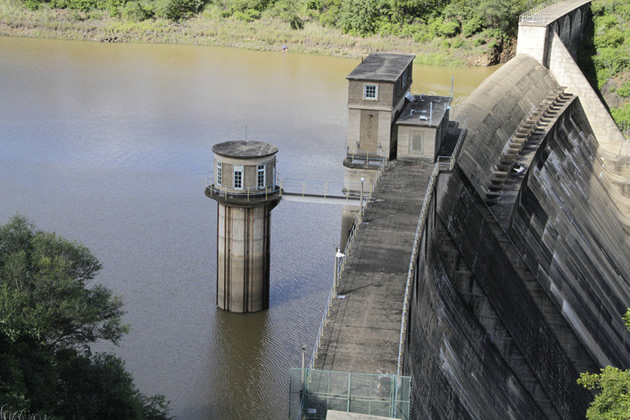

Prosper Ndlovu Business Editor
THE African Development Bank (AfDB) has extended a $37 million grant to the Bulawayo City Council for water supply and sanitation projects.
The city needs a long term reliable water supply in the context of a growing population and expansion with new suburbs being established and a growing demand for water from anticipated industrial growth.
Over the years Bulawayo has been saddled with ageing water and sewer infrastructure that has resulted in pipe bursts, leakages and wastage of treated water.
According to the council’s latest report, the money from the regional finance body would be used to finance priority water supply projects in the 2015-2016 tenure.
“It’s important to note that the AfDB has approved Bulawayo water supply and sanitation project grant of $37 million to be utilised in 2015 and 2016,” said council.
Presently Bulawayo draws its water from five main supply dams – Upper and Lower Ncema, Umzingwane, Inyankuni, Insiza and the recently connected Mtshabezi Dam.
Experts say by right the council should construct a dam within 10-year intervals to keep pace with a growing population and expansion.
Most city supply dams were constructed before independence in 1980 save for Mtshabezi which was constructed in 1994, initially meant to provide water for rural Gwanda communities and irrigation.
Given the limited inflows to the dams that presently hold about 65 percent of their total combined capacity so far since the rain season started, more efforts are required to repair Nyamandlovu aquifer boreholes to augment supply from dams.
The council has said it needs about $600,000 for rehabilitation of more than 70 boreholes at the aquifer amid reports only 13 were functional.
While Insiza and Mtshabezi dams hold the bulk of the city’s water, council says abstraction capacity is limited by pipeline capacities presently at 45 and 17 ML per day respectively.
The AfDB sent its team to Zimbabwe last month and held discussions with the Ministries of Finance and Economic Development, Environment, Water and Climate, Local Government, Public Works and National Housing and the Zimbabwe National Water Authority.
The team also met City of Bulawayo officials and discussed the city’s constraints and priorities as it sought to understand the local authority’s institutional, social and economic context.
“The mission did come and met the city officials, officials from Zinwa and external stakeholders namely residents associations and industry and commerce. They indicated that they’ll submit a report for further engagement,” said council.
The AfDB team was represented by Eskendir Demissie, the principal water and sanitation engineer; and Herbert Nyakutsikwa, the water and sanitation engineer.
Meanwhile, the local authority is considering engaging Loita Capital Partners International to raise an additional capital of $26 million to finance water and waste water projects.
Councillor Siboniso Khumalo observed that the proposed funding was meant to address priority projects in the water and waste water area and stressed the need to be specific as to which geographical areas would be covered in this exercise.
He suggested the proposal be referred to the Finance and Development Committee for clarification.
Other councillors concurred emphasising the need for transparency in the allocation and disbursement of funds.


 Online Reporter