admin
admin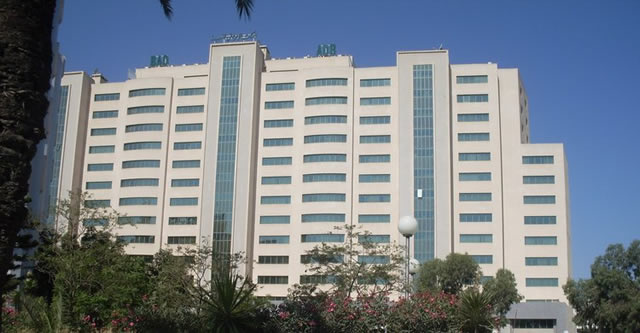
 Oliver Kazunga Senior Business Reporter
THE African Development Bank (AfDB) has partnered the public and private sectors in Africa on a new energy deal requiring $40 to $70 billion annually. The deal, which seeks to foster universal access to energy by 2025, comes at a time when most of the African countries including those in the Sadc region are faced with a power deficit.
“The new deal on energy for Africa is a partnership-driven effort with the aspirational goal of achieving universal access to energy in Africa by 2025.
“To drive and achieve this goal, the AfDB is working with governments, the private sector, and bilateral and multilateral energy sector initiatives to develop a transformative partnership on energy for Africa — a platform for public-private partnerships for innovative financing in Africa’s energy sector,” said the regional financier in a statement.
“To achieve universal access by 2025, innovative mechanisms are required to mobilise an additional $40-70 billion annually in domestic and international capital.
“This is a significant increase on the $22.5 billion invested in the sector in 2014.
“Achieving this scale of energy financing requires that collective action be taken by all stakeholders — public and private — to create enabling conditions for financial flows, to develop bankable projects, to reform utilities, and to enhance African countries’ absorptive capacities.”
Zimbabwe is one of the countries in Southern Africa that is experiencing a critical power deficit.
Electricity demand in Sadc continues to outstrip supply at a time when the region needs to attract investment to boost socio-economic development.
Load-shedding and power rationing have become the order of the day in most Sadc countries with economic analysts arguing that the development has crippled economic growth.
This was based on the fact that most of the economic drivers, for instance manufacturing, agriculture and mining require uninterrupted power supply.
Over the years, Sadc countries have failed to adequately invest in power projects, yet it was apparent that a time would come when demand would surpass supply to the extent that the region would not have excess power to export.
“The new deal on energy for Africa helps to unify all of the other efforts that are currently driving towards achieving the goals of universal access in Africa.
“It focuses on five key principles: raising aspirations to solve Africa’s energy challenges; establishing a Transformative Partnership on Energy for Africa; mobilising domestic and international capital for innovative financing in Africa’s energy sector; supporting African governments in strengthening energy policy, regulation and sector governance; and increasing AfDB’s investments in energy and climate financing.”
The power deal also aims at increasing on-grid transmission and grid connections that will create 130 million new connections by 2025.
According to the regional bank, over 645 million Africans have no access to electricity.
AfDB said power consumption per capita in Sub-Saharan Africa is the lowest of all continents, currently estimated at 181 kilowatt per hour annually compared to 6,500kWh in Europe and 13,000kWh in the United States.
The bank said the energy sector bottlenecks and power shortages were costing Africa about two to four percent annually of its Gross Domestic Product.


 Online Reporter