Online Reporter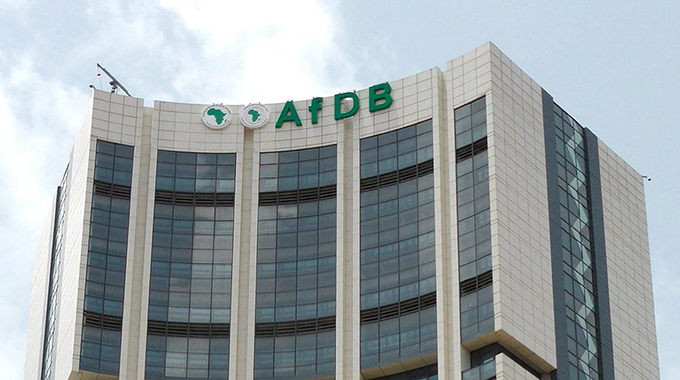
Tapiwanashe Mangwiro
AFRICA has been advised to rethink how it finances development as traditional aid flows become increasingly uncertain and global geopolitical tensions reshape capital allocation.
The recommendation appears in the African Development Bank (AfDB)’s “African Economic Outlook 2026” report.
In the report, released amid growing concerns over shrinking development assistance and rising debt-servicing costs across Africa, AfDB argues that the continent must build a more autonomous financial system capable of mobilising its own resources rather than relying heavily on external funding.
The warning comes as many governments, including Zimbabwe, face mounting infrastructure requirements, limited fiscal space and increasing competition for international capital.
“Rising geopolitical tensions could reduce official development assistance flows to Africa, heightening near-term risks to overall external financing,” said AfDB in the report.
The AfDB estimates that Africa’s annual development financing gap now stands at approximately US$1,3 trillion.
The institution argues that the continent possesses sufficient financial resources to close much of that gap if inefficiencies in mobilisation and allocation are addressed.
“Africa’s challenge is not only to close financing gaps, but also to transform financing systems to mobilise capital at scale, deploy it efficiently and strengthen financial agency,” the AfDB said.
Central to that ambition is the New African Financial Architecture for Development launched by the AfDB earlier this year.
The initiative seeks to deepen African capital markets, improve domestic resource mobilisation and reduce dependence on external financing sources that have become increasingly volatile.
The AfDB said Africa’s financial ecosystem already manages more than US$4 trillion in assets, but much of that capital remains fragmented and disconnected from productive investment opportunities.
“Shallow and fragmented markets limit the mobilisation of domestic savings and their allocation to productive investment,” the bank said.
For Zimbabwe, where access to international finance remains constrained and development priorities continue to outpace available public resources, the recommendations carry particular significance.
Industrialist Dr Nxaba Ndiweni said the report correctly identifies one of Africa’s longstanding structural weaknesses: the inability to convert domestic savings into industrial capital.
“The continent has spent decades discussing financing gaps while overlooking the resources that already exist within African economies,” he said.
“In Zimbabwe, pension funds, insurance companies, mining revenues and diaspora capital represent significant pools of finance. The challenge has always been creating credible institutions capable of converting those resources into long-term productive investment.”
Dr Ndiweni argued that industrialisation would remain elusive unless African countries deliberately build financial systems that support manufacturing, infrastructure and value addition.
“Foreign capital will always play an important role, but sustainable industrial development requires domestic ownership of the financing process,” he said.
“Countries that rely excessively on external funding inevitably become vulnerable to changes in global political and economic priorities.”
His comments echo AfDB’s conclusion that Africa must strengthen its own financial sovereignty to achieve durable economic transformation. Economist Gladys Shumbambiri-Mutsopotsi said the report should be viewed as a wake-up call for governments that continue to rely heavily on external support.
“What the AfDB is effectively saying is that the era of predictable aid flows is ending,” she said. “The development model that many African countries became accustomed to over the past several decades is becoming increasingly difficult to sustain.”
Ms Shumbambiri-Mutsopotsi said this places renewed emphasis on tax administration, revenue mobilisation and public financial management.
“The report identifies significant leakages in tax systems across the continent. Those are resources that governments can no longer afford to lose,” she said.
Ms Shumbambiri-Mutsopotsi said, for Zimbabwe, improvements in revenue mobilisation could prove more important than seeking additional borrowing.
Investment analyst Mrs Rudo Mashiringwane believes the report’s most significant message concerns the quality of institutions rather than the quantity of available capital.
“The report demonstrates that Africa’s financing challenge is increasingly institutional rather than financial,” she said.
“There is capital available.
“The issue is whether investors have confidence in the systems responsible for allocating it.”
Mrs Mashiringwane noted that investors are paying close attention to continental initiatives such as the African Financing Stability Mechanism, the African Monetary Institute and the proposed Africa Credit Rating Agency.
“The objective is to create a financial ecosystem that is more responsive to African realities and less vulnerable to decisions made outside the continent,” she said.
Mrs Mashiringwane further said countries able to demonstrate policy consistency, transparency and sound governance would be best positioned to benefit from the emerging financial architecture.