Online Reporter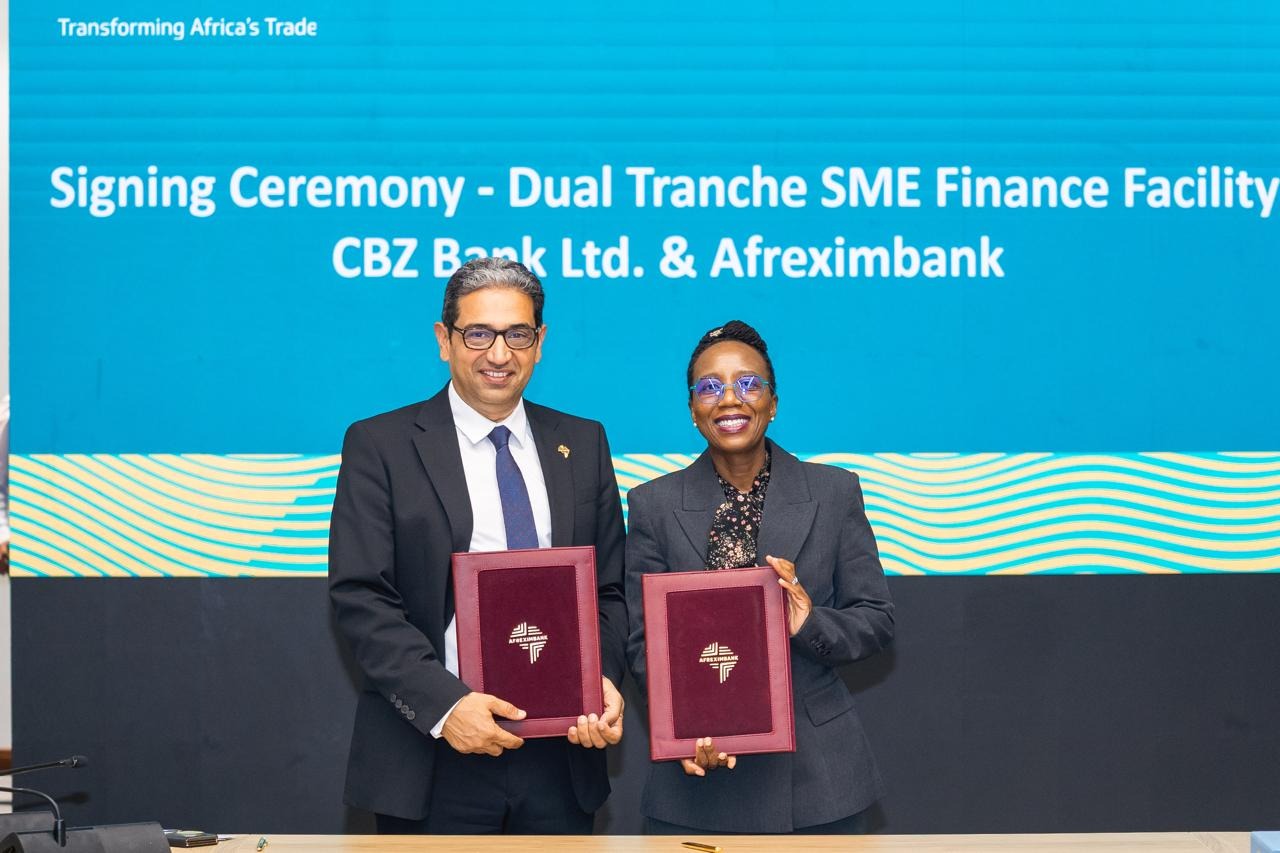
Business Reporter
African Export-Import Bank (Afreximbank) has finalised a trio of financing facilities worth US$190 million for Zimbabwe’s CBZ Bank Limited, in a major intervention designed to catalyse trade, support small businesses and alleviate chronic power shortages in the southern African nation.
The agreements, signed in El Alamein, Egypt, by Haytham Elmaayergi, Executive Vice President of Afreximbank’s Global Trade Bank, and Valeta Mthimkhulu, Managing Director of CBZ Bank Limited, comprise three distinct packages aimed at unlocking credit across key sectors of Zimbabwe’s economy.
The cornerstone of the package is a US$150-million revolving trade finance facility, which will enable CBZ Bank to issue letters of credit and provide direct funding to Zimbabwean companies. The facility is intended to bridge the yawning trade finance gap that has constrained African commerce, with Afreximbank noting that it will benefit multiple productive sectors aligned with the country’s Vision 2030 ambition of becoming an upper-middle-income society.
In a separate agreement, the pan-African lender extended a US$20 million dual-tranche SME finance facility, designed to bolster CBZ Bank’s capacity to on-lend to small and medium-sized enterprises engaged in trade and ancillary activities. The package includes provisions for capacity building, reflecting Afreximbank’s broader strategy of combining financing with regulatory and skills development support.
The third facility, also valued at US$20 million, is a dual-tranche on-lending arrangement earmarked for the energy sector. It will position CBZ Bank to participate in an approved US$210 million syndicated facility for the Zimbabwe Electricity Transmission and Distribution Company, a move intended to reduce power deficits and enhance grid stability both domestically and across the wider Southern African Development Community (SADC) region.
Mr Elmaayergi emphasised that the facilities would directly and indirectly bolster export-oriented businesses, easing pressure on Zimbabwe’s scarce foreign currency reserves and generating much-needed hard currency inflows.
“Our SME and trade finance interventions centre around financing, legal frameworks, awareness, capacity building and strategic partnerships,” he said. “This US$150 million revolving facility will contribute meaningfully to the country’s Vision 2030 aspirations.”
Ms Mthimkhulu welcomed the agreements as a strategic milestone for the Zimbabwean lender, stating that CBZ was now better equipped to deliver financing solutions across the client spectrum.
“From exporters to small businesses, we are committed to enabling growth while contributing to key national priorities, including energy development,” she said.
Afreximbank’s intervention is seen as a critical vote of confidence in the country’s private sector, albeit one that underscores the structural challenges still confronting its economy.
All three facilities are subject to customary conditions precedent and are expected to be drawn down in the coming months.