Online Reporter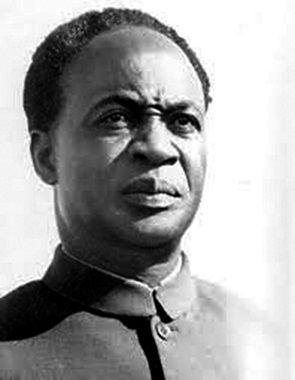
Gibson Nyikadzino
Zimpapers Politics Hub
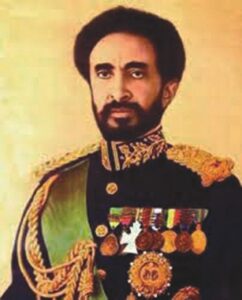
In hypothetical terms, if Ghana’s Kwame Nkrumah, Ethiopia’s Emperor Haile Sellasie or Guinea’s Sékou Touré were alive today, what would be their reactions to the progress the continent has made so far in shaping their vision of a strong and united Africa?
They envisioned a continent that would strive to promote unity and solidarity among states in development, trade, cultural heritage preservation, politics and the defence of sovereignty.
Africa this year commemorates the 62nd anniversary of the founding of the Organisation of African Unity (now the African Union).
Conversations on missed past commitments can be revived, but there is need to implement them within the context of upholding unity.
As Nkrumah puts it, “African union can resolve wars, conflicts and aggressions. Africa’s total independence and unity is necessary for world peace today.”
In simple terms, the continued wars and conflicts on the continent today are a reflection of the absence of unity.
Key areas that have been missed include the 1988 Yamoussoukro Declaration in Cote d’Ivoire, when nations committed to having an African air transport policy that ensured a free airspace for civil aviation across the entire continent.
In 2013, there was a pledge made in Abuja, Nigeria, to silence the guns by 2020, yet intra-state conflicts in the Democratic Republic of Congo (DRC), Ethiopia, Sudan, South Sudan and in other regions continue up to today.
Additionally, in 2018, in Kigali, Rwanda, there was a resolution by African leaders on the elimination of visas on the continent, yet today this remains a dream.
Unity is not only key in stopping wars, but also vital in promoting trade and the full implementation of the African Continental Free Trade Area (AfCFTA) agreement.
Because there are barriers to African unity, even continental trade is low.
The share of intra-African trade last year stood at 13 percent.
The elimination of barriers to trade is a step towards continental unison.
In the case of trade, besides the elimination of physical barriers, the currency used for intra-continental transactions also determines whether the prospects of unity are there or not.
In Africa today, there are at least 42 separate currencies.
Each country is determined to have its financial and economic sovereignty, and no single African currency has ever been used to conclude an international transaction.
It would be ideal if there is also an African currency that can be used alongside sovereign currencies.
The case for a single currency across a broad market like Africa is compelling enough to persuade the continental leaders to embrace the idea, and also trade in their historically separate currencies.
There are more conversations around Agenda 2063.The strategic framework for the socio-economic transformation of the continent was promulgated in 2013 with the goal of delivering sustainable development that pulls people out of poverty and place Africa at the centre of global influence and become a superpower.
It, therefore, cannot be contested that the Africa 2063 agenda is a critical strategy embraced by African leaders to build a better continent for its people.
If executed effectively and efficiently, it has the potential to alter the African continent.
But issues that include poverty, malnutrition, health care systems, living standards, infrastructure, electricity, political instability and weak economic performances of member states need to be addressed.
None but ourselves should take the responsibility of financing the continent’s development initiatives and ensure Agenda 2063 goals are achieved.
However, the way African countries are indebted threatens the well-being of the continent’s citizens as many people rely on state provisions.
Africans need to rethink how they look into the future so that the continent’s aspirations are not overshadowed by discourses of poverty, disunity, war and conflict.
Of importance is building on the Pan-African foundation that was established by our forebears.
Without uniformity in the political, social, economic and cultural policy formulations, the basis of unity will crumble.
The best that can be done is to speak more of neo-Pan-African renaissance as an avenue of ideological reorientation.
Heirs of revolutionaries
Africans are heirs of revolutionaries.
They are children born into a lineage of fighters and revolutionaries like Egypt’s Gamal Abdel Nasser, Algeria’s Ben Bella, Tanzania’s Julius Nyerere, Guinea Bissau’s Amilcar Cabral and Zimbabwe’s Robert Mugabe.
It is important to highlight that the impact each revolutionary had extended beyond a single country to various regions across the continent and even beyond.
Their creative engagement not only localised and indigenised their ideas, but also globalised their resolve.
The fighting spirit of these revolutionaries should reincarnate in present and future generations to complete the collective struggles they led and inspired.
Having, for instance, African soil hosting foreign military forces is not an ideal expression of how Pan-African defence systems will be forged.
Africa is for Africans and African solutions should be used to address the continent’s challenges.



 Online Reporter