Chronicle Editor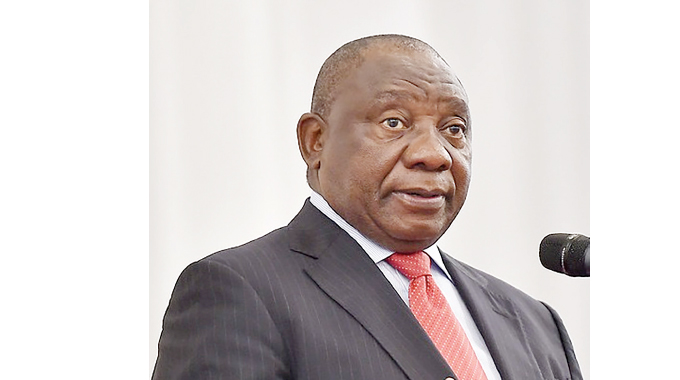
Bongani Ndlovu, Online Reporter
SOUTH Africa’s President Cyril Ramaphosa has said Africa is suffering directly from the war between Ukraine and Russia as it has disrupted grain and fertiliser supplies to the continent.
President Ramaphosa last week led seven African leaders to meet Ukraine President Volodymyr Zelensky and Russia President Vladimir Putin.
The mission comprised the presidents of Senegal, the Comoros, Zambia and South Africa, together with the Prime Minister of Egypt and envoys from the Republic of Congo and Uganda.
Last Friday, the seven African leaders met with Ukrainian President Volodymyr Zelenskyy in the capital Kyiv, and with Russian President Vladimir Putin in St Petersburg on Saturday.
In a statement giving feedback to South Africans on the mission, President Ramaphosa said the war has caused the shortage of grain and farming inputs threatening food security in Africa.
“We made the point to the Ukrainian and Russian Presidents that while we undertook this mission as members of the international community committed to peacebuilding, we as the African continent also have a material interest in seeing a resolution to the conflict,” said President Ramaphosa.
“Both Russia and Ukraine are major suppliers of grains and producers of fertiliser destined for African markets. According to the African Development Bank, the conflict has ‘triggered a shortage of about 30 million tonnes of grains on the African continent, along with a sharp increase in cost.’
As a result of this conflict African countries are negatively affected by the rising costs of food and energy.
“Supply chain disruptions have caused a shortage of farming inputs such as fertilisers, threatening the food security of a number of African countries.”
President Ramaphosa said another point of the peace proposal being put forward by African leaders is for the opening up of the movement of grains across the Black Sea for grains from Russia or Ukraine to reach world markets.
He said this initiative has been historic in that it is the first time African leaders have embarked on a peace mission beyond the shores of the continent.
“Although the delegation comprised countries that have taken diverse positions on the various UN resolutions on the conflict, the countries represented have all taken a non-aligned stance on this issue. This has lent credibility to the mission and engendered trust from both sides,” said President Ramaphosa.
“We presented a ten-point proposal that we as African leaders believe can contribute to various efforts that have been made by various parties to bring the conflict to an end.”
“Included in the proposal being put forward as part of the African Peace Initiative are calls for a de-escalation of fighting and for negotiations to commence with urgency; for the release of prisoners of war and return of children; for greater humanitarian support; and for reconstruction efforts to be prioritised.”
President Ramaphosa said African leaders’ primary concern is for the lives of the people directly affected by the conflict.
“We believe that everything should be done to end the fighting to prevent further loss of life, injury, displacement and destruction. As the international community we need to work together to prevent any further suffering,” said President Ramaphosa.
The toll on human life, the extensive destruction and the ripple effect it has had on the global economy mean that no country has been shielded. The conflict has caused instability, precipitated a humanitarian crisis and sent shockwaves through vulnerable economies.”
President Ramaphosa said both Presidents Zelensky and Putin agreed to further engagements following this initial visit.
“Just as we as African leaders visited Ukraine and Russia to explain the impact the conflict is having on our citizens, we also believe we can contribute to international efforts to bring about the conditions for a lasting peace,” said President Ramaphosa.
“As engagements with both parties and African leaders continue, it is our hope that as the process moves forward, a foundation can be set for a de-escalation of the conflict and negotiation, the two crucial preconditions for a lasting peace.”


 Online Reporter