Online Reporter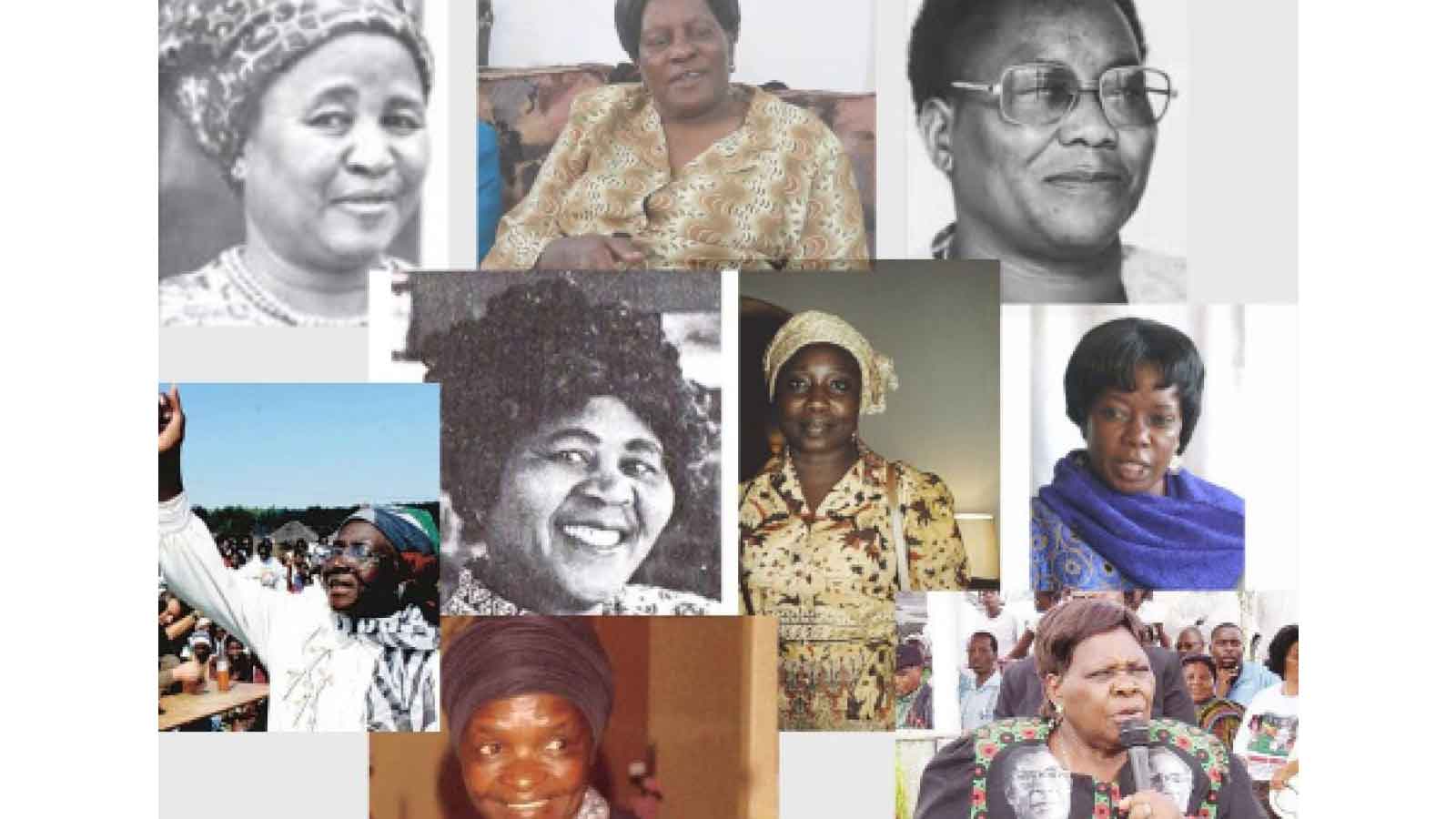
Gibson Nyikadzino
Zimpapers Politics Hub
It was Nigerian author Buchi Emecheta who in 1997 said: “I will not be called feminist because it is European. It is as simple as that. I just resent that. I don’t like being defined by them. It is just that it comes from outside and I don’t like people dictating to me. I am not a feminist. I am an African woman.” This standpoint serves to provide a window into how African women should be perceived, in particular those who fought for the independence of their people.
The terms that people use to describe their heroes and advocates carry both existential and symbolic meaning which either challenges for the good, or the bad, how people shape their narratives.
From Emecheta’s standpoint, there is nothing fashionable for wanting to be called a feminist. From her reasoning, no African woman should embrace the description, feminist.
Based on this, there appears to be a fundamental misconstruction and misrepresentation of heroines of Zimbabwe’s liberation struggle by ascribing their sacrifices, actions and commitment to self-rule to feminism.
Heroines in the mold of the late Cdes Sally Mugabe, Maria Musika, Victoria Chitepo, Sunny Ntombiyelanga Takawira, Ruth Lottie Chinamano, Thokozile Angela Mathuthu and Ellen Gwaradzimba all fought as African liberators, and not tagged feminists.
By tracing the etymology or genesis of the origins of feminism, it would be intellectually disastrous to place and fit an African woman or Zimbabwean liberation war heroine in that depiction. It restricts and diminishes their heroic contributions to Zimbabwe.
As an outcome, traditions that led to the emergence of feminism are not African in discourse, nature, character, content and form because feminism developed out of the discontents of women in the West against oppression and not in Africa. Using that term seeks to invoke a rebellious nature in African and Zimbabwean women, which is not part of their way to getting redress to modern challenges. Although African and Zimbabwean women, over the ages, have always been sensitive to all forms of discrimination, it is unfathomable to credit their consciousness to new forms of oppression as having been based on feminism.
What Zimbabwean women sought to fight during the liberation struggle was the oppression that the colonial system brought and attempts it made to alienate women from the struggles that the population back then countenanced. Calling women who participated and led the charge for Zimbabwe’s liberation struggle feminists is in essence importing a form of domination that acts as if it is giving them a new consciousness, yet it is a way to engineer them to dispose their values and ideals while clinging to the foreign ones.
Even within the existence of multiple feminisms, no one form of feminism can trace its origins to Africa. Today, the feminist movement in all its forms seeks to align methodical approaches to understand the way women are universally oppressed, discriminated and or marginalised. In Africa, and in particular Zimbabwe, it is a different case because feminism is an alien version that purports to fight against women’s “oppression”.
To give colour, the version of feminism ascribed to African women has been designated as Black feminism; a movement born out of Western feminist influences, and cannot be universalised to address experiences of African and Zimbabwe women. Therefore, to describe women in Zimbabwe who participated in the liberations struggle and some who gave up their lives for the liberty being enjoyed is a misappropriation of their roles and wanting to frame and understand them using Western lens.
This dichotomy proffers existential differences between the objectives of what Africans want to champion as Black feminism, which is Western, against its equivalent in Africa known as motherism or African womanism, which Emecheta advocated. Thus, the inappropriateness of Western feminism in general, including Black feminism in specific, is its hoisting of the hegemonic and domineering imperialistic approach which is rejected in the struggles for African against oppression and discrimination.
African Womanism over Feminism
By referring Zimbabwe’s heroines as feminists, it is a description that seeks to divorce them from the struggles they waged with the combined effort and contributions from men. The view to reject Western feminism emanates from its assumed failure to understand the historical challenges Africans and African women experienced due to the continent’s history of slavery, colonialism, imperialism and oppression caused by Europeans.
While feminism seeks to advocate for gender equality, it does so through its various shades, with an ambition to discredit and uproot much of the presence of men. This overshadows or dims its advocacy because from an African point of view, versions of equivalence to African feminisms, that is, motherism or womanism, show that African struggles are addressed collectively by both women and men. No one fights for freedom alone since both women and men in Africa have undergone equally similar experiences of marginalisation.
In this view, an equivalent of Western feminism, which is African motherism or womanism, is a common fight of women alongside men against foreign exploitation, the acknowledgement of certain iniquities in traditional societies, women’s financial self-reliance, and the focus on women’s issues, such as their lack of choice in marriage, the oppression of barren women, genital mutilations, and the look for possible avenues of choice for women.
Hence, the efforts of women and men are inseparable in the cause of African independence, women’s liberty and freedoms.
The preference to describe women who played a key role to Zimbabwe’s independence as feminists is a mischaracterisation attempt to snatch from them their identity and belonging, instead of identifying their bravery as African womanism or motherism. The concept of independence of Zimbabwe’s independence is in the collective.