Online Reporter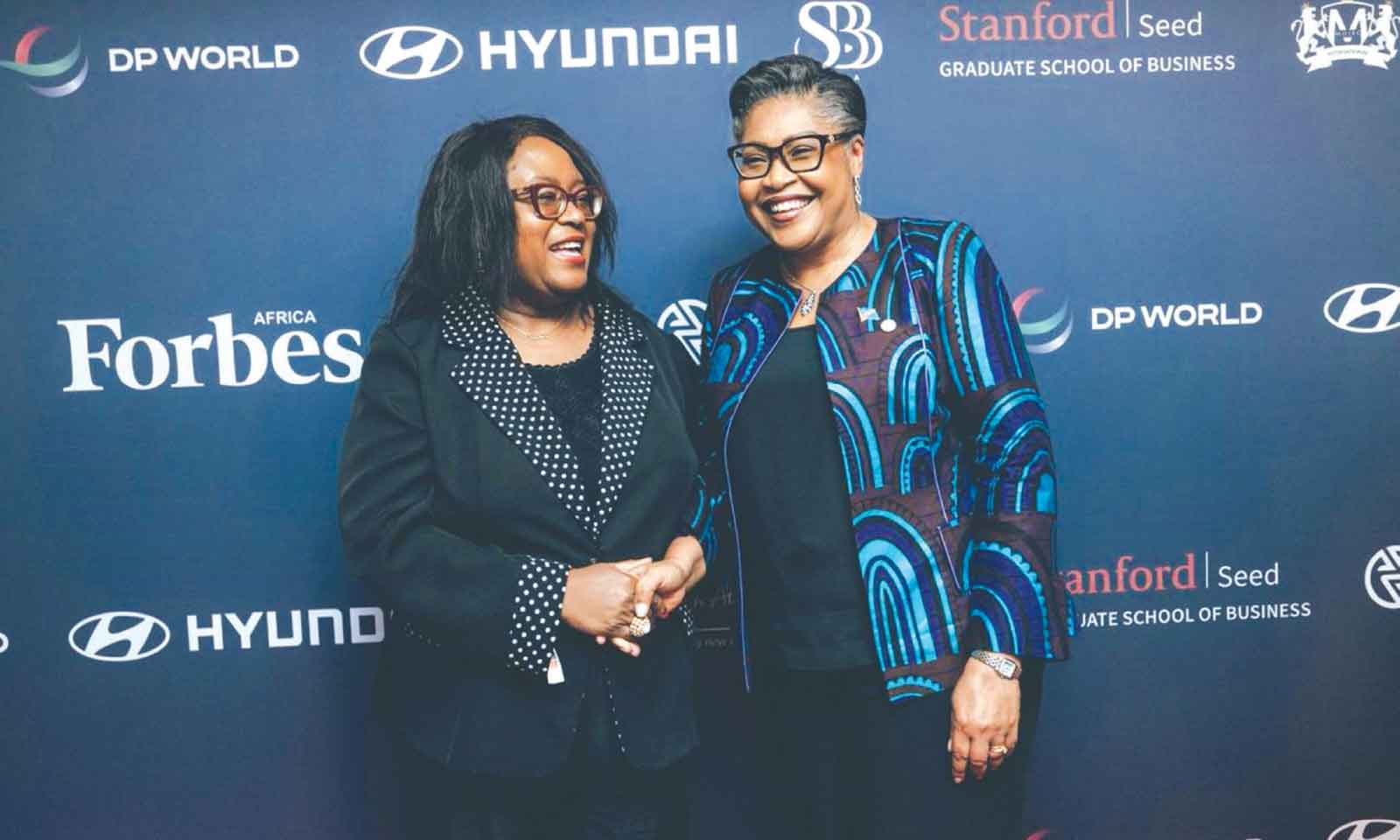
Victoria Ruzvidzo
Editor’s Brief
African women are not stopping at anything and have become more intentional and unapologetic about occupying more meaningful positions in the continent’s development trajectory.
They feel the continent will not progress much if half or even more than half the population is not actively engaged. Agenda 2063 and other development programmes may remain just good on paper unless women are in it and they have been asserting themselves more.
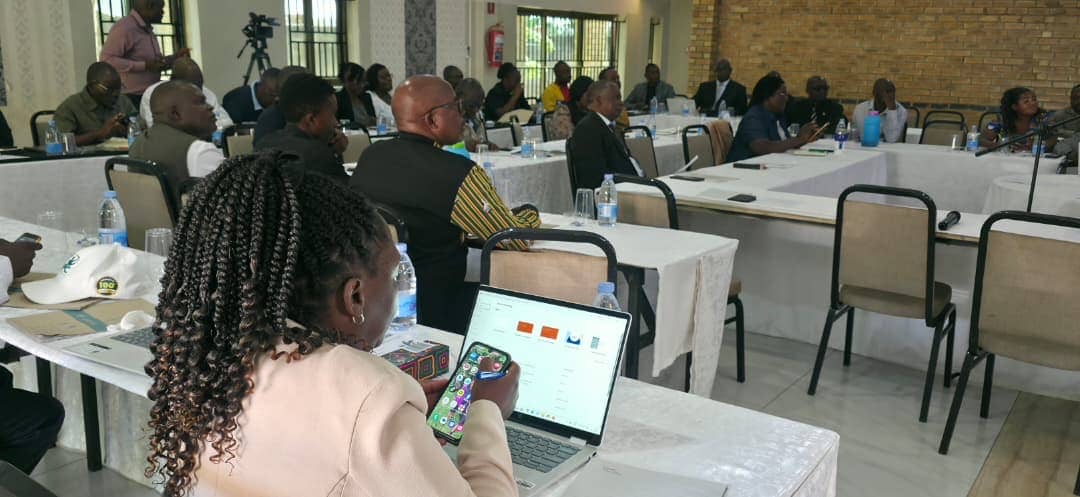
The mood and general vibe at the Forbes Africa Woman Leading Women Summit held in Johannesburg, South Africa, last week was telling. It was quite celebratory and instructive.
The 1 000-plus high level politicians, business executives, entrepreneurs and innovators were all in agreement that the time for mourning was over. Women are now going all the way to claim their rightful place. Not through confrontation but through establishing avenues and strategies that will produce results.
The summit was held in celebration of the Women’s Month under the theme “The Voice, Vision and Victories of Her Africa”.
It highlighted the power and resilience of African women as they shaped industries and redefined leadership across the continent.
Speakers, panellists and other delegates spoke of the progress made and the work that lies ahead.
In tandem with the theme, the summit celebrated the expanding influence of African women’s voices, visions and victories. More women now occupy influential positions across sectors.
The presence of former Ethiopian President Sahle-Work Zewde and the Democratic Republic of Congo Prime Minister Judith Suminwa Tuluka upped the tempo and was clear evidence that women are no longer in the periphery.
The dress code of suits and sneakers reflected the seriousness of the discussions in a day that made women in the room feel their worth. We all could not help but marvel at achievements so far and the possibilities that lie ahead.
There was a sprinkle of about 30 men at the summit. They too expressed joy and a sense of belonging.
“Victory by women is victory for all. Every ceiling shattered becomes a doorway for someone else. When women lead, organisations perform better. Women are truly rocks of resilience and strength,” said MacDonald’s South Africa chief executive, Mr Max Oliva.
Others said the increased involvement of women in development was a real game-changer.
“Africa is not becoming powerful. It is exercising its power,” quipped one panellist in reference to the benefits of having more women on board.
Her Excellency Zewde said in part; “it is a pleasure to stand before you today at this Forbes Africa Leading Women’s Summit. To be in a room with over one thousand of Africa’s most dynamic, brilliant, and determined women, and our allies, is to feel the very pulse of our continent’s future. I look around this room and I see leaders in business, in science, in art, in technology, and in their communities. I see the architects of a new Africa.
“And it is fitting that we meet in March. Across the world, March is a season of reflection and resolve.
“It is a month that begins with the International Women’s Day, a day of celebration, but also of, reckoning,” she said.
“This year, the United Nations chose a theme that cuts to the very heart of our gathering: ‘For ALL Women and Girls: Rights. Equality. Empowerment.’
“This theme is a declaration. It insists that our progress is not truly progress until it reaches the rural farmer, the urban entrepreneur, the displaced person, and the woman in the boardroom, to name a few. It is a call for rights that are not just written into law, but lived in reality,” said Her Excellency Zewde.
“For equality that is not just an aspiration, but a measurement. For empowerment that is not just given, but claimed.
“But as I prepared my remarks for today, I found myself grappling with a sobering truth.
“Here we are, in 2026, and the air around us feels different. It feels heavier. If we are honest, we must acknowledge that the great arc of progress for women’s rights, which many of us believed was bending inevitably toward justice, is facing powerful forces trying to bend it back,” she said.
“We are facing a paradox. On one hand, we see incredible individual achievement. We see women like yourselves, shattering glass ceilings and building your own path.
“On the other hand, when we look at the broader landscape, professionally, legally, and politically, we see that the very foundations of our rights are being systematically dismantled; such as challenges faced by CSOs working on women’s issues.
“It is as if for every step we take forward, a powerful current is trying to sweep us two steps back” said Her Excellency Zewde.
“Let us be clear-eyed about what is happening. Just last week, at the United Nations, the Commission on the Status of Women failed, for the first time, to adopt its annual declaration by consensus.
“The subject was a critical one: strengthening women’s access to justice. According to some reports some states sought to roll back decades of agreed language on gender equality. They tried to water down commitments. They tried to sow doubt on long-established principles.
“While an overwhelming majority of nations stood firm and protected the integrity of the outcome, the mere fact that this fight happened, was a stark warning. It is a signal that the global consensus on women’s rights, hard-won over generations, is no longer a given,” she said.
And this erosion is not just happening in distant multilateral halls. It is happening in plain sight, in the professional and international arena.
“One thing is clear, an attack on women’s rights is an attack on democracy. Look at the examples around the world. We see leaders who cloak their power grabs in the language of ‘traditional values’.
“They tell women that our primary role is in the home, not in the halls of power or the corner office. They pass laws that restrict our autonomy over our own bodies, our own healthcare, our own futures. In some nations, this has gone so far as barring girls from education, systematically excluding them from professional life from childhood.
“In other contexts, it is more subtle but equally destructive: the erasure of protections against workplace discrimination, the defunding of support services for survivors of violence, the silencing of feminist organisations, who are on the frontlines of this fight.
“They attack the very concept of ‘gender ideology’ to create a permission structure for inequality. They are not just attacking women’s rights; they are using us as a battleground to consolidate power, to limit freedoms for everyone” said Her Excellency Zewde.
“As a woman who has spent her career in public service mainly in diplomacy, I can tell you that when we see a government begin to systematically restrict the rights of women and girls, you are seeing the blueprint for authoritarianism. It is a test. If they can silence and control half the population, no one is safe.
“In the face of this daunting reality, what is our role? What can a room full of ‘leading women’ do when the tides of history seem to be turning? My answer is this: We must be more than leaders in our fields. We must be guardians of the future.
“And that starts with seeing ourselves, and each other, not as beneficiaries of progress, but as its fierce protectors and relentless drivers. You have been called role models,” she said.
“And yes, that is a title I accept with humility. But being a role model is not about being perfect, or unattainable. It is about being visible. It is about showing the next generation of African girls, the girl in Addis, in Johannesburg, in Dakar, in Tunis, that her dreams are valid. That a seat at the table, a voice in the conversation, a place in the Parliament is her birthright.
“I was deeply moved by a recent report from the United Nations, which detailed the horrifying reality for women human rights defenders in the eastern Democratic Republic of the Congo. It describes women who are doing nothing more than documenting abuses and supporting their communities, who are being systematically targeted by armed groups with unspeakable brutality, abduction, torture, and sexual violence.
“And yet, these women persist. They continue their work because they know that when they are silenced, the prospects for peace and justice grow ever more distant.
“This is the legacy of African women. We are the daughters of those who resisted. Our grandmothers and great-grandmothers fought colonialism, fought apartheid, fought patriarchal traditions disguised as culture. They did it with limited resources, with no platforms, and with everything to lose. We have no excuse.
“Our resistance in 2026 must take many forms. It means: Supporting, investing in, and protecting women human rights defenders and feminist organisations who are on the ground, doing the hard work that governments will not do. They are our first line of defence,” Her Excellency Zewde said.
“Using our platforms and our privilege to speak out, not just on women’s issues, but on all issues. Because there is no such thing as a “women’s issue” that is separate from the health of our economies, our democracies, or our planet. When democracy is under threat, it is our issue. When justice is denied, it is our issue.
“Mentoring and lifting as we climb. We must build networks of support so powerful and so wide that no woman has to navigate her professional journey alone. We must be intentional about bringing young women into the rooms where decisions are made.
“Refusing to be silent in the face of injustice, whether it is a colleague being passed over for promotion, a law being passed that restricts a woman’s autonomy, or a girl being denied an education.
“The fight for gender equality has never been a straight line. It has always been a struggle. But what makes this moment so critical is that the backlash we face is organised, it is global, and it is well-funded. It is targeting the very idea that women should have full agency over their lives,” she said.
“So, as you go through today’s Summit, as you network and learn and celebrate, I urge you to also strategise. Think about what you will take back to your companies, your communities, your countries.
“Think about how you will be part of the resistance to this regression. The month of March will soon end. The commemorations will fade. But the struggle for the rights, equality, and empowerment of all women and girls will not. It cannot.
“The clock is ticking. But I believe, with every fibre of my being, that the women in this room are the ones who will ensure that time is on our side. Which will be remembered not as the year we went backwards, but as the year we planted our feet, looked the backlash in the eye, and said: Not on our watch. Not on our continent.
“The support system a woman gets from another woman is fundamental. Let us all remember that,” ” said Her Excellency Zewde.
In a Question and Answer session, Her Excellency Suminwa Tulukwa said in part:
“Women are able to manage. They bring balance and a natural nurturing ability. When women are involved in the advancement of public policy, things move quicker. They remain focused and push the agents quickly for the benefit if all.
“Education, access to finance are barriers but lack of confidence in ourselves is a self-imposed barrier. It is also important to look for leaders who will push youths to the front. They can help us turn resources into commercially viable projects.”
Indeed it was a great meeting where many left more empowered and raring to go.
Africa will never be the same again!
In God I Trust!
X handle: @VictoriaRuzvid2; Email: [email protected]; [email protected]; WhatsApp number: 0772 129 972.