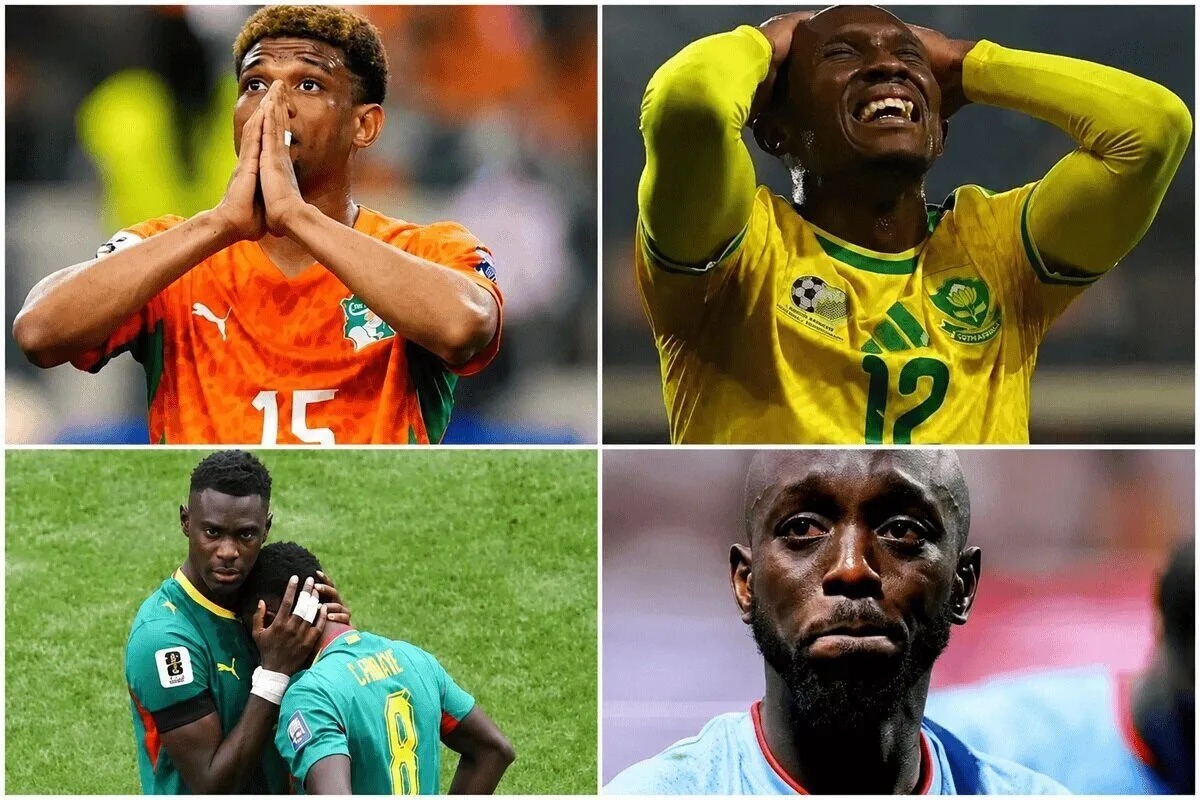
FOUR African nations saw their Fifa World Cup campaigns come to an agonising end after a series of late goals and dramatic comebacks dashed their hopes of reaching the Round of 16.
South Africa, Côte d’Ivoire, DR Congo and Senegal all produced spirited performances against formidable opponents and came within touching distance of progression. However, costly lapses, late drama and moments of individual brilliance from their opponents ultimately brought their journeys to a painful close.
For African football supporters, it was a bitter reminder of how fine the margins can be at the highest level of the game.
South Africa denied at the death
South Africa came heartbreakingly close to taking their tie against Canada into extra time before suffering a cruel late blow.
After battling bravely throughout the match, Bafana Bafana appeared set to force an additional 30 minutes. However, Canada snatched victory deep into stoppage time when Stephen Eustáquio found the back of the net to secure a dramatic 1-0 win.
The late strike shattered South African hopes and brought an end to what had been a spirited World Cup campaign.
Côte d’Ivoire fall to Haaland’s late strike
Côte d’Ivoire were also left devastated after Norway claimed a narrow 2-1 victory in a fiercely contested encounter.
The Ivorians showed great character to fight their way back into the match when Amad Diallo scored the equaliser, reigniting hopes of a place in the next round.
However, with extra time looming, Norway struck the decisive blow. Erling Haaland scored in the 86th minute, breaking Ivorian resistance and sending the Scandinavians through to the Round of 16.
England fight back against DR Congo
DR Congo looked on course for one of the biggest upsets of the tournament after taking the lead against England.
The Leopards produced a disciplined and courageous performance, frustrating their highly fancied opponents for long periods and raising hopes of a famous victory.
But England captain Harry Kane proved decisive when it mattered most. The striker scored twice late in the game to complete a dramatic turnaround and hand England a 2-1 victory, bringing the Congolese side’s impressive World Cup run to an end.
African giants Senegal let two-goal lead slip
Senegal endured arguably the most painful exit of all after surrendering a commanding lead against Belgium.
The Lions of Teranga made a dream start, racing into a 2-0 advantage and appearing firmly on course for a place in the next round.
Belgium, however, refused to give up. They struck twice in quick succession to level the contest before completing a remarkable comeback with a winning penalty in extra time.
For Senegal, it was a devastating ending to a match that had seemed within their grasp for long periods.
A familiar story for Africa
The exits of the four nations highlighted a recurring challenge for African teams at major international tournaments.
Against some of the world’s strongest sides, South Africa, Côte d’Ivoire, DR Congo and Senegal all demonstrated quality, resilience and tactical discipline. Yet in crucial moments, particularly during the closing stages of matches, they were unable to hold on.
Despite the disappointment, their performances reinforced the growing competitiveness of African football on the global stage. Each nation pushed higher-ranked opponents to the limit and showed that the gap between Africa and the traditional football powers continues to narrow.
While these four teams have bowed out, Morocco kept Africa’s hopes alive by securing their place in the Round of 16 after defeating the Netherlands on penalties.
The continent’s World Cup dream also remains in the hands of other representatives still in contention. Algeria, Egypt and Ghana will now carry Africa’s ambitions into their Round of 32 clashes against Switzerland, Australia and Colombia respectively.
Though the exits of South Africa, Côte d’Ivoire, DR Congo and Senegal will be remembered for their heartbreak, their performances also served as a reminder that African football continues to grow in strength, belief and competitiveness on the world stage. — The South African