Nothando Zondo, [email protected]
THE steady scraping of sandpaper against wood breaks the silence inside the carpentry workshop at Filabusi Satellite Prison. Bent over a wooden sculpture, 43-year-old Thompson Madzivire carefully smooths the curved horn of a kudu. Around him, other inmates work on furniture, carvings and household items, each focused on the task at hand.
For Madzivire, these are more than just pieces of wood. They represent purpose, hope and the possibility of a better future.
Serving a prison sentence for assault, he could easily have allowed his circumstances to define him. Instead, he has chosen a different path — one shaped by the same skill that once helped him build a life and support his family.
Inside the prison workshop, Madzivire has become known not for the crime that brought him there, but for the craftsmanship of his wood sculptures and his willingness to teach others.
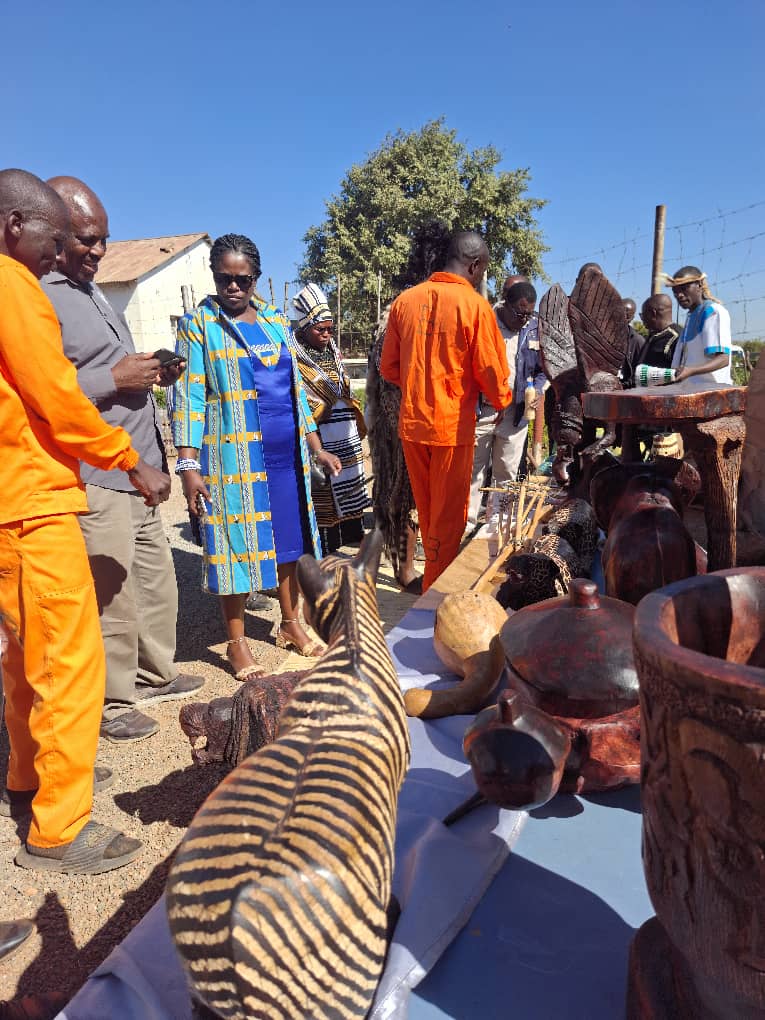
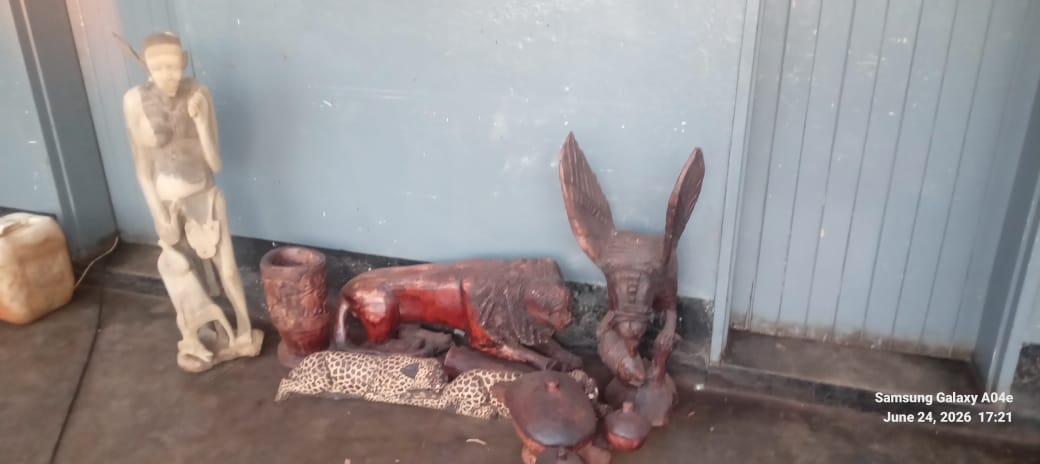
With little more than a chisel, sandpaper and patience, he transforms pieces of muwanga and teak into detailed works of art. Birds, elephants and human figures emerge from blocks of wood that many people would overlook.
The craft is not new to him.
Long before his imprisonment, Madzivire earned a living from wood carving in Victoria Falls, one of the country’s busiest tourism centres.
“I started working in Victoria Falls many years ago, where I sold my products. The company I was working for, which taught me these skills, later relocated to Harare,” he said during an interview inside the workshop.
The lessons he learnt there became the foundation of a business that would support him and his family for years.
After leaving formal employment, he continued producing sculptures independently while taking private orders from the same company. His work generated enough income for him to venture into other businesses.
“I had opened several shops in Nkankezi using money I earned from selling my sculptures,” he says. “I also ventured into mining.”
Like many Zimbabweans, Madzivire worked hard to create multiple income streams. The shops provided daily revenue while his sculpting business continued to bring in orders. Mining added another source of income.
For a time, things were going well.
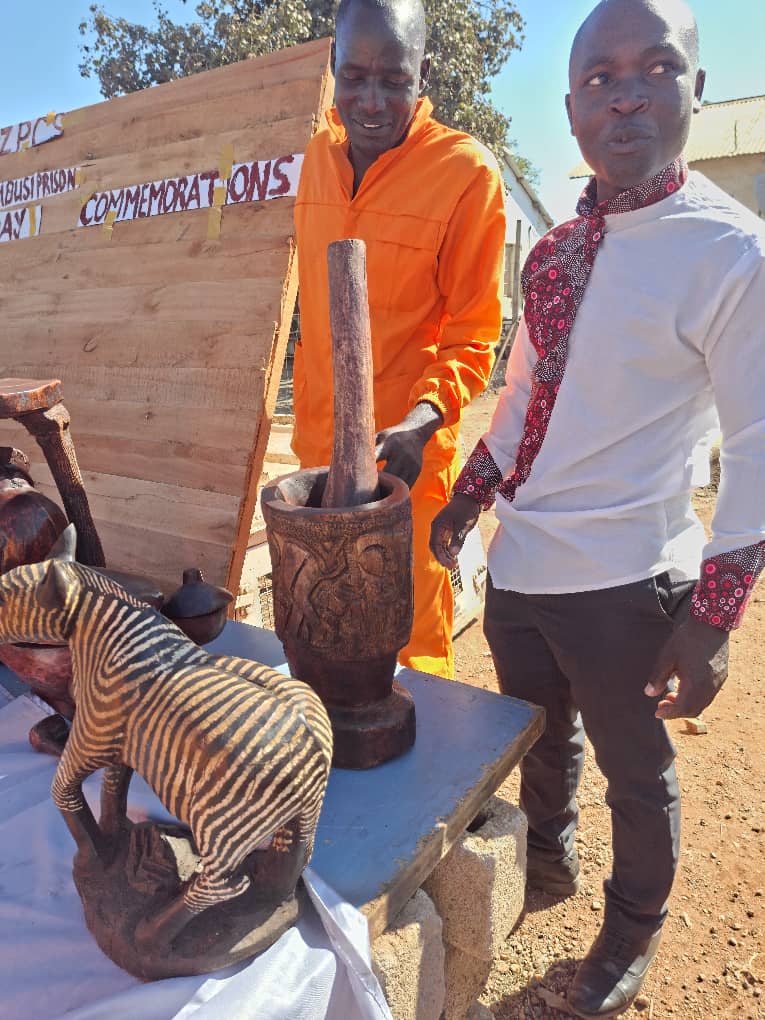
His art paid school fees, supported his family and helped him establish himself as a businessman in his community.
Then everything changed.
His conviction and subsequent imprisonment brought an abrupt end to the life he had built outside prison walls.
Today, while his businesses continue to operate under the management of family members, he worries about what may become of the investments he worked so hard to establish.
Madzivire admits the uncertainty weighs heavily on him.
“Some of my property may fall prey to opportunists because I am not there to watch,” he admits.
Yet rather than allowing those concerns to consume him, he decided early in his sentence that he would use his time productively.
That decision led him back to the skill he knows best.
Inside the prison workshop, he resumed carving. Before long, he was helping other inmates learn the trade.
Now, a small group of aspiring wood carvers regularly gathers around his workbench, eager to learn techniques he spent years mastering.
Among them is Nqobile Ndlovu, an inmate who had no previous experience with carving before arriving at Filabusi Satellite Prison.
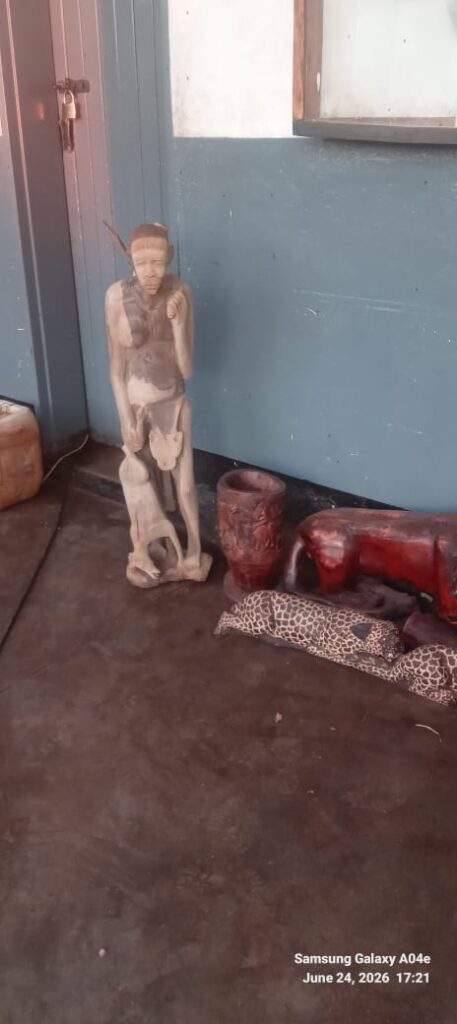
Today, he is working on his first sculpture.
“Mai, it is hard at first,” Ndlovu says, smiling as wood dust settles on his overalls. “But Sekuru Madzivire is patient. He shows you how to read the grain, how not to force the cut.”
The relationship between teacher and student has become one of the workshop’s greatest success stories.
While prison is often associated with punishment, rehabilitation remains a key part of the correctional system. Vocational training programmes are designed to equip inmates with practical skills they can use to earn a living after their release.
For Ndlovu, learning wood carving is not simply about passing time.
He already sees it as a pathway to a fresh start.
“When I get out, I want to make small carvings and sell them at roadside markets. At least I will have something to start with.”
Madzivire believes that sharing knowledge is as important as acquiring it.
“If I keep the knowledge to myself, it dies with me. If I share it, it lives,” he declared.
His approach reflects a broader effort by the Zimbabwe Prisons and Correctional Service to prepare inmates for life beyond prison.
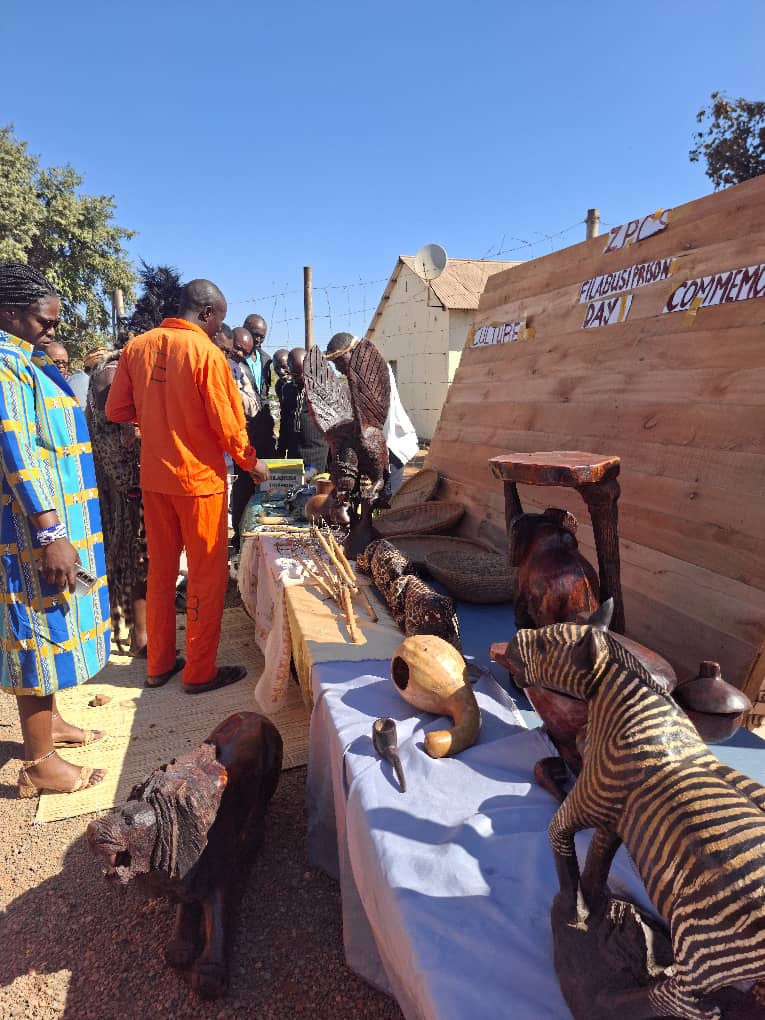
At Filabusi Satellite Prison, vocational training forms an important part of rehabilitation programmes aimed at reducing reoffending and helping former inmates reintegrate into society.
Correctional Officer Grade One Inspector Arnold Ndlovu said inmates are encouraged to learn practical skills that can support them once they complete their sentences.
“At Filabusi, we offer training in areas such as poultry production, horticulture and building, among other skills. We try to equip inmates with as many skills as possible so that they become responsible and productive members of society once they return to their communities.”
The workshop produces more than decorative sculptures.
Inmates also manufacture furniture, door frames and various household items, many of which are sold to generate income.
According to prison authorities, such projects not only develop skills but also help inmates understand the value of productive work.
Assistant Principal Correctional Officer (APCO) Lizwe Mpofu, the acting Officer-in-Charge, said proceeds from inmate projects assist with a range of needs, including helping inmates when they are released.
“That small support can be the difference between walking out with nothing, and walking out with bus fare, a meal, and a start,” said the APCO.
For communities across Matabeleland South, the importance of such programmes extends beyond the prison walls.
Skills such as wood carving have long been part of the region’s cultural and economic life. Artisans supply local markets, tourist destinations and businesses that depend on handcrafted products.
By continuing to practise and teach those skills, inmates like Madzivire are helping to preserve a tradition that has supported families for generations.
His favourite piece currently sitting in the workshop is a half-metre kudu sculpture.
Every detail has been carefully crafted, from the gently curved horns to the eyes made from darker wood.
The sculpture took three weeks to complete.
“Every sculpture is a symbol,” he says quietly. “Resilience. Redemption. Determination.”
Those words capture much of his journey.
Prison has not been easy. He misses his family and worries about the businesses he left behind. There are days when uncertainty about the future is difficult to ignore.
Yet the workshop gives him something valuable — purpose.
Asked what he plans to do once he regains his freedom, his answer comes without hesitation.
“I will go back to my art. I want to expand what I built before. More designs. Maybe train young people outside too. I do not want to start from zero.”
For prison officers, that ambition is exactly what rehabilitation is meant to achieve.
The goal is not simply to punish offenders but to prepare them for productive lives after incarceration. A person who leaves prison with practical skills and a clear plan for the future is better equipped to rebuild their life than one who leaves with nothing.
Back inside the workshop, the day’s work continues.
Wood shavings collect on the floor as tools tap gently against timber. Inmates exchange ideas, share jokes and focus on their projects.
Madzivire pauses to inspect a sculpture before returning to work.
Nearby, Ndlovu watches closely before repeating the same technique on his own carving.
It is a small moment, but one that says much about what is happening inside the workshop.
Beyond the prison walls and locked gates, people often see inmates only through the mistakes they have made. Inside the workshop, however, another story is unfolding — one of learning, mentorship and second chances.
For Thompson Madzivire, every sculpture tells a story.
And with each piece he carves, he hopes he is also shaping a better future for himself and for those learning alongside him.