daniel chigunwe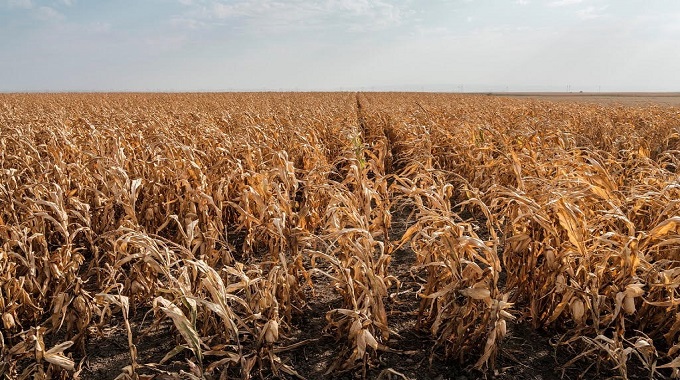
By Johnson Siamachira
“What shall we eat in November?”
This is what smallholder farmers wanted to know when journalists recently visited Goromonzi district in Zimbabwe’s Mashonaland East Province.
This year’s devastating region-wide El-Nino-induced drought has wiped out much of the maize crop, the country’s staple food.
What will the smallholder farmers eat in the next few months, until at least March 2025 when the first crops from the next season will be ready? They also face difficulties buying agricultural inputs like seeds, fertilizers, herbicides, and pesticides since their resources are depleted and their livestock has been sold or eaten.
“We never used to experience drought almost every year. Rains now come late in summer, and we have mid-season dry spells and short rain seasons,” said Fungai Chinamhora of Chinamhora communal lands in the district.
“It rains in patches. It’s also so erratic and unevenly distributed that we’re not sure when to plant. It’s now guess work,” she goes on.
Zimbabwe’s vital smallholder food producers face the risk of being overwhelmed by the pace and severity of climate change.
Smallholder farmers drive Zimbabwe’s agricultural economy, which in turn drives the country’s economic growth, providing employment to some 70 per cent of Zimbabwe’s 17 million people, and about 60 per cent of all raw materials for industry. About 45 per cent of the country’s exports are of agricultural origin.
Agricultural scientists have recommended growing resilient crop varieties such as traditional grains.
Chimanimani district smallholder farmer, Sarah Muzvuzvu says despite the drought, she has managed to harvest sorghum grain to take her family through to the next harvest season.
Although droughts mean that farmers in Zimbabwe will struggle to grow a crop in two of every five seasons, there is still a lack of comprehensive strategies to prepare smallholder farmers.
Will the current El Nino-induced drought act as a wake-up call to the authorities to rethink donor strategies and increase much needed funding for Zimbabwe? The country needs a more proactive, financially-protected approach to managing risks.
Enter the African Risk Capacity (ARC) disaster financing mechanism:
Zimbabwe is taking innovative steps to protect itself against the financial ravages of extreme weather events through ARC – an ambitious continental strategy designed to help African Union Member States plan, prepare and better respond to extreme weather events. When a severe drought strikes, the affected country can quickly access a pay out to fund emergency response, as opposed to relying on slow-moving, international aid.
Zimbabwe’s embrace of the ARC is part of a broader continental push to strengthen climate risk management.
Having joined the ARC in 2012, the insurance policy motivated Zimbabwe’s participation in the drought insurance risk pool for the 2019/20 agricultural season, where the country paid a premium of US$1 million towards the ARC drought insurance cover.
Incidentally, the drought experienced during the 2019/20 agricultural season triggered a payout amount of $1.4 million which was extended to the government, while the World Food Program replica policy received
US$290 000. Over 180,000 households in highly vulnerable districts benefited from this payout.
Since the 2019/20 agriculture season, the country has not looked back.
In collaboration with development partners, the government has been purchasing sovereign policies, complemented by Replica Policies from the World Food Program and Start Network.
The government has received an insurance pay out of US$16.8 million following its participation in the ARC Group disaster financing mechanism. The pay-out comes at a time when the country is facing severe food insecurity following a prolonged dry spell largely triggered by the prevailing El Niño conditions in Southern Africa.
Through the Replica programme, an initiative which allows humanitarian actors to purchase insurance policies on behalf of a country, Replica partners, the United Nations World Food Programme (WFP) and Start Network received pay-outs of US$6.1 million and US$8.9 million respectively. Zimbabwe, therefore, received a total pay-out of US$31.8 million.
According to Africa RiskView, ARC’s technical software for early warning and monitoring, over 4.7 million people were affected, triggering the pay-outs.
Speaking during the drought insurance pay out cheque ceremony in Harare, Prof. Mthuli Ncube, the Minister of Finance and Investment Promotion,
said: “This pay out ceremony marks a monumental occasion in our joint endeavours to mitigate the adverse impacts of climate change and solidify our nation’s resilience to this threat.” The payouts will help
509 000 vulnerable households in 27 districts. The goal is to reach and cover more people in the coming seasons.
The pay-outs, made by ARC Limited (ARC Ltd.), the insurance affiliate of the ARC Group responsible for risk pooling and transfer, will help the affected populations to recover from the failed 2023/2024 agricultural season. Insurance taken out with ARC Ltd avails predictable finance to facilitate response to disaster events.
“I commend the Government of Zimbabwe for their prudent decision to collaborate with the ARC Group to mitigate the impacts of drought in the country,” said Anthony Maruping, ARC Group chairperson.
“The impact of drought on the agricultural sector in Zimbabwe has been devastating,” said Ibrahima Cheikh Diong, UN Assistant Secretary General and ARC Group Director General. “The ARC Group stands with the Government of Zimbabwe that continues to demonstrate its willingness to strengthen its preparedness to respond to such catastrophes,” he continued.
“The ARC is helping shift the disaster management paradigm in Africa,”
said Diong. “Rather than responding to crises after the challenges, we’re giving countries the financial tools to plan ahead and build resilience.”
This forward-thinking approach is crucial, as climate change drives more frequent and severe droughts across the continent “Our goal is to make climate risk insurance the new normal across Africa,” says Diong. “We want every country to have the ability to protect itself and its people from the devastating impacts of extreme weather.”
For Zimbabwe, the ARC represents a bold step towards a resilient future.
As the country navigates an increasingly unpredictable future, the security of a drought insurance policy has become an indispensable safety net.
The ARC model has been a game changer for the country, the initiative has transformed the way Zimbabwe approaches disaster management.
It has allowed it to be proactive rather than reactive – to plan for the worst, while hoping for the best. This is the kind of innovation Africa needs to thrive in the face of climate change and variability. – New Ziana



 Online Reporter