peter
peter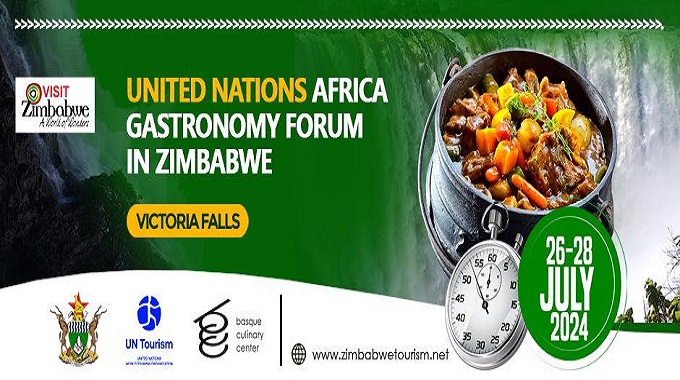
The inaugural United Nations Tourism Regional Forum on Gastronomy for Africa, which was held in Victoria Falls, Zimbabwe and ends today, marks an important milestone in the continent’s efforts to leverage its rich culinary heritage to drive sustainable development through tourism. Convened under the auspices of the UN World Tourism Organisation (UNWTO), this forum brought together Government officials, tourism industry leaders,and culinary experts from across Africa to share best practices and chart a path forward for promoting Africa’s diverse gastronomic offerings to the world.
Hosted under the patronage of the First Lady, Dr Auxillia Mnangagwa and co-organised with the Basque Culinary Centre, the forum was aimed at harnessing the transformative power of gastronomy tourism for the benefit of local communities and territories in the African continent.
The timing of this event could not be more opportune. As the global tourism industry rebounds from the upheaval of the Covid-19 pandemic, Africa is poised to capture a greater share of the lucrative food tourism market.
By some estimates, food tourism already accounts for over a quarter of all tourism spending worldwide and this figure is expected to grow in the coming years as travellers increasingly seek out authentic cultural experiences centred around local cuisines.
Africa, with its myriad of distinct regional culinary traditions, is uniquely positioned to capitalise on this trend. From the delicate flavours of North African tagines to the bold spices of West African jollof rice, the continent’s gastronomic repertoire is a vast untapped resource waiting to be discovered by the world’s epicurean adventurers.
The forum in Victoria Falls provides a vital platform to showcase this culinary diversity and develop strategies to market African food tourism on the global stage.
In his remarks at the forum’s opening ceremony, President Mnangagwa rightly emphasised the importance of leveraging gastronomy to drive economic growth and job creation, particularly in marginalised rural communities.
Food tourism has the potential to be a powerful engine of sustainable development, generating income for smallholder farmers, artisanal food producers and other local stakeholders while preserving indigenous culinary traditions.
With the right policies and investments, the dividends of this approach could be substantial. Consider the success of countries like Italy, Thailand and Peru, which have transformed their reputations as gastronomic powerhouses, attracting legions of food-focused travellers and catapulting their culinary entrepreneurs onto the global stage.
Africa, with its unparalleled bounty of fresh produce, unique flavours and storied cooking techniques, is poised to follow a similar trajectory.
Of course, realising this vision will require overcoming significant challenges. Infrastructure deficits, lack of access to financing and gaps in culinary training and tourism skills development have long hindered the growth of Africa’s food tourism sector.
The Victoria Falls forum provides a crucial opportunity for stakeholders to collectively address these barriers and chart a path forward.
One key priority should be fostering greater collaboration between the tourism and agriculture sectors. By forging stronger linkages between food producers, chefs and tour operators, Africa can ensure that food tourism revenues translate into tangible benefits for rural communities. Initiatives to promote farm-to-table supply chains, culinary heritage preservation and agritourism should be at the forefront of the forum’s agenda.
Equally important will be investments in human capital development. Equipping a new generation of African chefs, sommeliers and hospitality professionals with world-class skills will be essential to delivering the high-quality experiences that discerning food travellers demand.
The forum should explore innovative training programmes, apprenticeships and knowledge-sharing platforms to nurture this vital talent pipeline.
Ultimately, the success of the Victoria Falls forum will be measured not by the number of pronouncements, but by the concrete actions and collaborations it catalyses across the continent. If African nations can leverage this platform to forge a collective vision for food tourism development — one that is inclusive, sustainable and proudly African — the dividends could be transformative.
The world’s culinary adventurers are waiting; now is Africa’s moment to shine.



 Online Reporter