admin
admin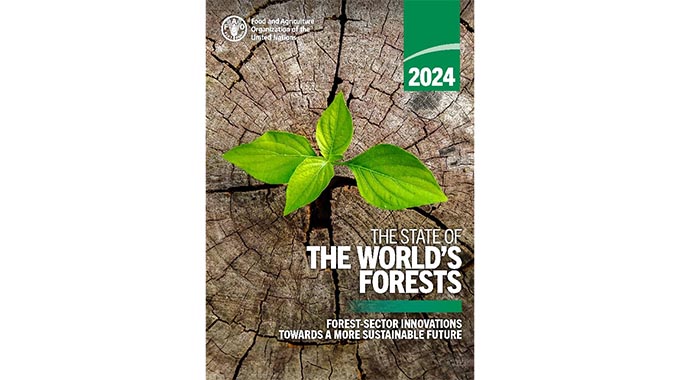
Sifelani Tsiko
Environment & Innovations Editor
Africa’s deforestation rate is slowing down but wildfires and pests still pose a huge threat to the continent’s forest due to climate change impacts, a new Food and Agriculture Organisation of the United Nations (FAO) publication shows.
The report, titled ‘The State of the World’s Forests’, provides a comprehensive analysis of global forest conditions and trends.
It highlighted a decline in deforestation rates in Africa and across the world, compared to previous decades showing marked improvements in the state of the forests.
The UN agency reported that deforestation rates fell from 15,8 million hectare per year between 1990 and 2002 to 10,2 million ha between 2015 and 2020.
Deforestation rates in Africa were 4,41 million ha, 2,95 million in South America and 2,24 million in Asia.
“Globally, the net rate of change in forest area, which is the difference between forest expansion and deforestation, is estimated at -4,7 million ha per year in 2010-2020,” the FAO reported.
“This was significantly lower than in the two previous decades (-7.8 million ha per year in 1990-2000 and -5.2 million ha per year in 2000-2010).”
The latest publication says there is evidence to suggest that climate change is making forests more vulnerable to stressors such as wildfires and pests.
Wildfire intensity and frequency are increasing, including in areas not previously affected, with fires in 2023 releasing an estimated 6,687 mega tonnes of carbon dioxide globally.
Wildfires were mainly driven by extended drought.
Climate change also makes forests more vulnerable to invasive species, with insects, pests and disease pathogens threatening tree growth and survival.
“FAO recognises that science and innovation are crucial ingredients for achieving forest-based solutions,” FAO director-general QU Dongyu wrote in the report.
“This edition of SOFO will inform FAO’s work to scale up evidence-based innovation in forestry. I believe it will also support FAO members and other stakeholders in enabling responsible, inclusive, and essential innovation in the forest sector to strengthen sustainability and the resilience of agri-food systems for a better world and a better future for all.”
The report identifies five innovation types that enhance forests’ potential to address global challenges, that is technological, social, policy, institutional, and financial.
FAO says enabling actions that will help scale up innovation in the forest sector include raising awareness, boosting innovation skills, capabilities, and knowledge, encouraging transformational partnerships, ensuring more and universally accessible finance for innovation, and providing an incentivising policy and regulatory environment.



 Online Reporter