

 Online Reporter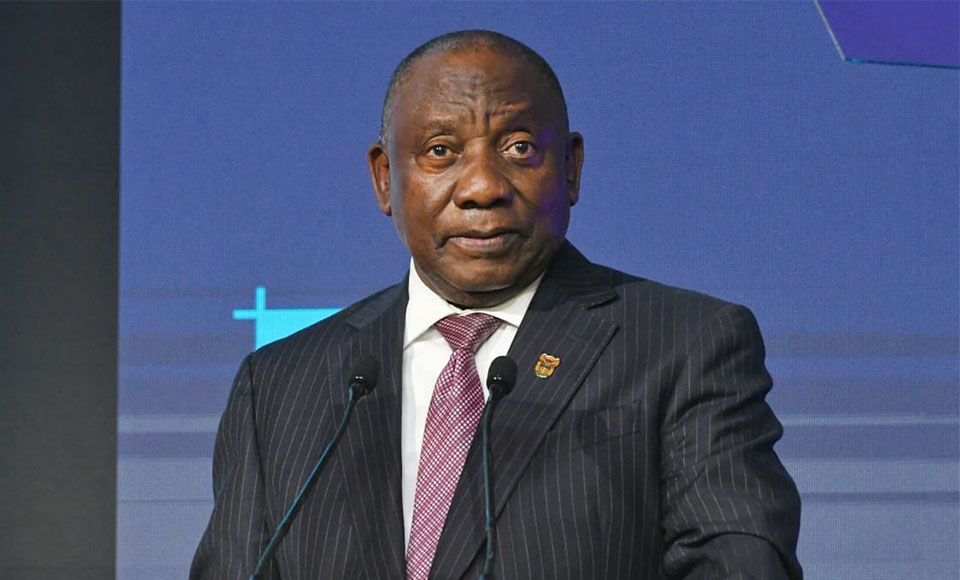
Zimpapers Politics Hub
South African President Cyril Ramaphosa has begun a state visit to the United States, where he is scheduled to meet President Donald Trump to ease diplomatic tensions sparked by Trump’s discredited claims of a genocide against white farmers.
The visit comes just days after the US welcomed a group of 59 white South African “refugees” who claim they were being persecuted because of race.
They flew to the US on a special relocation plan and will be allowed to settle there.
Diplomatic etiquette
Given the unconventional and unpredictability of President Trump’s recent engagements with other leaders (Volodymyr Zelensky and Canadian Prime Minister Mark Carney), this meeting is a litmus test for Ramaphosa, known for his diplomatic skills.
Although President Ramaphosa will be representing South Africa, he will also be carrying Africa’s burden. His response to Trump will set the tone for other African countries, who are facing the economic impact Trump’s tariff wars.
African countries that are part of the Africa Growth Opportunity Act (AGOA), will be watching the talks closely, as they may have to decide the future of the programme that has allowed goods from some African economies to access the US market duty free.
President Ramaphosa is not new to frosty and delicate engagements. He is highly regarded in South Africa as a shrewd operator able to balance measured aggression with diplomatic calm.
Once described by founding South African president Nelson Mandela as one of the most gifted leaders of his generation, President Ramaphosa played a crucial role in the negotiations that brought an end to apartheid in the early 1990s.
As a former trade unionist and anti-apartheid activist, President Ramaphosa needs to be at his best in engaging a leader wielding so much influence as a superpower.
Past clashes
The two countries have clashed on the white farmers’ genocide claim and on the Israel/Palestine conflict in which the South African government laid genocide charges against Israel on the Palestine people.
South Africa has had to fend off US allegations of supplying arms to Russia, claims that were later proven false. All these episodes have created tensions for two of most powerful countries on either side of the Equator.
While many believe that the issue of the alleged “white genocide” against white farmers will feature as a prominent agenda item, the South African President is well briefed to focus on various areas of mutual cooperation.
Business deal
While it’s given that President Ramaphosa will seek to counter the white genocide falsehoods with facts obtaining on the ground, he also understands the transactional nature of President Trump’s foreign policy. He will seek not to dwell on the bluster of the “white genocide” debacle, but seek to remind the US President of past glorious years of mutual economic cooperation.
There are strong indications that President Ramaphosa’s government has already worked on a comprehensive deal.
Reports from Business Day in South Africa suggest that transactions in the gas industry will be an agenda item for discussion. Gas fields run by Sasol in Mozambique are said to be running out and the supplies need to be replaced.
There is strong indication that the South African government is willing to sign a deal that would see US companies supplying gas and being allowed to explore possible gas reserves.
In recent times, energy either through oil, uranium or other products have become instruments of diplomacy and sources of political power. The gas deal would give the US the notion that it has long-term leverage on South Africa. This is exactly the kind of deal that Trump would appreciate.
President Ramaphosa indicated during the recent reburial of struggle icon Advocate Duma Nokwe that his focus would be on trade and bilateral relations.
“There is no genocide in South Africa. That is a fact that’s borne out of a lot of evidence. I am not worried about anything. We are going there to discuss trade and our bilateral relations and that’s what we are going to discuss. It’s a country to country and we trade with each other, so we have to relate to each other,” said President Ramaphosa.
President Ramaphosa is aware of the fact that the US is South Africa’s second-largest bilateral trading partner after China. Under AGOA, introduced in 2000, South Africa sells precious stones, steel products and cars to the US, and imports crude oil, aircrafts and electrical goods in return. The AGOA framework, which includes 32 African countries is up for renewal this year, but it’s unclear if President Trump’s administration will follow through with it.
Africa’s burden
With all the racial scapegoating coming from White House, President Ramaphosa might find himself in an unenviable position of representing all of Africa and her diaspora at this meeting. Other credentials that might play in President Ramaphosa’s favour is the fact that he currently heads the G20 grouping.
Representing 19 countries and the European Union and accounting approximately 80 percent of global GDP, 75 percent of global exports, and 60 percent of the global population, the G20 is a crucial platform that ensures that discussions reflect the interests of the world’s major economies. President Trump will most likely have a measure of respect for President Ramaphosa.
Despite having the upper-hand as the leader of the biggest economy and greatest military superpower, President Trump will not engage his counterpart as a weakling.
Unlike other leaders President Trump has engaged with (Volodymyr Zelensky and Canadian Prime Minister Mark Carney), which are largely dependent on the US, South Africa will still survive even if President Trump decides to take drastic measures on tariffs.
Africa is anxiously waiting to see if President Ramaphosa will go down in history as the black leader who stood up to “Big Brother” and laid the case for his country’s quest to eradicate lingering racism and establish an equitable society made up of people from diverse backgrounds and races.


