African players have long been among the most influential figures in world football. Wherever the game reaches its highest level, players with African roots are rarely far from the spotlight.
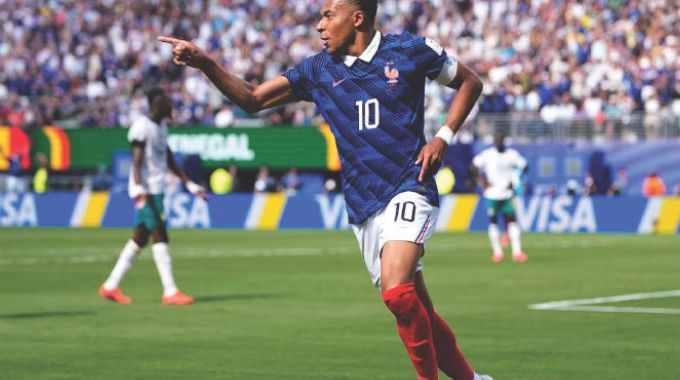
Few countries illustrate this reality better than France. The country’s football development model and sense of national identity are deeply linked to a colonial policy that sought to assimilate people from its overseas territories and colonies.
Unlike the British Empire and several other European powers, France pursued a policy of assimilation, aiming to transform colonised populations into French citizens with, at least in theory, equal rights under the mission civilisatrice.
The impact of that history has been visible on the football pitch for decades.
France’s 1998 World Cup-winning squad featured several stars with African and Caribbean heritage, including Marcel Desailly, Zinedine Zidane, Lilian Thuram and a young Thierry Henry.
Twenty years later, the trend was even more pronounced when France lifted a second World Cup trophy.
That squad included Adil Rami, Presnel Kimpembe, Raphaël Varane, Samuel Umtiti, Paul Pogba,
Benjamin Mendy, Blaise Matuidi, N’Golo Kanté, Steve Nzonzi, Nabil Fekir and emerging stars such as Ousmane Dembélé and Kylian Mbappé.
At that tournament, an estimated 78 percent of France’s squad came from families with roots outside mainland France. Ironically, while social media users jokingly dubbed the team “Africa FC” during its successful campaign, Africa endured one of its poorest World Cup performances since 1982, with no African nation progressing beyond the group stage.
Why African footballers choose foreign national teams
So what prevents more players of African heritage from representing African countries?
For some, the answer is simple. Many grow up in Europe, North America or elsewhere, immersed in the culture of the country where they were born and raised. Their connection to their ancestral homeland may remain strong, but their sense of identity is often shaped by the nation they call home.
For others, however, the decision is far more deliberate.
England and Manchester United midfielder Kobbie Mainoo was born in Stockport to Ghanaian parents.
Despite eligibility for Ghana, he opted to represent England, where he faces competition from players such as Jude Bellingham for a place in the starting line-up.
The decision disappointed Ghana Football Association president Kurt Okraku, who described it as
“unfortunate”, adding that “full-blooded Ghanaians should be representing their countries.”
While playing for a traditional European powerhouse offers prestige and greater visibility, representing an African nation can provide opportunities for regular football and a more central role within a national team.
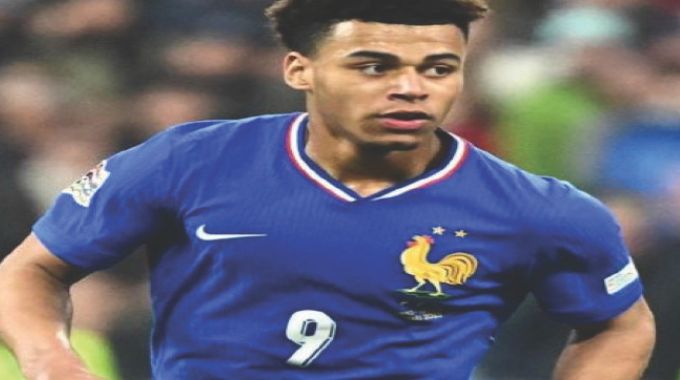
Current Golden Boy winner Désiré Doué is a good example. Already a two-time Champions League winner and one of Europe’s brightest attacking talents, Doué remains part of a highly competitive French national team setup where opportunities are limited. As a result, he often finds himself on the bench during international matches despite his immense quality.
By contrast, his older brother Guéla Doué, who plays for Strasbourg, is a key figure for Cote d’Ivoire. The right-back has become an important component of the national side, contributing in both defence and attack. He even scored and provided an assist during The Elephants’ memorable pre-tournament victory over France.
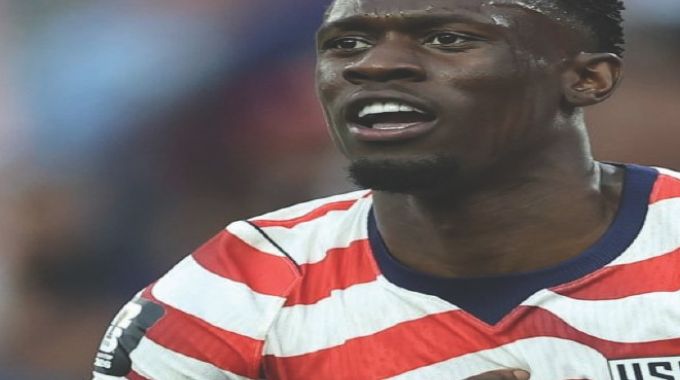
The case of United States striker Folarin Balogun is even more unusual.
Born to Nigerian parents and raised in London, Balogun spent 12 years in Arsenal’s academy and represented England throughout much of his youth career. Yet he ultimately chose to represent the United States.
His eligibility stemmed from an extraordinary circumstance. While pregnant, his mother was prevented from boarding a flight back to London following a holiday in New York because the airline considered her too close to giving birth. Balogun was subsequently born in New York and spent the first two months of his life there before the family returned to London, giving him American citizenship by birth.
African football’s lack of prestige
African football has historically struggled for the respect afforded to other regions of the game.
Even when players choose to represent their countries and establish themselves among the world’s elite, they are often discouraged by their clubs from participating in African competitions. In some cases, they face direct pressure to prioritise club commitments over international duty.
In 2022, the Senegalese Football Federation clashed with Premier League side Watford after accusing the club of refusing to release Ismaila Sarr for that year’s Africa Cup of Nations (Afcon) as the team battled relegation.
During the same year, Napoli owner Aurelio De Laurentiis publicly stated that he would not sign additional African players unless they agreed to waive participation in Afcon. The comments sparked widespread criticism, particularly given that Napoli captain Kalidou Koulibaly was simultaneously leading Senegal’s national team.
Choosing foreign national teams
The consequences of this institutional disregard are increasingly evident.
Players of African heritage often cite poor organisation, inadequate facilities, delayed payments and a lack of professionalism as reasons for distancing themselves from their national teams.
Several have rejected call-ups, switched allegiance or simply chosen alternative pathways.
The story of the Boateng brothers captures this contrast perfectly.
Jérôme Boateng is celebrated as one of Germany’s footballing greats and a World Cup winner. His brother, Kevin-Prince Boateng, represented Ghana but experienced a very different reality.
According to Kevin-Prince, he was pushed out of Ghana’s squad during a World Cup after demanding improved conditions and prompt payment for players.
When national team duty becomes associated with logistical confusion and administrative dysfunction, the attraction of representing a stable, well-resourced European football system becomes much stronger.
Conflict and displacement also play a major role.
Many footballers are the children of refugees who were forced to leave African nations because of war or political instability. Their allegiance often reflects the countries that gave their families safety and opportunity.
Examples include Bayern Munich star Alphonso Davies, who was born in Ghana to Liberian refugee parents and now captains Canada. Sweden internationals Alexander Isak and Taha Ali are the children of
Eritrean and Somali refugees respectively.
Australia has also embraced this trend. Players such as Nestory Irankunda, Mohamed Touré, Awer Mabil and Tete Yengi either arrived as refugees or were born to refugee parents.
A continent rich in football talent
The perception that African football is underdeveloped deserves closer examination.
Some of the Premier League’s greatest African stars emerged from academies on the continent. Yaya Touré, Kolo Touré, Didier Zokora, Emmanuel Eboué, Salomon Kalou and Didier Drogba all developed through the youth ranks of ASEC Mimosas in Abidjan.
Senegal’s golden generation provides another striking example.
Sadio Mané, Ismaila Sarr and Papiss Cissé all began their journeys at Dakar’s renowned Génération Foot
Academy. Idrissa Gueye developed through Diambars in Saly, a project closely associated with former France captain Patrick Vieira.
The Senegalese Football Federation has actively embraced local talent, both on and off the pitch. By prioritising homegrown coaches, administrators and players, the country has built one of Africa’s most successful football programmes and significantly improved its performances over the past decade.
African football needs good management and investment
The challenge facing African football is not a shortage of talent. It is a shortage of structures capable of maximising that talent.
What is needed is strong governance, better commercial expertise and long-term investment in player development.
Academies across the continent invest significant resources into nurturing young players, yet often receive limited financial benefit when those players achieve global success.
Fifa solidarity payments account for only 5 percent of a transfer fee and are distributed among all clubs involved in a player’s development between the ages of 12 and 23.
Had Dakar’s Génération Foot negotiated a substantial sell-on clause when Sadio Mané first moved to Europe, for example, it could have shared significantly in the value generated by his later transfers.
Unfortunately, many African academies lack the legal expertise and negotiating power required to secure such agreements when dealing with wealthier European clubs.
South Africa provides another example of the structural challenges facing the sport.
Football remains the country’s most popular game among the general public, yet institutional support has traditionally favoured rugby and cricket. Schools, scholarships and elite sporting structures often channel talented youngsters into those sports instead.
The contrast is striking. While Orlando Pirates and Kaizer Chiefs attract passionate support and fill stadiums during the famous Soweto Derby, South Africa’s national football team, Bafana Bafana, has often struggled internationally, while the Springboks and Proteas continue to compete among the world’s elite in rugby and cricket.
The South African example
When South Africa won the right to host the 2010 Fifa World Cup, critics predicted that the tournament would leave behind expensive white elephants and empty stadiums.
Those fears largely failed to materialise.
The Gautrain system developed for the tournament has become a vital transport link within Gauteng, creating jobs and improving mobility across the region.
World Cup stadiums have continued to host professional football and major events, providing clubs with consistent revenue streams that can be reinvested into player development and infrastructure.
The country’s Premier Soccer League has also grown in stature, attracting players from across Africa and beyond.
Although Bafana Bafana has taken time to re-establish itself on the global stage, South Africa’s presence at the 2025 Fifa Club World Cup through Caf Champions League winners Mamelodi Sundowns demonstrated the progress that can be achieved through planning and investment.
Sundowns have become a model African club, built largely around homegrown talent and a distinctive football identity.
Their famous “Shoeshine & Piano” philosophy combines elements of Spanish tiki-taka with the flair and creativity traditionally associated with South African street football.
The result is an entertaining, possession-based style built on quick passing, technical excellence and collective movement. Every player participates in attacking play, including the goalkeeper, who often acts as the starting point for moves.
The philosophy runs throughout the club, from the senior men’s side to the academy and women’s teams.
Charting the way forward
Africa’s problem has never been talent.
The continent has repeatedly proven its ability to produce world-class footballers. Academies in Dakar and Abidjan continue to develop players capable of thriving at the very highest level. Clubs such as
Mamelodi Sundowns have shown that a clear vision, supported by investment and competent leadership, can deliver success on the global stage.
The blueprint already exists.
What African football now requires is stronger legal, commercial and institutional infrastructure to match its enormous potential. Federations and clubs must treat players as valuable assets worth developing, protecting and retaining.
Footballers in the diaspora will continue making decisions that best serve their careers. The real question is whether African football can create an environment compelling enough to persuade more of its brightest talents to wear the colours of home. — African Business