

 admin
admin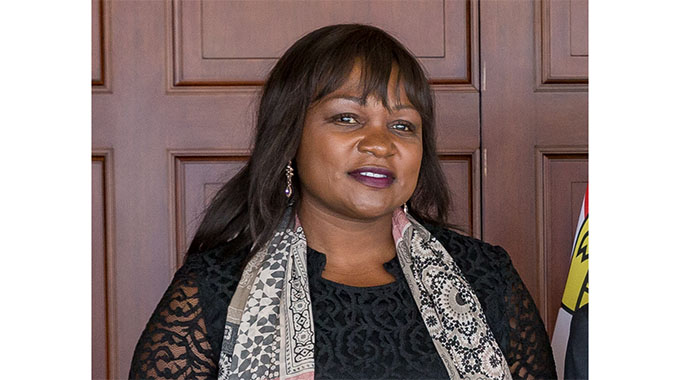
Fidelis Munyoro Chief Court Reporter
ALL 279 missing victims of Cyclone Idai in March 2019 will now be declared dead in terms of an order being sought from the High Court sitting in Mutare by Attorney General Mrs Virginia Mabiza who has mounted a class action on behalf of the affected families.
With all hope of ever recovering the bodies of those still listed as missing by the police fading, the class action allows families to acquire the death certificates they need for inheritance, to allow surviving parents and guardians to act without contest for minor children, and for survivors to carry on with their lives with the minimum of legal fuss.
While families can seek a similar court order to have a missing person presumed dead after five years, with a class action by the Attorney General, there are no legal fees for the survivors, which is critical considering that many of the affected families are poor.
Cyclone Idai struck the country in March 2019, affecting 270,000 people. The storm and subsequent flooding and landslides left at least 340 people dead and many others missing.
Major efforts to rescue the living and then recover the dead were made, but after four years the police still have those 279 listed as missing and their families now need closure.
Chimanimani and Chipinge districts were hardest hit.
The Attorney General has a number of functions in terms of the Constitution including to promote, protect and uphold the rule of law and defend the public interest.
As such Mrs Mabiza has in terms of Rule 57 (1) (a) as read with section (4) of the Class Actions Act and section (3) of the Missing Persons Act instituted a class action in the High Court at Mutare seeking an order to have 279 victims of Cyclone Idai who have been verified missing by the police to be declared dead.
This will enable the Registrar of Deaths and Births to legally issue death certificates and any other relevant documentation to the next of kin of the missing persons.
Typical challenges facing the families of the missing victims include: failure to obtain birth certificates for their children; failure to access pensions and other benefits of their missing relatives; and failure by the Civil Service Commission to fill vacant positions left by the missing persons, among others.
And it is for these reasons that the AG has seen it necessary and desirable in the public interest to institute the class action on behalf of the affected families. Legal experts hailed the AG’s class action as a good move considering that this would give the affected families closure and enable them to move on with their lives. They will also be able to utilise the normal rules of inheritance. A law expert, Mrs Sithembile Mpofu, said the class action suit instituted by the AG was a beneficial development as it will provide affected families with the opportunity to lay their loved ones to rest with the dignity they deserve.
“Cyclone Idai was a devastating event for the country as a whole and for the affected families in particular hence it was important that those directly affected find closure and are able to move on with their lives free from any legal impediments,” she said.
“Pending a successful outcome of the class action, families will have recourse to seek legal documentation confirming the deaths of their relatives, which documents will inevitably be required for future legal processes.”
Veteran lawyer Mr Obert Gutu described the class action as a good move saying it helps to bring closure to the families of the missing people.
In addition, he said, it would also assist the relevant Government departments to process whatever form of assistance that might be required to help the affected families settle down and continue with their lives as normally as was practically possible.
“If there are issues like insurance and pension payments, this will also be made much easier in that the missing people would have been legally presumed dead,” Mr Gutu said.
“Life has got to go on for the surviving members of the affected families and over and above this, there is also a need for Government and other relevant non-State actors to provide the necessary psychosocial support and other forms of interventions that will help the affected families move on.”
Another lawyer, Ms Nunudzayi Masunda, concurred adding that the problem with a catastrophic event like a cyclone is that people die and their remains may never be located.
She said the Missing Persons Act provides an avenue for a close relative to have their relative declared dead, if they have been missing for more than five years.
“If the AG does it, people who ordinarily cannot afford the process will be able to get the recourse they need without the need to incur expenses,” Ms Masunda said. “You must also remember the affected families are from very poor and marginalised communities.
“The Act provides for a process where if a person who is presumed dead turns out not to be dead they can have the presumption set aside.
“I guess the caveat you would put to the process is that the AG, if they obtain the order, should conscientise people and the families of those presumed dead on what they should do if the person shows up.”
Cyclone Idai killed at least 1 300 people in Zimbabwe, Mozambique and Malawi, while hundreds are still missing in all the three affected countries.



 Online Reporter