Online Reporter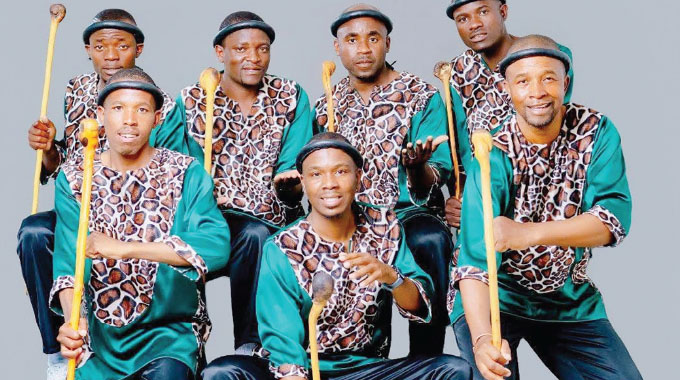
Langalakhe Mabena, [email protected]
WHEN Amaqaqa took to the stage at the recent Imbube Night concert during this year’s Bulawayo Arts Festival (BAF), they reminded audiences why they are widely regarded as the torchbearers of Zimbabwean Imbube music.
Sharing the stage with celebrated ensembles Indosakusa: The Morning Star, Udonsi LwabaPostoli and the legendary Black Umfolosi, Amaqaqa emerged as one of the standout acts of the evening, winning over audiences with their powerful harmonies, energetic choreography and authentic traditional sound. One of the night’s memorable moments came when Bulawayo Mayor Councillor David Coltart joined the group on stage during a performance of their popular song Juba Lakhwelimota, drawing loud cheers from the crowd.
Amaqaqa is one of the country’s most successful Imbube groups, boasting an award-winning catalogue and a growing regional footprint. Their recent collaboration with Baba Harare on the hit song Rese has further expanded their audience beyond traditional Imbube circles.
Yet behind the success lies a remarkable story of perseverance, faith and determination. At the centre of that journey is founder and lead vocalist Khulekani Mnkandla, affectionately known as Dlodloba Khabo.
Born in Filabusi, Matabeleland South, Mnkandla’s love for Imbube music was nurtured at an early age by his uncles, who were members of the group Ibutho Elingcwele between the late 1990s and 2005. Their eventual move to
Ugodlwayo Bright Stars exposed him to the richness of vocal harmony and traditional music performance.
“By 2004, I was already rooted in Imbube music, singing with groups such as Imvuselelo, Flaming Arrows, Ilinqe Elimnyama, Insika Yesizwe, Ibutho Likakhristu and Minana Brothers.
“However, the journey was not easy. Economic hardships caused group after group to disband, forcing us to start over repeatedly,” said Mnkandla.
His musical path later took him to Impumelelo Shining Stars, now known as Indosakusa: The Morning Star. Artistic differences eventually led him to part ways with the group in 2017 and relocate to South Africa, where he joined
Izinkanyezi ZeZulu. Although the experience sharpened his skills and broadened his understanding of the genre, Mnkandla felt destined for something bigger. This saw him return home.
“I returned to Zimbabwe with what I can only describe as a divine revelation. A voice guided me to start my own movement, something I could build from the ground up. That’s how Amaqaqa Music was born in 2018,” he said.
The birth of Amaqaqa was far from glamorous. Without a complete group, recording studio or financial backing,
Mnkandla relied on little more than his talent, determination and a mobile phone. Using the Walk Band multi-track recording application, he recorded songs by himself and sent them to Khulumani FM.
“I sent those recordings to Khulumani FM. Among the first songs people heard was Silindile Thina Ukukhala Kwecilongo. Many listeners were convinced it had been recorded by a full group, yet I had done everything on my own,” said Mnkandla.
As interest in the music grew, Mnkandla slowly assembled a team of singers who shared his vision. But before officially launching the group, he wanted to ensure its foundation was built on more than just music.
“When I finally found the right members, we spent three days in prayer and fasting at a mountain. We prayed over the future of the group and dedicated it to God.
“I strongly believe that divine encounter laid the foundation that continues to sustain and grow Amaqaqa today,” said Mnkandla.
The current line-up consists of Khulekani Khabo Mnkandla, Mohau Ncube, Stanley Moyo, Madodana Dlodlo, Njabulo Moyo, Mandla Sibanda, Welcome Maseko and Welile Maseko.
The name Amaqaqa translates to “those who climb mountains” in IsiNdebele, symbolising resilience, perseverance and the determination to overcome obstacles. The group’s emblem, a knobkerrie, was deliberately chosen to represent strength, heritage and victory.
Since its formation, Amaqaqa has released five albums — Ibhodo Elishisayo, Ezosinga, Ngicel’elinye Ithuba Baba, Insakavukela Umchilo Wesidwaba and their latest project, Inkemba: The Sword.
Their hard work has earned them a string of accolades, including a Roil Bulawayo Arts Award, two Zimbabwe Music
Awards, the Zimbabwe Community News Award and the Matabeleland Award for Best Imbube Group. Beyond the awards, the group has taken its music beyond Zimbabwe’s borders, performing in South Africa and Botswana while building a growing regional following and cementing its reputation as one of the country’s leading traditional music ensembles.