Online Reporter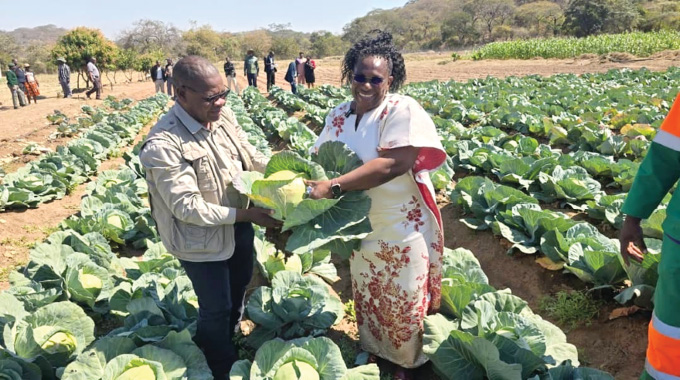
Sikhulekelani Moyo, Zimpapers Business Hub
IN a bid to drive rural development, the Ministry of Lands, Agriculture, Fisheries, Water and Rural Development, has launched an innovative initiative to attract investors, including diasporans, to establish village business units (VBUs).
Speaking during a recent visit to Joseph Village in Mwenezi, Masvingo Province, the ministry’s Permanent Secretary, Professor Obert Jiri, highlighted that there are vast opportunities available in rural areas.
Prof Jiri said Joseph Village was leading the way in rural development.
To facilitate investment, the ministry has established the Vision Incubator Model (VIAM) under the Agriculture and Rural Development Authority (Arda), which provides a safe and secure vehicle for investors.
“The Arda VIAM model will be listed on the Victoria Falls Stock Exchange and Dubai Stock Exchange, allowing investors to easily buy stock and participate in the agricultural space,” he said.
“Investing in rural development projects is set to become as simple as buying stock on the stock exchange.
“The ministry will soon roll out advertisements for parcels of land available in Village Business Units, Irrigation Scheme Units, and other land processed by Arda.”
“This innovative approach is expected to unlock the potential of rural areas and drive economic growth.”
Prof Jiri said that despite the country’s vast agricultural potential, rural areas lack the necessary investment to unlock their productivity.
“The ministry is calling on investors and diasporans to take advantage of the available land and labour in rural areas,” said Prof Jiri.
“By investing in Village Business Units, investors can tap into the local market, as well as aggregate to district, provincial and national markets.
“There is a guaranteed market for agricultural products, with big retailers like Pick n’ Pay and other major players already aggregating and procuring local products.”
Prof Jiri said there was also a growing appetite for Zimbabwean agricultural products in the Middle East, providing a lucrative export market for investors.
Meanwhile, Prof Jiri has applauded the efforts by Joseph Village in Ward 1 of Mwenezi District, saying that it was a shining example of rural development and agricultural resilience.
He said, despite being located in ecological Region Five, one of the driest areas in Zimbabwe with rainfall less than 400mm, the village has defied the odds and become a thriving agricultural hub.
Prof Jiri toured the village’s agricultural projects spearheaded by the Mboweni family and highlighted the remarkable transformation that has taken place.
“The village’s success story is built on the back of innovative agricultural practices and community-led initiatives,” stated Mrs Mboweni.
The sandy soils, once depleted of nutrients, have been revitalised through concerted efforts by farmers and the community.
Prof Jiri said today, crops such as tomatoes, peppers, cabbage, onions, and green mealies were being grown in abundance, and livestock products were also being produced, adding that the transformation was a testament to the resilience of the agricultural sector and the determination of the farmers.
“The success of Joseph Village is a model for climate-resilient agriculture that can be replicated in other dry areas,” he said.
“The Government’s focus on household food security through the Pfumvudza/Intwasa program has been instrumental in ensuring food security at the household level.
“Additionally, the national irrigation program has enhanced food security, allowing communities to diversify their crops and improve nutrition.”
The village’s success has also led to the establishment of VBUs, which have enhanced nutrition, diversity and access to food.
This has enabled the community to become industrialised and empowered, driving economic development in the area.
The concept of rural development and rural industrialisation is becoming a reality, and Joseph Village is at the forefront of this transformation.
Prof Jiri stated that the transformation of Joseph Village is a testament to the Government’s commitment to realising Vision 2030.
He went on to highlight that as Zimbabwe continues to adapt to climate change, the success of villages like Joseph will serve as a beacon of hope, demonstrating the potential for rural development and economic growth in even the most challenging environments.