Online Reporter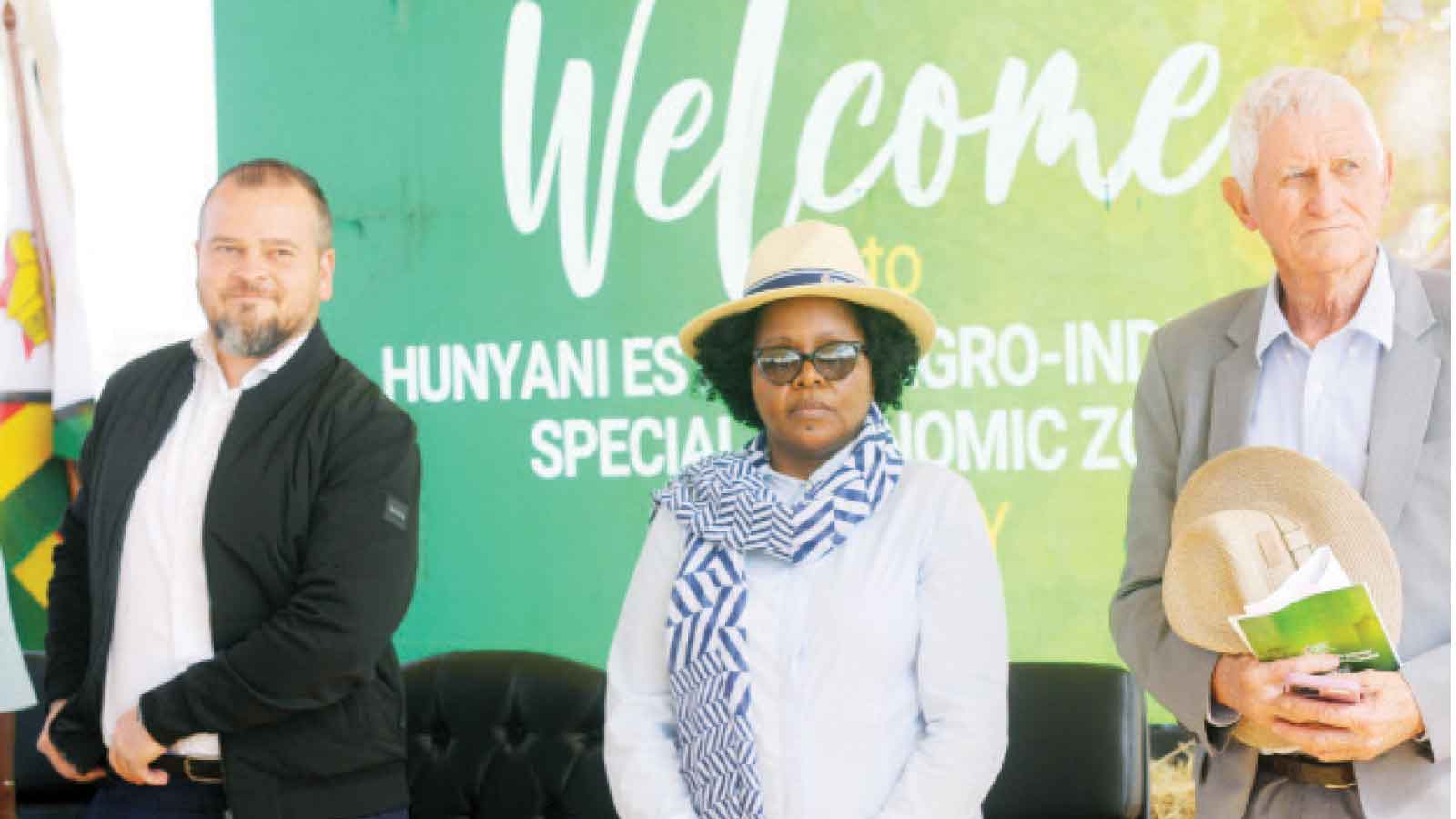
Takunda Gambiza
Herald Reporter
GOVERNMENT is working to identify agriculture-based Special Economic Zones in every province as part of a strategy to accelerate value addition, attract investment and expand agro-processing.
The initiative is geared to transform Zimbabwe from a net importer of agricultural produce into a major exporter.
Lands and Rural Development Minister Vangelis Haritatos said the initiative was being undertaken in collaboration with the Ministry of Finance, Economic Development and Investment Promotion and the Zimbabwe Investment and Development Agency (ZIDA) to ensure every province developed agro-industrial hubs aligned to its economic potential and the country’s long-term development plans.
Speaking at the Hunyani Agro-Industrial Special Economic Zone Field Day held last Friday, Minister Haritatos said Government wanted SEZs that reflected each province’s comparative advantages while supporting industrialisation and export-led growth.
“We want every province to have Special Economic Zones that make economic sense and fit into the country’s long-term development master plan.
“The number of zones will ultimately be determined by investor demand,” he said.
A Special Economic Zone is a designated area where investors benefit from incentives such as streamlined regulations, improved infrastructure and investment facilitation to encourage industrial development, exports and job creation.
In agriculture, SEZs are designed to bring processing industries closer to production areas, allowing raw agricultural commodities to be processed locally before reaching domestic or international markets, thereby increasing value addition and foreign currency earnings.
Minister Haritatos said the Hunyani Agro-Industrial Special Economic Zone represented a shift from traditional supply-driven farming to a demand-led production model in which processing industries create reliable markets for farmers.
“Special Economic Zones bring factories, value addition and beneficiation closer to production areas.
“Instead of farmers producing without guaranteed markets, these hubs create demand for agricultural products, while opening opportunities in logistics, cold chain facilities, infrastructure development and processing,” he said.
He said Zimbabwe’s agricultural land remained finite despite receiving between 250 000 and 260 000 applications from prospective farmers, making investment throughout the agricultural value chain essential to maximise productivity and economic returns.
The minister also assured farmers that Government’s priority was productive land utilisation, saying land would only be repossessed where it remained idle or was required for projects of national importance.
“Our priority is productive land. If farmers are utilising their land responsibly and practicing proper soil conservation, there is no reason for Government to downsize or repossess it. We want Zimbabwe to move from being a net importer of agricultural produce to becoming a strong net exporter,” he said.
ZIDA chief investment promotion officer Ms Silibaziso Chizwina said the 2 600-hectare Hunyani Agro-Industrial Special Economic Zone, which was designated in October last year, is expected to become a model investment hub integrating commercial agriculture, agro-processing industries and supporting infrastructure.
She said the project would be implemented over a 72-month period and would attract both domestic and international investors.
“As an agency, we have already received expressions of interest from potential investors and will facilitate engagements with the developers.
“Our vision is for this to become a model Special Economic Zone showcasing efficient investment services, customs systems and agro-industrial development,” she said.
Ms Chizwina said an estimated US$201 million would be required to develop the core infrastructure for the zone, with additional capital expected from investors establishing businesses within the SEZ.
Owner of Hunyani Farm, Mr Peter Drummond, said converting part of the property into a Special Economic Zone would unlock long-term investment opportunities that had previously been difficult to finance through conventional lending.
He said the project would initially cover about 200 hectares and include investments in solar power generation, blueberry production, dairy farming and other export-oriented agricultural enterprises before expanding in phases.
Mr Drummond said existing farming operations would continue while the development created new opportunities for investment, employment and economic growth in the district.