

 daniel chigunwe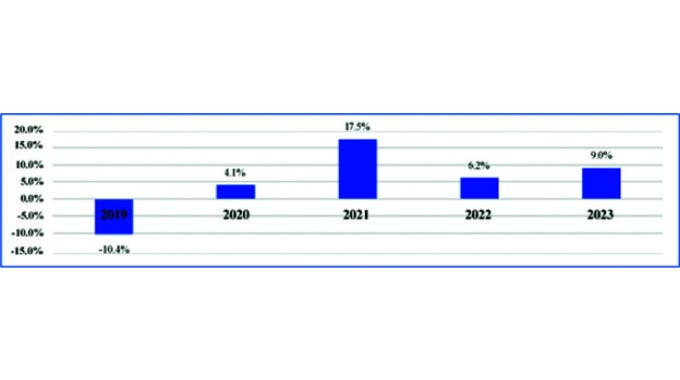
Since the advent of the Second Republic, President Mnangagwa’s Government has implemented a number of interventions to transform the country’s agriculture sector.
The Herald has been serialising the Agriculture, Food Systems and Rural Transformation Strategy 2023-2025 every Thursday for the benefit of our readers.
Continued from last week.
***
Government undertook institutional and regulatory reforms to produce a fit- for-purpose support system to accelerate agricultural rural transformation.
A new ministry structure, with strong decentralisation, was approved and the requisite skills were identified and recruited. Capacitation of institutions was prioritised and staff development enhanced.
The necessary legislative reviews to support market transformation were undertaken. The structured liberalisation of markets, and operationalisation of the warehouse receipt system and establishment of the commodity exchange provided confidence for additional investments by various stakeholders.
The Government’s “Open for Business” mantra saw the increase in development partner and private sector support for agriculture. A strong public–private sector coordination framework with regular stakeholder feedback, provided the additional oversight and direction and invigorated the transformation of the sector.
PERFORMANCE REVIEW: 2020 – 2023
Agriculture Growth and Contribution to the Economy
Agriculture Gross Domestic Product (GDP) grew from US$5,62 billion in 2020 to 8,5 billion (76,8 percent growth) in 2022, surpassing the US$8,2 billion targeted in 2025. Agricultural GDP growth was therefore strong, averaging 8,5 percent annually.
Agriculture has positive multiplier effects, providing raw materials for manufacturing, raising the contribution of agriculture and agriculture-related value chains to national GDP to 19,9 percent.
The key drivers of agriculture GDP growth were tobacco (19 percent), maize (14 percent), cotton (12 percent) and beef (9 percent). Sugarcane, poultry, horticulture and wheat accounted for over 25 percent, while other enterprises accounted for the remaining 23 percent.
The gross value projections clearly show major growth in cereals, including, maize, traditional grains and wheat. Wheat and tobacco production reached new production peaks in 2022 and 2023, respectively.
In terms of employment, the agriculture, forestry and fisheries sector is the biggest employer in the country. Activities such as water, food services, and agriculture-based manufacturing increase employment of the sector through horizontal and vertical linkages to 30 percent. Employment in agriculture increased from 21,7 percent in 2019 to 24,9 percent in 2023 (ZIMSTATS 2023).
Food Security for an Increasing Population
Zimbabwe’s population of 15,1 million is growing at 1,9 percent per annum (ZimStats, 2022). The Agriculture Recovery Plan focused on cereals and soyabean production, with emphasis on capacitating institutions, increasing affordable financing, and accelerating climate-proofing (through irrigation development and Pfumvudza/Intwasa schemes) and accelerating mechanisation development, while undertaking sector-wide market reforms. Based on the ZIMVAC 2023 report, the proportion of the population requiring free food distribution during the peak hunger period of January-March has declined significantly, pointing to a better food security situation for the country.
Production and Productivity Trends
Cereals and Tubers
The increased focus on climate-proofing cereal production and timeous provision of inputs for the Pfumvudza/Intwasa scheme resulted in increased maize and traditional grains production. National maize yields increased from 0,7 tonnes/ha in 2020 to 1,4 tonnes/ha in 2021. The drought experienced during the 2021/22 season only reduced maize yield to 1,17 tonnes/ha, reflecting the significant improvement in resilience building as a result of the adoption of sustainable intensive conservation agriculture principles (Pfumvudza/Intwasa).
Sorghum production increased from 144 633tonnes in 2021/22 to 191 125 tonnes in the 2022/23 season. This stellar cereal production trend led to self-sufficiency, as the country’s production (annual and stock) surpassed its annual national cereals requirement of 2,2 million tonnes for both human (1,8 million tonnes) and livestock consumption (400 000 tonnes).
Government reviewed the policy on the physical strategic grain reserve, in view of climate and other idiosyncratic shocks, from 750 000 tonnes to 1,75 million tonnes (maize 1,2 million tonnes and traditional grains 300 000 tonnes, wheat 250 000 tonnes). This has necessitated the expansion of infrastructure and logistics at the Grain Marketing Board, from 75 000 tonnes to 1,025 million tonnes silo capacity. Private sector long-term storage capacity is estimated at 500 000 tonnes. Additionally, to enhance food security at a local level, village storage systems such as metal silos, are being developed. Attention has also been given to loss reduction during harvesting and post–harvest (sometimes as high as 20 percent for maize). Government introduced a grain protectant support scheme for each household in 2022. Transition losses between seasons (summer to winter, and winter to summer) can be substantial. Public and private sector investments in drying capacity are being revamped.
There has been an increase in the consumption of Irish potatoes and rice, especially among youths. Consequently, a potato value-chain financing facility was introduced in 2021, following the declaration of potato as a strategic food crop in 2021, alongside maize, wheat, and other crops. Production is increasing annually in response to demand, and Zimbabwe has become self-sufficient in both table and crisping potato production.
Sadly, Zimbabwe produces only about 600 tonnes of rice annually against an estimated annual consumption of 100 000 tonnes, costing the country US$ 150 million annually. Increased production of rice using the New Rice for Africa (NERICA) varieties and development partner support are envisaged to progressively close the demand and supply gaps in the medium to long term.
Sweet potato production is estimated at 276 784 tonnes, a 33 percent increase from 207 529 tonnes produced in the 2021/2022 season. This increased production is attributable to the virus-free vine distribution scheme under the Rural Development 8.0.
Zimbabwe achieved a record wheat production of 375 131 tonnes in 2022 and 465 000 tonnes in 2023, surpassing its previous production record of 324 000 tonnes achieved in 1999. The annual national requirement is 360 000 tonnes for soft wheat. Government promulgated a policy to establish a strategic wheat reserve of 250 000 tonnes.
Oilseeds
Zimbabwe imports US$300 million worth of predominantly sunflower and soyabean oils annually. Government declared cotton and sunflower strategic oilseeds crops in 2021 and reclassified soyabean as a “feed and oilseed crop’’, from an “oilseed crop”.
Arising from this policy, soyabean national annual requirement reduced from 600 00 tonnes to 240 000 tonnes, reducing the land requirement from 240 000ha to 90 000 ha annually.
Soyabean production increased from 47 088 tonnes in 2020/21 to over 101 086 tonnes in 2022/23 (114 percent growth), driven by a bigger area under production and higher yield. Soya bean production is currently at 42,5 percent of national requirement, necessitating imports of 250 000 tonnes as soya meal and soya bean, at a cost of US$200 million, annually.
Cotton production and productivity
Cotton production is on a rebound following the introduction of a Government input support in the 2015/2016 season, but production still fluctuates in response to season quality, highlighting the need to intensify climate–proofing interventions. In 2021 Government introduced the intensive conservation agriculture cotton production (Pfumvudza/Intwasa) under the Productive Social Investment Model. This led to an increase in production volumes to 90 million kg in 2022/23.
However, as Zimbabwe still imports upwards of US$300 million worth of oils annually, urgent increased local production of both cotton and sunflower is required.
Sunflower production of between 150 000 tonnes to 175 000 tonnes is required annually to meet local oil seeds demand. For cotton peak production was over 350 000 tonnes and this should be the target by 2025.
Robust growth-oriented interventions for the two crops focus on the small holder sector. The use of locally-adapted varieties of sunflower of adequate quantities is required. Rural industrialisation through the processing of sunflower into oil and feed at source is being encouraged.
The cotton plan focusses on contract-farming, farmer viability, timely payments, deployment of best management practices, elimination of side-marketing, improved selections of OPV varieties, use of hybrids and screening suitable genetically modified material.
The main challenge in cotton production includes side-marketing and ensuring that farmers who receive inputs under the Government programme, use these for cotton production. In 2022/2023, only 37 percent of farmers who received inputs delivered cotton.
Efforts to enhance value addition and beneficiation are also being strengthened, through the establishment of oils and feed processing plants, and the resuscitation and expansion of spinning and weaving and cloth-making factories.
Both sunflower and cotton are important drought-tolerant crops for rural agro-industrialisation, and mainstreaming the rural population into the economy.
To be continued next week.



 Peter Tanyanyiwa
 Online Reporter