


 admin
admin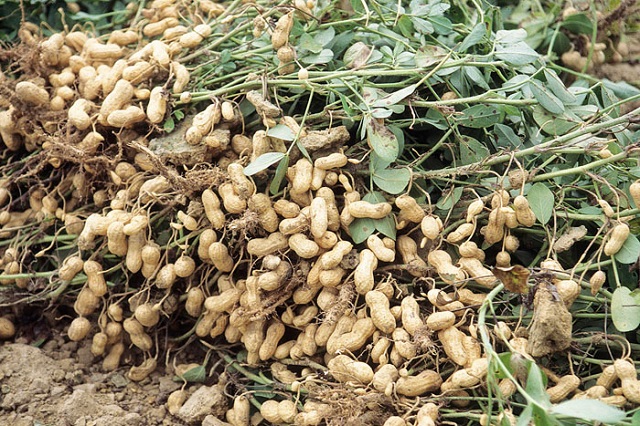
Dumisani Nsingo, Senior Farming Reporter
THE Department of Agricultural Technical and Extension Services (Agritex) has said it intends to promote increased production of groundnuts in Matabeleland North Province, following the success of a small grain seed multiplication programme in Tsholotsho and Hwange districts.
Agritex Matabeleland North provincial chief officer Mr Dumisani Nyoni said the department was working towards encouraging farmers in the province to crop small grains as it has been proven that they were suited for the conditions in most parts of the province.
“When we talk about food security nutrition cereals tend to play a very important role in this part of the country and going forward with the climate change crops such as pearl millet and sorghum will be ideal in this region. Of course finger millet is also cropped but it’s in small quantities,” said Mr Nyoni.
In an effort to increase small grains seed availability, Agritex and the International Crops Research Institute for the Semi-Arid Tropics (Icrisat) embarked on small grain seeds multiplication programme in Tsholotsho and Hwange two years ago.
“Our thrust for the 2016/17 season is to strengthen production of small grains following a programme we were doing in Tsholotsho and Hwange. We conducted a seed multiplication programme to improve the availability of groundnut seed.
“If you go to virtually all the seed houses you will realise that there are no groundnut seeds. The seed houses claim that groundnut seeds are very fragile thus they tend to crack when moving them and once they crack they won’t germinate,” said Mr Nyoni.
The two organisations (Agritex and Icrisat) distribute the small grains realised under the multiplication programme to farmers across the province in an effort to increase their production.
Icrisat is a non-profit, organisation that conducts agricultural research for development in the drylands of Asia and sub-Saharan Africa.
“At household level we need a source of protein thus we encouraged growing of cow peas which can also be sold to generate income while groundnuts have a scope of value addition in the production of peanut butter. The groundnuts which are grown in this region are low in terms of alpha toxin.
“If you are to export groundnuts they should be free of alpha toxin. We are looking at coming up with the best varieties of groundnuts. The best variety should be the one which gives us good stover in line with our thrust of integrated livestock and crop integrated systems,” said Mr Nyoni.
Alpha-toxin refers to several different protein toxins produced by bacteria.



 Online Reporter