Online Reporter
Patrick Chitumba [email protected]
ZIMBABWE’S efforts to strengthen food security and build strategic grain reserves have received a significant boost with the commissioning of the country’s first artificial intelligence-powered grain silos at the Grain Marketing Board (GMB) depot in Kwekwe.
The 56 000-tonne facility, commissioned by President Mnangagwa last year, is already receiving maize and wheat deliveries from farmers across Midlands Province and is expected to play a pivotal role in protecting national grain stocks from drought and other climate-related challenges.
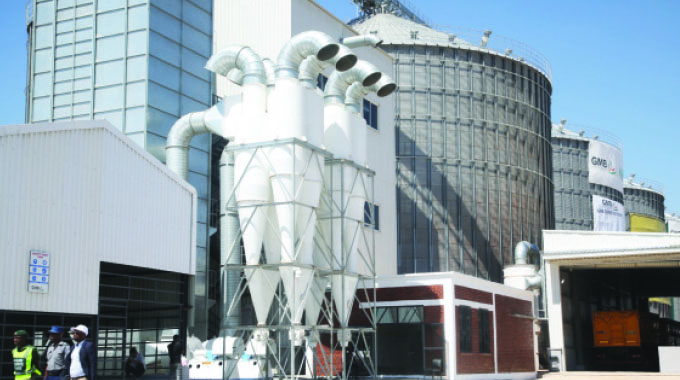
Equipped with seven state-of-the-art silos, the facility uses automated technology to monitor temperature and moisture levels and manage fumigation processes. The system allows grain to be stored safely for extended periods while minimising post-harvest losses and preserving quality.
Midlands provincial director for agricultural engineering, mechanisation and farm infrastructure development in the Ministry of Agriculture, Mechanisation and Water Resources Development,
Engineer Andrew Mupariwa, said the facility marked a major advancement in grain storage and management.
“The automated temperature, moisture and fumigation systems allow grain to be safely preserved for up to 10 years, protecting reserves from spoilage and pests. Kwekwe’s 56 000-tonne AI-powered grain silo is becoming a critical food-security buffer ahead of the predicted Super El Niño,” he said.
The facility forms part of Government’s broader strategy to modernise grain storage infrastructure and increase the country’s capacity to preserve harvests from productive seasons for use during periods of drought and reduced agricultural output.
Eng Mupariwa said the initiative is aimed at significantly expanding Zimbabwe’s grain storage capacity to strengthen national food resilience.
“The facility is part of Government’s wider rollout of smart silos, with Mutare already commissioned and other sites under development. The programme seeks to double national storage capacity to 1.5 million tonnes, ensuring grain harvested in good seasons can cushion the country against drought and climate shocks,” he said.
The Kwekwe depot is the first large-scale grain storage facility of its kind in Midlands Province and is expected to serve farmers from all districts across the region.
Eng Mupariwa said the facility was already easing logistical challenges by reducing the distances farmers previously travelled to access bulk grain storage facilities.
“Farmers used to move their grain as far as Chegutu. That is no longer necessary. It reduces costs drastically,” he said.
In addition to storage services, the depot is equipped with grain cleaning and drying facilities, enabling farmers to deliver grain that may not immediately meet moisture-content requirements.
“It also offers drying facility so no more turning away farmers with grain that has high moisture content. It also has cleaning facility, making sure that grain stored is very clean,” he said.
The facility’s operations are managed through a centralised automated system that enables real-time monitoring of grain movements and storage conditions throughout the complex.
Eng Mupariwa said depot managers can track both incoming and outgoing grain from their offices, improving operational efficiency while minimising the risk of losses and spoilage.
The investment is also expected to reduce transport costs for farmers, many of whom previously incurred significant expenses transporting grain to depots outside the province.
Farmers transporting a 30-tonne consignment to Chegutu could spend more than US$600 on transport costs, expenses that can now be substantially reduced through use of the Kwekwe facility.
The Kwekwe silos form part of a nationwide rollout of modern grain storage infrastructure. Similar facilities have already been commissioned in Mutare, while additional projects are under development in Beitbridge, Gwanda, Lupane, Gokwe, Masvingo and Timber Mills.
The expansion of storage infrastructure comes as Zimbabwe seeks to strengthen its strategic grain reserves in the face of increasingly unpredictable weather patterns and recurring droughts.
With the country requiring approximately 2,2 million tonnes of grain annually for human and livestock consumption, adequate storage capacity remains a critical component of national food security.
The smart silos are expected to enable Government to retain surplus grain harvested during favourable agricultural seasons and release stocks when production is affected by drought or other adverse conditions.
“This expansion is critical to cushioning the country against droughts, stabilising food prices and reducing post-harvest losses,” said Eng Mupariwa.
Among the farmers already delivering grain to the Kwekwe depot are major producers including Pricabe Farm and DCK Investments.