

 admin
admin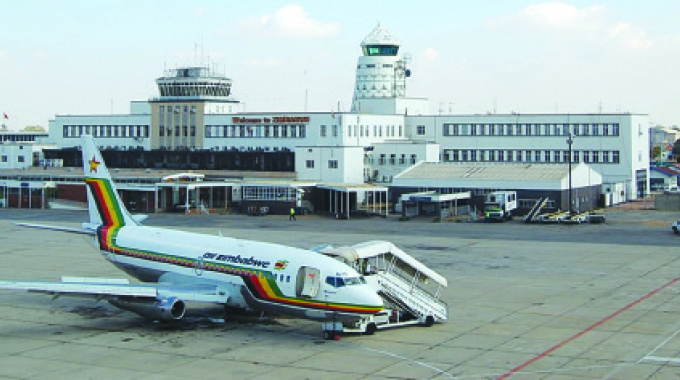
Benjamin Chivandire and Lee Mudhindo
Landing at the Robert Gabriel Mugabe International Airport in Harare, Zimbabwe’s main airport, one is cheerfully welcomed by the view of massive cranes and construction works, which testifies to economic growth as the Second Republic leaves no stone unturned towards the attainment of Vision 2030.
Indeed, “Nyika inovakwa nevene vayo,” for Zimbabweans are masters of their destiny!
The duty, burden and responsibility to develop Zimbabwe falls on the shoulders of Zimbabweans.
This is not mere rhetoric, but rather a philosophy and development driven charter which transcends words as it cuts across all spectrums, taking everyone and every place on board.
As the country celebrates 42 years of independence this month, the Second Republic, under President Mnangagwa, is making tremendous strides towards the promotion of the aviation industry as an arterial contributor to economic development and the realisation of national Vision 2030.
The political will by way of expression under the mantra “Zimbabwe is Open for Business”, speaks volumes on the Government’s commitment to engage and re-engage the international community for the good of the people of Zimbabwe.
Business requires connectivity, which is why the Second Republic is engaging and re-engaging with many countries; putting in place all the modalities for business to thrive regardless of where the investor comes from.
In the same context, the airline industry plays a pivotal role as the fastest and most reliable mode of transport.
It is in the same context that the issue of re-opening comes into play, hence infrastructural development in the country must be on equal footing with the rest of the world.
The institutional framework regarding the aviation sector is regulated by the Civil Aviation Authority of Zimbabwe (CAAZ).
The Government unbundled CAAZ to create the Airports Company of Zimbabwe, thus meeting the international conventions that Zimbabwe acceded to be a signatory to.
That means in terms of the requisite institutional arrangements, Zimbabwe is equal to the rest of the world.
The country’s aviation industry is also subject to international audits, regulations, and accidents investigations done by those organisations Zimbabwe complies to.
These include the International Air Transport Association (IATA) and International Civil Aviation Organisation (CAO).
Furthermore, the Government’s thrust under the Second Republic from a regulatory, operational and global standpoint, is that there is huge untapped potential for Zimbabwe to become an aviation hub for international air traffic movement.
This is made possible by the country’s geographical location, proximity to the rest of the world, political stability and economic recovery trajectory.
Also, the engagement and re-engagement appeal, through the Ministry of Foreign Affairs and International Trade, is to call investors from all the four corners of the world to come and explore the abundant opportunities in Zimbabwe.
One of which is the tourism sector which solely relies on air transport.
Through the Ministry of Environment, Climate, Tourism and Hospitality Industry, the Government is casting the net wider in a bid to promote domestic and international tourism. Since there is a positive correlation between the aviation sector and the tourism industry, if the two are strategically amplified and harnessed, they bring limitless economic benefits to the country.
Government is making inroads towards that end as the tourism industry targets to be a US$5 billion sector by the year 2025.
At the heart and soul of this initiative is the aviation sector through the concept of hybrid tourism.
The aforementioned initiative saw a local airline, Fastjet, launching a new flight between Victoria Falls and Kruger National Park, another key tourist site in South Africa.
This is the starting point in utilising tourism as an avenue for socio-economic development with air transport playing a central role.
Basically, air transport stands in the midst of the developmental course due to its centrality as a key, reliable, more efficient mode.
Other crucial economic activities like mining, agriculture and tourism rely on the aviation industry, while the same sector is the heart and soul of international trade.
Even though the investment call is reaching far and wide, the issue of connectivity takes centre stage as a key enabler to the achievement of the country’s economic aspirations.
This is why the Government is putting emphasis on infrastructure expansion upon which all developments sit.
Forecasts suggest that the world’s economies will become even more dependent on international trade in future due to the inevitability of globalisation.
World trade is expected to almost double, rising at more than twice the rate of global gross domestic product (GDP), with China, India and other emerging markets leading the way. This opens up more prospects for Zimbabwe which enjoys cordial relations with these emerging economic giants.
Though affected by the Covid-19 pandemic, like any other country globally, Zimbabwe has made significant efforts to revamp the national carrier, Air Zimbabwe.
This would contribute tremendously towards multilateral engagement, and make Zimbabwe a tourism and investment destination of choice.
More than 15 airlines fly into Zimbabwe, including international giants like Fly Emirates, Qatar Airways, Ethiopian Airlines and Eurowings.
Exporters of perishable goods such as food and flowers, many of whom are located in developing countries, can only reach export markets by air; providing steady employment and economic growth to developing countries.
Zimbabwe is not an exception to that.



 Online Reporter