


 Chronicle Editor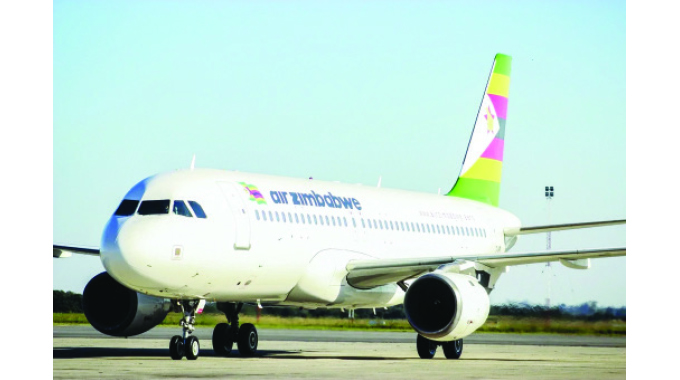
Rutendo Nyeve, Features Reporter
THERE is a popular Shona adage that says “mazarura amuka.” This is an old maxim that refers to the resurrection of an old bus company that used to dominate rural routes in Mashonaland back in the day but the business has since gone down, with shells of buses only left as evidence that once upon a time, it was once a company of repute.
This adage was used by Air Zimbabwe Chief Executive Officer Mr Edmund Makona while describing the recovery strategy of the national airline on the sidelines of the just -ended Sanganai/Hlanganani World Tourism Expo held in Bulawayo recently.
Analogically, he equated the national airline which has been brought down by the impacts of sanctions to the Mazarura Bus Company. While some might have doubted his assertions, his entity went on to scoop the best airline exhibition at the expo and was overall awarded the second best of the entire expo.
The awarding of Air Zimbabwe sparked a lot of controversy within social media corridors with retrogressive citizens castigating the awards regardless of them not having seen the exhibition.
Most of these negative comments have been proven to be ignorance of the impacts of sanctions on the country’s national airline. The transport sector was adversely affected by the illegal punitive measures, resulting in dilapidated aviation, road and rail sub-sectors. Air transport lost almost 50 percent of traffic movements at its airports and airspace since the imposition of sanctions.
In 1997, a total of 2 280 153 passengers were registered in Zimbabwe but the number of passengers dropped by almost 63 percent to as low as 834 269 in 2003. A number of foreign (European) Airlines like Lufthansa, British Airways, Air France, KLM and Qantas exited the Zimbabwe market.
In the same year, recorded aircraft movements stood at 36 215, representing a 58 percent fall from the 1997 figure of 87 618. These figures meant retarded growth and loss of revenue, which had a direct impact on the tourism industry, employment rates, exports and foreign currency generated.
By its nature, the aviation industry is capital intensive, with most airlines thriving through leasing of equipment and purchasing the same through loans and other credit facilities. Due to sanctions, local airlines were unable to access loans, purchase equipment and get any financial support from the traditional funders.

This crippled domestic air operators, who failed to get spares and other equipment to sustain their operations. In some cases, private air operators had to contend with high credit costs, while still being considered unsuitable for trade and business partnerships with Western firms.
Furthermore, the movement of funds via the International Air Transport Association (IATA) has been difficult resulting in airlines failing to access their funds from ticket sales, thereby making it hard for airlines to do business in Zimbabwe. For example, the national airline was suspended from the IATA billing and ticketing system. By implication, the airline cannot sell interline tickets or international tickets via travel agents or other airlines.
The road and rail sectors were not spared by the sanctions. A transport sector support programme funded by DANIDA to the tune of US$48 million was discontinued because of sanctions. In addition, a labour-based roads and rehabilitation works programme with the aim of rehabilitating 116 kilometres of roads, which was funded by the Swedish government to the tune of US$15,1 million, was discontinued due to sanctions.
The national railway’s capitalisation and operations were hampered by sanctions because all of its rolling stock was supplied by an American company, General Electric.
Currently, the national railways purchases parts through third parties outside Zimbabwe, which makes their cost of doing business high. It also faces challenges of securing lines of credit and loans from the American market for recapitalisation as the US companies are forbidden to engage with the national railways.
However, Air Zimbabwe has revealed that it is on the right path towards recovery with laid down strategies that will ensure it is back on its feet regardless of the impacts of sanctions.
Speaking on the sidelines of the Sanganai/Hlanganani Expo, Mr Makona said the airline was driving towards a prosperous and empowered upper middle-income economy by 2023.
“The national airline is poised to drive the national vision. Our mission as Air Zimbabwe is to provide safe and reliable air transport services that facilitate trade, investment and tourism. Our mandate is in four folds. The provision of air passenger services, the provision of air cargo services, the provision of aircraft maintenance services, and above all, the provision of commercial and technical training.
“Cognisant of the fact that men are not judged by how they fall but about how they rise after they fall, as Air Zimbabwe we are driven by the notion that we want to make it great again. We are going to do this in a collaborative manner governed by the three Cs which are co-operation, co-ordination and collaboration,” said Mr Makona.
He said as Air Zimbabwe drives towards this, they want everyone to appreciate that “Mazarura wamuka”.
“We are not going to talk much but our work will make the noise. What we understand is that there has been no airline that has made it at the international fora by not being successful at home. So our strategy is to congest the domestic market.
“From that perspective, we are going to congest the domestic market, grow ourselves from inside and not from outside then go regional and international. We want to make the Robert Gabriel Mugabe International Airport the business hub and at the same time making Victoria Falls International Airport the tourism hub,” said Mr Makona.
He said this will be achieved in a phased manner in order to grow sustainably.
“We are building an Air Zimbabwe that is going to last and one that will adapt to the changing environment. So, as we build this, we are going to ride on some of the routes that our colleagues have penetrated in a competitive manner. We might be constrained in terms of equipment but we can achieve it,” said Mr Makona. —@nyeve14



 Bongani Ndlovu
 Online Reporter