admin
admin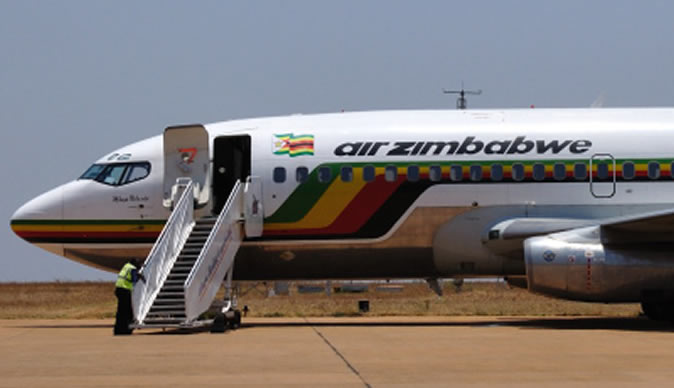
Oliver Kazunga in Harare
AIR Zimbabwe’s more than 20 years old small aircraft fleet is “still young” in terms of usage and will continue being used until it exhausts its 75,000 pressurisation cycles, the airline’s management said yesterday.
Edmund Makona, the airline’s acting chief executive officer told journalists at a press briefing in Harare yesterday the fleet, secured between 1989 and 1990, had only serviced an average 14,000 cycles.
“The aircraft’s life span is not measured in the number of years but in terms of pressurisation cycles, that is, the plane’s wings…undergo extreme fatigue each time it takes off and with time the aircraft suffers metal fatigue,” said Makona.
“And considering the number of pressurisation cycles that our aircraft have covered, we’ll continue using them until they reach their average life span.”
Makona said planes were not designed to be on the ground, adding that Air Zimbabwe would use its fleet until they reach the average life span.
The parastatal is being asked to replace its “ageing” fleet considering the years it has been in service amid concerns of increased technical faults that have resulted in take off delays, cancellation of trips and mid-flight scares.
Air Zimbabwe’s fleet comprise three MA 60, two Boeing 767s and Boeing 737s.
Makona acknowledged the national carrier was having challenges and said turnaround strategies were being worked on. The airline requires about $300 million to operate viably.
He said the aviation industry’s contribution to the Gross Domestic Product (GDP) was of paramount importance.
He said: “African aviation contributes three percent of the world’s GDP and it’s an economic driver that needs to be well supported.
“Therefore, the success of world economies lies with the aviation industry.”
While admitting the impact of the turnaround strategy might take long to be felt, Makona said the national airline prioritises safety.
“The turnaround may take too long but we’re aware that as we do this our priority is on safety. Even with the meagre resources that we have, we’ll continue embracing the safety culture,” he said.
“Air Zimbabwe is known for its safety record. It’s the only national airline that has never been involved in an accident and we’ll continue prioritising safety culture. We would rather not fly than flying precariously putting the lives of people in danger.”
Makona said due to the good safety record some airlines in the north and south of the continent had approached Air Zimbabwe clandestinely, seeking safety advice.
The national airline has conformed to standards set out by the International Air Transport Association (IATA), a trade association for the world’s airlines, representing some 240 airlines or 84 percent of total air traffic.
IATA supports a number of areas of aviation activity and help formulate industry policy on critical aviation issues.
Air Zimbabwe was also certified by the International Operational Safety Audit (IOSA), an internationally recognised and accepted evaluation system designed to assess the operational management and control systems of an airline.
Makona meanwhile told Business Chronicle after the media briefing that Air Zimbabwe was diversifying its business to boost profitability by providing maintenance work to some of the regional airlines.
“We’ve best maintenance people in the region and we can offer our services to other airlines. At the moment, most of the airlines aren’t making profit and through diversification, profits in the aviation industry can be maximised,” he said.


 Online Reporter