Online Reporter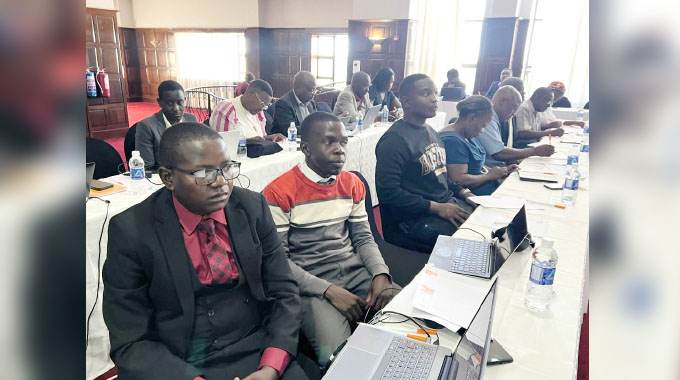
Sukulwenkosi Dube-Matutu, [email protected]
TEENAGE pregnancies and child marriages remain a critical issue in Matabeleland South Province, with statistics revealing alarming trends.
In 2024 alone, approximately 5 700 teenage girls were impregnated, while the province recorded 85 372 cases of female teenage marriages.
Beitbridge and Insiza districts have emerged as the epicentres of this crisis, with Beitbridge accounting for 31 248 child marriage cases and Insiza recording 20 872.
In response, the Government, in collaboration with the United Nations Population Fund (UNFPA), has launched the
“Not-in-My-Village” Campaign, aimed at ending teenage pregnancies. Insiza and Beitbridge have been selected as the pilot areas for the project, with priority given to the hotspots within these districts.
At a recent “Not in My Village” campaign meeting in Bulawayo, stakeholders highlighted several contributing factors, including cultural and religious practices, long distances to school, the influence of social media, poverty, parental absence, limited education and late-night parties, among others.
To address some of these root causes, participants suggested the need for more schools, the enforcement of cyber security laws, strengthened guidance and counselling in schools and the economic empowerment of youths.
National Aids Council (NAC) Matabeleland South provincial manager, Mr Mgcini Sibanda, noted that Beitbridge and Insiza have the highest proportion of early teenage marriages, at 24 percent and 16 percent, respectively.
Both districts feature highly mobile populations due to cross-border trading in Beitbridge and artisanal mining activities in Insiza.
“These conditions are characterised by spousal separation and transactional sex, which expose adolescent girls and young women, who are often unable to negotiate safer sex due to their age, to STIs, unwanted pregnancies and HIV infections,” said Mr Sibanda.
The two districts also have vibrant informal sectors, with substantial financial transactions, which can expose young women to sexual relations.
“In Beitbridge, places like Tshaswingo, Dite, Tongwe and Lutumba are hotspots for early marriages, as girls not in school engage in cross-border activities and participate in late-night parties,” added Mr Sibanda.
He further explained that in Beitbridge urban, wards covering areas such as Dulivhadzimu, Khwalu, Madinginye, Mabidi and Siyoka bear the highest rates of early marriage, as many parents are absent.
In Insiza, areas like Alpha in Ward 13, Mpalawani in Ward 21 and Kombo area in Ward 22, suffer from limited educational opportunities, along with cultural and religious beliefs that perpetuate early child marriages.
Mr Sibanda also pointed out that Lambani area in Ward 20 and Shangani area in Ward 23 are particularly affected due to their vibrant artisanal mining activities, which lead to teenage girls being involved in transactional sex.
Matabeleland South provincial medical director, Dr Andrew Muza, noted that teenage mothers face higher maternal mortality rates.
The Ministry of Health’s policy on zero maternal deaths is challenged by these complex cases. Additionally, young girls are highly vulnerable to sexually transmitted infections (STIs) and HIV, due to their inability to negotiate safe practices.
“The interventions we will implement here will help us address the problem of maternal deaths at the community level. We need systems that ensure teenage pregnancy cases are reported promptly, with protection for whistle-blowers,” he said.
Led by adolescents and young people through the Young People’s Network on Health and Well-being (YPNHW), in collaboration with the National Aids Council, the campaign is spearheaded by chiefs in their communities and seeks to mobilise joint community efforts to tackle adolescent teenage pregnancies and early child marriages.
YPNHW national technical advisor, Mr Luckmore Pamhidzai, explained that the “Not In My Village Campaign” is a community-based initiative aimed at raising awareness, mobilising action and empowering community gatekeepers to end child marriages in rural areas across the country.
“The campaign is based on the idea that change starts at the grassroots level, where people can influence their own communities and cultures.
“It involves engaging traditional and religious leaders, such as chiefs and headmen, who have the authority and respect to challenge harmful practices and attitudes that support child marriage,” he said.
The campaign also involves educating and empowering girls and boys, parents, teachers and other community members, to speak out against child marriage and support the rights and choices of girls.
The campaign was piloted in Mashonaland Central and is now being expanded to other provinces, including Matabeleland South. Targeted districts include Beitbridge, Insiza, Murehwa, Goromonzi, Hurungwe, Chegutu, Mutare and Chipinge, due to their high prevalence rates.
Eliminating child marriages aligns with the National Development Strategy 1 (NDS1), which envisions an empowered upper-middle-income society by 2030. —@DubeMatutu