admin
admin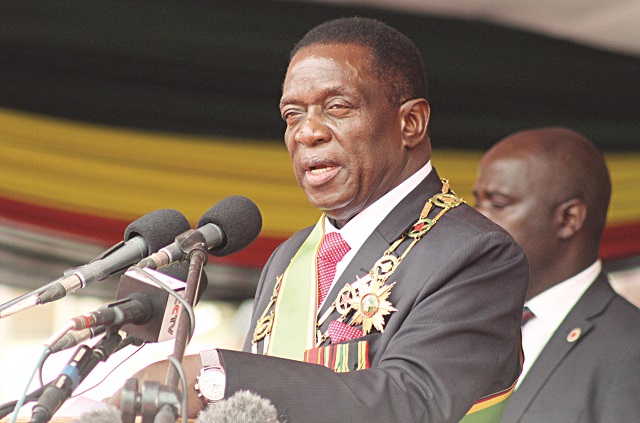
Vincent Gono, Features Editor
NOTHING puzzles God. The month of November was full of long, medium and sharp political twists and turns that had all the ingredients of a blockbuster action packed movie masterpiece where the plot was two sided and where no-one knew who the real hero or main actor would be.
As in any good movie the plot would thicken in quick motion as if going to a climax as one side seemed to be going for the kill, then a spark would flick the hopes again and unsettle the nerves of those that would have seemingly won the episode.
Both action including life threatening ones and a spirited verbal onslaught that would pierce to the bone marrow coupled with public vilification of party comrades, senior civil servants and the security forces of the country based on somewhat village gossip were used as weapons of assault of imagined enemies as the Zanu PF succession plot thickened and continued to turn its pages.
And it (Zanu PF) being the ruling party, its internal fights that were no longer a secret were advertently affecting Government business and even threatening the security of the country hence the intervention of the Zimbabwe Defence Forces (ZDF) on the side of people leading to the people’s victory.
Those in the party who were led by the zeal of the First Lady who had usurped the powers of the executive, as pointed out by party members, chose to disregard the wise African idiom that says those who gather ant-infested faggots must be prepared for the visit of lizards. And indeed the ructions in Zanu PF were visited and stopped by the people – Zimbabweans led by the ZDF Commander General Constantino Guveya Chiwenga.
Prior to November, the fights had to swing from side to side giving the media something to feast on with headlines telling which political side the media houses were sympathetic to. And to suggest that the events of the month were not concocted in advance of events is as unimaginable as it is to think they were happening in real life and in Zimbabwe.
Although the sacking on spurious charges of former Vice President and now President Cde Emmerson Dambudzo Mnangagwa on November 6 was to provide the match stick that ignited the bonfire on an already petrol socked political rag and ushered in a new political dispensation in Zimbabwe, there were a lot of other pieces including, but not limited to personalities that collectively contributed to a decaying political system in Zanu PF but I will leave that to the recording of history, at least for now.
But what is clear was that the goings on in the party was a mirror reflecting a society that had gone completely rotten and maggoty at the centre – where the centre could not hold. It was however, the execution of the corrective measures that was top notch.
A lot of people never saw it coming the way it did, neither did they dream of it. It was peaceful, it never disturbed any business individual or corporate and needed no police to control order and yet without them (police) a whole President was made to resign under pressure from the people.
But nothing puzzles God, for he who is born to drown shall never be hanged and that is the explained definition of destiny. God had it in mind. He had it all planned and well oiled. He even knew the executors of the plan.
He had long authored the script of former President Robert Mugabe’s political end game and the rise to the pinnacles of national political power of Cde Mnangagwa whose inauguration as President of Zimbabwe was held on Friday.
It was simply God’s case that no one could have appealed against. Yes, smiles could be read on most people’s faces as the dawn of a new political era unfolded but what are the people’s expectations going into the future. Sunday News went into the streets of Bulawayo to gather what people expect from the new political dispensation.
Corruption, police roadblocks
People who spoke to Sunday News poured their hearts out on the issue of countless police roadblocks and check points, some mounted right in the city centre, which they said amounted to harassment. They demanded that the new national leadership should move the country from being a “police state” to a nation where the police are not there to “extort money” from the public but to protect them.
“We finally tested freedom from police harassment. Our soldiers are professional, friendly, disciplined and have no corruption. Bad apples in the police force should be disappointed if not embarrassed by the good showing of professional and ethical conduct displayed by our soldiers. While not all police officers are corrupt, the conduct of most of them was just not good. And who came up with the idea of all those roadblocks? Why should the police behave as if they are a revenue generating department?,” said a Magwegwe resident Mr Dainos Chafuka.
Another resident Ms Sihle Moyo of Suburbs said the new government should deal with corruption right from the top to the bottom of the social ladder.
“Government ministers were the ones that were corrupt and it was cascading down to those that were supposed to stop it. It was worse in most Government departments where one would expect to be paid to do a job that they are employed to do. Service was very slow and we are appealing to President Mnangagwa to make sure there is efficiency in all Government departments and zero corruption,” she said. She also had no kind words for the traffic police.
Economic resuscitation, employment, and banks queues
On economic revival Mr Chafuka stressed the need for Government to ensure the removal of red tape and replace it with a red carpet for investors. He said political stability minus corruption was going to boost investor confidence and create jobs for the country’s graduates and the youths in general.
This, he says, will only be achievable if the new President appoints a cabinet of people without a record of corruption.
“People no longer have confidence in most of our ministers, a good number have been fingered in shoddy deals. As a result the President should inject new blood with new ideas and no record of scarring investors with outrageous money demands to approve projects as we have read in newspapers,” he said.
He said the majority of people do not care which direction investment came from – East, West or North- what people cared for were jobs, job security and managing to develop their lives using honest means.
Still on economic resuscitation, another resident Miss Naledi Mpofu said the issue of economy was supposed to be top priority if the new Government was to gain popularity. She said bank queues were supposed to be dealt with so that people return to the good old days where they would withdraw cash from banks at any time of the day without having to sleep in a queue or buying cash from the black market.
She said the corrupt chain where banks and companies allegedly supply the black market with cash while starving the ordinary person of their cash was unacceptable and only serves to perpetuate people’s suffering. She said the idea where new notes from the Central Bank allegedly find their way onto the black market should be investigated and contained as it was the one causing long queues at the country’s financial institutions.
Diverse views, parastatals
Mr Cletus Wandai of Pumula South called for acceptance of diverse views.
“Notwithstanding the political dynamics, we really want the government to listen to ideas from all corners and include technocrats in decision making.
The homeboy syndrome should just end as well as nepotism, where a leader surrounds himself with relatives who know nothing about what they are supposed to superintend over. Even ministers should be appointed on grounds of merit and not personal loyalty so that they push for policies that spur the economy forward,” said Mr Wandai.
He also called for the earnest revival of parastatals such as CSC, NRZ, Zupco and Zisco saying they were crucial in economic revival, adding that there should be a deliberate policy to revive Bulawayo industries.
His comments were echoed by Ms Nomathemba Sibanda of Tshabalala who said the new Government should strive to reduce the gap between the rich and the poor and restore the middle class. She said the cost of education in the country’s tertiary institutions should be reduced to enable the poor but academically gifted a chance to pursue their dreams. She also lamented the shortage of drugs in the country’s hospitals saying the poor were dying while the rich could afford to seek medical attention outside the country.


 derick.khumalo