admin
admin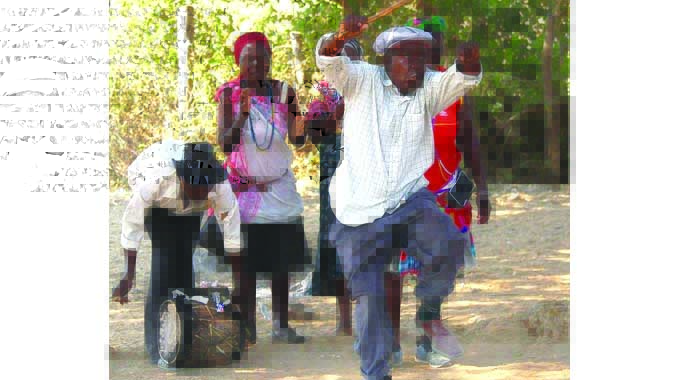
Isdore Guvamombe Saturday Lounge Reflections
Back in the village, in the proverbial land of milk, honey and dust or Guruve, at dawn as the first shafts of sun coloured the fluffy grass heads rippling across the savannah plains in a russet hue, the village was awoken by chirping birds, crowing cocks and crinkling hens.
The sun rose as a soft mothball soon picking its anger as the day progressed and spitting its raises with reckless abandon.
After days of cloudless skies, the villagers were getting used to the sun sucking moisture from mother earth and the blistering heat left the earth’s crust baked into a cracked cake.
It was another drought year and village elders with cotton tuft hair, were beginning to agonise about how to keep their families afloat.
It was unheard of to go as far as Christmas holiday without meaningful rains, but this time around, the skies, which normally delivered starting mid-October had until Christmas not delivered the life-saving liquid.
This morning, the village was teeming with people engaged in a multifarious array of chores.
Driven by the ancient rhythm of life to celebrate Christmas, each brain preoccupied itself with family chores for this day.
In the village, grass-thatched huts tottered with age, their mud-and-pole walls leaning backwards, with little doors.
More often than not, the thatch was dark brown with age, the weather and soot from fires forever lit inside.
In the village, a goat does not sneeze for no reason.
The elders looked at taboo-after-taboo, but the women and children still prepared for Christmas.
The celebrations, even in lean years, were still there.
Here and there a goat was slaughtered and so were chicken. But everyone including the richest of the elders was worried about cattle and the looming drought.
This year, the celebrations centred at Isiah’s homestead.
Isiah was a small bodied man. He was a soldier by profession and had brought to his modest village home, a huge radio and batteries.
My mid-morning the village had streaked to his homestead. A few who got there first were treated to rice and chicken, but it was too little to feed the whole clan.
He also had a few drinks and beers and like food these were too little.
This villager and his colleagues, numbering a dozen gathered at the usual place, each of us flaunting his Christmas gear.
The usual place was a rock promontory called Dombo Renyenze.
It was a huge bald-headed stone, which bended over like an old man. Under its curving side, cicadas found a home and when hot they sang the sounds of sorrow.
This Christmas, the cicadas sang the songs of a sad tomorrow, for, it was a clear drought year.
Soon the boys started discussing the cicadas and the belief as that they were praying for rains and even crying.
Of course we never saw the tears. But this morning they cried and cried, again and again and yet the sun was unrelenting.
With time the meeting place was a full house all the boys were there. Almost everyone wore a new shoe, mainly the tenderfoot. The tenderfoot was a canvas shoe, black and fashionable those days.
Sting trousers, no called cargo pants, were in fashion too and so where the safari suits. So all the boys fitted into this cast of dressing. This villager was in khaki sting trouser and shirt. This outfit came with many pockets, including side ones.
We had mango fruits in the side pockets.
Each not also had half a loaf of bread, with the centre lashed with sugar, with a bit of water to make it wet. That was very delicious.
Soon we opened cattle and herded them for a few hours under the blistering heat. The cattle grazed and munched. While there was no enough rain for crops, it was enough for cattle pastures.
After about two hours, we drove the cattle back to the village. It was now time to enjoy Christmas. We penned the cattle and went to Isiah’s homestead.
There, Thomas Mapfumo’s song Nyoka Musango was on hit. It was played again and again.
The elderly sat drinking home brewed beer, joined in the dance floor once in a while.
It was now time for the herdboys.
We danced and raised dust. There was fancy footwork. Great skill and cheering on. The combination of dust and sweat accompanied by the fragrance of Vaseline, was not nice.
Things got hot and we removed shoes. They were no longer comfortable for, we only wore them on special occasions.
Our feet were not used to wearing the shoes all day.
Without shoes we danced our hearts out, the feet comfortable with their normal configuration and dust caked on our feet. Everything about the heat had been forgotten.
No one really noticed the change of weather until a lightning bolt stabbed the air, cracking the sky into uncharacteristic pieces. Again and again the sky was violated and the earth echoed. Everything shook. Mountains almost moved.
We scampered for cover into the kitchen hut, while a group of boys and men took refuge under a huge tree.
Quickly, dark rain clouds started building up in the sky. And, within minutes the sky started weeping. Everyone rushed to safety. Hard rain tears dropped.
The lightning bolt struck again, this time around with ferocity and before we knew it, many people were thrown out of the kitchen hut.
After the rains we discovered three villagers had died and 11 others injured. Among the dead was a herdboy, an elderly man and a young woman.
The injured were rushed to hospital by scotch cart. Police later came and collected the three bodies. The village was awestruck. It was a felon affair that shook the village.



 Online Reporter