admin
admin
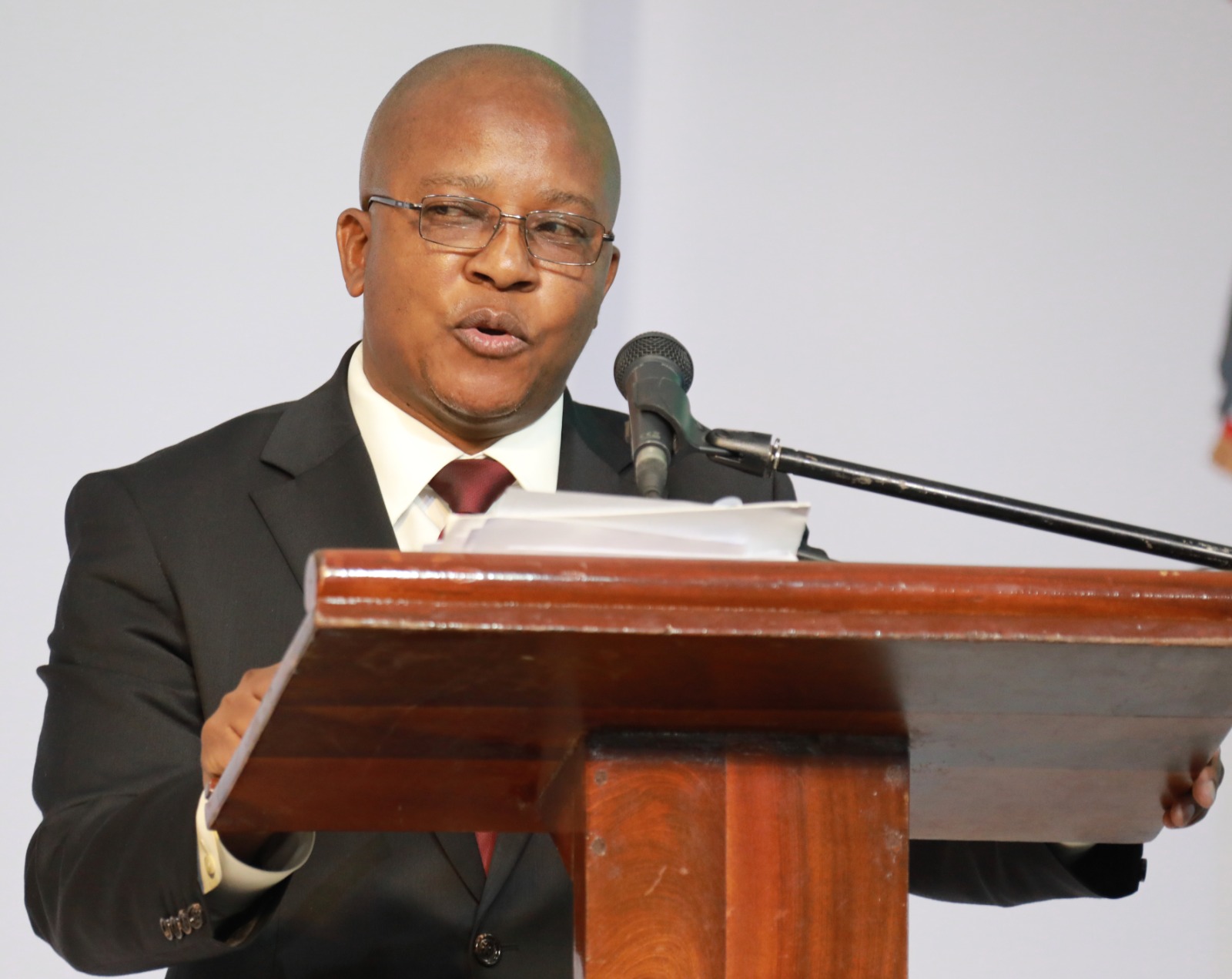
This was said at Eco Biz seminar that was held by Maranatha High School yesterday where Dr Bloch was presenting on the economic issues to students from various colleges around Bulawayo.
In an interview, Dr Bloch said the allocation of the Dimaf fund to big companies was a commendable move since it was not only going to create employment for the general public but the small companies also.
“When these guys are fully operational, it means that they could take most of their orders from small companies hence it will give them a chance to blossom also,” he said.
Commenting on the economy, Dr Bloch said the youth were the future of the nation hence the future of the economy also.
“The youths are supposed to be exposed to right schooling and they should be given access to funding so that they develop their own projects for the growth of the economy.
“They must enjoy the incentives of indigenisation so that they can actively participate in the economy,” he said.
He said Zimbabwe had the potential to be the second best in the manufacturing sector in the southern region only if right steps were taken. “We have the technology and the skilled manpower in Zimbabwe which are the greatest assets for growth.
“At the moment there is no security for investment in our country which is again hindering progress but if the country can only manage to provide investment security, investors will definitely come to Zimbabwe.”
He said the country’s diamond sector was another sector that could be supporting the government meaningfully if it were not for the lack of diamond cutting companies locally.
“We are producing minerals that are of global standards but we do not have our own cutting companies in Zimbabwe.
“The diamonds could contribute about $400 million to the government briefcase this year,” he said.
Dr Bloch called on the relevant authorities to look at other countries on how they did their indigenisation process so that they emulate the same trend because if done the wrong way the exercise was likely to benefit a few.
“How can we reinvent a wheel unless it is broken, we should look up to other countries for the indigenisation programmes, for example, India.
He lambasted corruption which h e said was another factor that was weighing the economy down.
“Corruption is inherently growing as it is a result of poverty and it is there at every level from the ministers to the company messengers. Many people are resorting to corruption out of desperation.
“In companies stocks disappear while in the government there has been a report of about 70 000 ghost workers who were discovered by independent auditors but nothing was done about it,” Dr Bloch said.
He challenged the pupils to take up commercial subjects at school so as to support the growth of the economy. “Do get subjects that are economically related so that you can also actively support the economic transformation; not that I am underrating any other subjects,”he said.
Eco Biz is a project that was pioneered by Mr Derrick Ncube who is also a commercials teacher at the school chaired by Dalukuhle Sifani who is also the president of the club.
In an interview, Mr Ncube said this was a platform for pupils to prepare themselves for the future and a way of guiding them by letting industrial captains and specialists directly talk to them.
“This way, pupils get to believe more and they can take their theoretical work relating it to the real world thereby improving their academic prowess,” he said.
Rumbidzai Sengu, Nomazulu Moyo and Bakani Dube, some of the students who spoke on behalf of other scholars said the project was a noble move as it had empowered them intellectually and made books come into reality.


 Online Reporter