

 admin
admin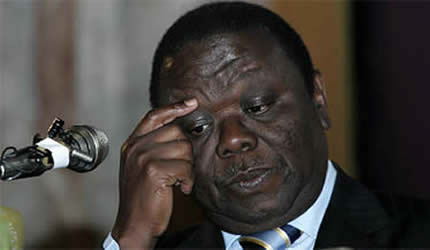
The media, referred to as the Fourth Estate, has a critical role to play in people’s everyday lives.
The media’s mandate is to inform, educate and entertain and every media house should therefore strive to meet this obligation. The people can only make informed decisions if the media plays its role of disseminating information.
Zimbabwe is already in an elections mood given that the elections could just be a few weeks away unless there are dramatic changes.
President Mugabe proclaimed 31 July as the date for the harmonised elections in compliance with a Constitutional Court order which set 31 July as the deadline for the holding of elections.
Sadc has, however, urged the Government to approach the same court seeking extension of the dates to 14 August to accommodate agreed reforms.
The media therefore has an onerous task to ensure that the electorate understands the dynamics of these unfolding events.
The elections are meant to decide the fate of this nation probably for the next five years and it will be criminal on the part of the media to mislead the nation through misinformation.
It is the duty of the media to educate the electorate on electoral processes such as registering to be voters and checking the voters’ roll.
The political leadership led by Cde Mugabe has for a long time now been preaching the gospel of peace and media has an obligation to see to it that this message reaches every corner of Zimbabwe.
The media should in fact be in the forefront of preaching the gospel of peace and tolerance.
The journalists in their execution of duty should be guided by their professional ethics which emphasise on reporting nothing but the truth.
It will be reckless on the part of the media to take the electorate for granted and publish or broadcast falsehoods.
The politicians on their part have an obligation to create an enabling environment so that the media is able to carry out its mandate of educating, informing and entertaining the people.
We are therefore very disturbed when politicians whose work of disseminating information is complemented daily by the media make it a routine to attack journalists.
The relentless attack of the public media by the MDC-T leader Mr Morgan Tsvangirai is uncalled for and should stop forthwith.
Mr Tsvangirai is in fact guilty of inciting his supporters to attack journalists. Already a senior reporter with this paper, Mashudu Netsianda and a reporter from the Zimbabwe Independent Herbert Moyo have been attacked by MDC-T supporters while carrying out their duties.
Mr Tsvangirai, instead of reprimanding his supporters as is expected of a person seeking the highest office in the land, continues to attack reporters.
What we need to remind Mr Tsvangirai is that journalists especially from the public media have an obligation to meet their mandate which, as already spelt out, is to inform, educate and entertain the nation.
Journalists, we need again to remind Mr Tsvangirai, are not MDC-T propagandists.
Mr Tsvangirai’s relentless threats will therefore not cow them into compromising on meeting their obligation. Journalists will continue to expose the shortcomings of not only MDC-T leaders but of all those politicians seeking public office.
We have already stated that it is the duty of the media to assist the electorate to make informed decisions and politicians making unwarranted attacks on journalists such as what Mr Tsvangirai has chosen to do, are interfering with the operations of the media and should be stopped.
We want to implore the media to continue to play its watchdog role so that the leadership including Mr Tsvangirai is made accountable.
The threats from politicians should in fact strengthen the journalists’ resolve to assist the nation in making informed decisions especially on issues of governance.
We want to once again urge journalists not to be detracted from playing their critical role of disseminating information which in turn assists people to make informed decisions.


 Online Reporter
 derick.khumalo