admin
admin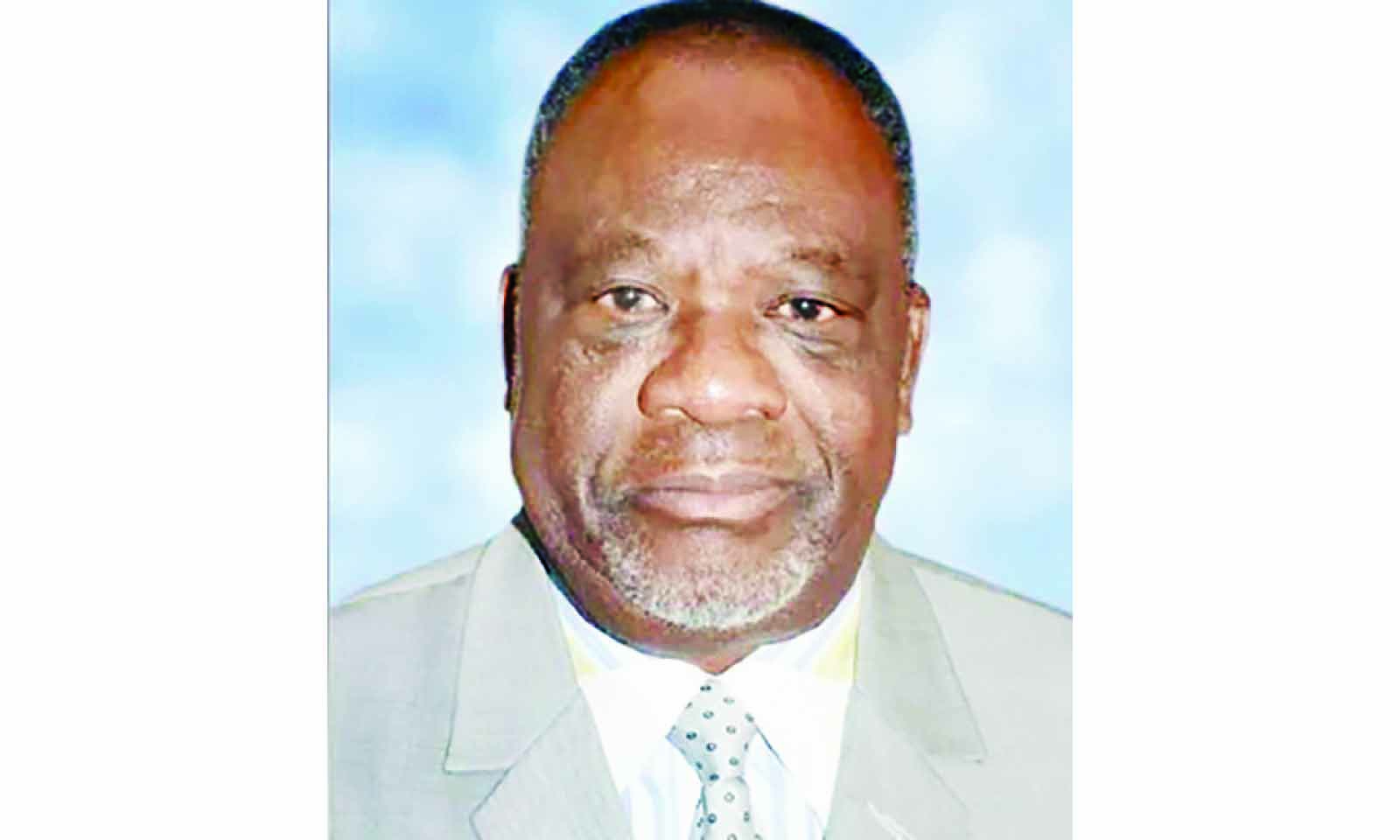
The nation is mourning the passing on of Ambassador Dr John Shumba Mvundura, a revered member of the ZANLA General Staff.
He died at St Anne’s Hospital in Harare on January 15 after a prolonged struggle with liver cancer.
Amb Mvundura was declared a National Hero and was buried on Wednesday at the National Heroes Acre. He was 81.
Early life
Amb Mvundura was born on August 8, 1943 in Tarisai Village, Makoni District in Manicaland to Revesai Mvundura and Renee Mvundura (née Zharati).
He was the third born in a family of nine, namely Crisis, Esther, George, Washington, Enock, Jane, Mary and Margret.
In 1951, young Mvundura enrolled for primary education at Dumba Primary School, in Makoni District. In 1957, he transferred to Handina Primary School before moving to Chirodzo Primary School in 1960, for his final year of primary education.
In 1961, he enrolled at Harare Secondary School.
Due to the racial discrimination at the time, which disadvantaged many Africans in the quest to attain education, young Mvundura had to withdraw from his studies in 1963.
Pre-independence political life
Having witnessed the racial imbalances in the then Salisbury, and particularly in the African township of Highfield, youthful John became a full time youth activist.
He subsequently became the ZANU youth chairman in 1963.
In 1965, Cde Mvundura got a job at the Dairy Marketing Board. In 1967, he moved to Zengeni Stores as a manager.
He was later promoted to the position of general manager, a position he held until early 1974. During this time, he remained youth chair for the Highfield branch.
In mid 1974, outraged by the surveillance of the white Rhodesians on comrades who had been released from detention, the likes of Cdes Robert Mugabe, Morton Malianga, Maurice Nyagumbo, Edgar Tekere, Enos Nkala among others, Cde Mvundura and other youths demonstrated and pelted stones against the white Rhodesians, forcing them to retreat.
Highfield township was a hive of political activity and Cde Mvundura as the youth chairman helped in mobilising his colleagues to join the ZANU Youth League.
The political polarisation particularly to the youths compounded with the frenzied racial discrimination across all sectors, brewed in Cde Mvundura the zeal to fight and liberate the country. The youths became inspired by the 1974 Samora Machel-led FRELIMO victory in Mozambique and were convinced that liberating Zimbabwe was indeed possible.
Cde Mvundura and fellow cadres crossed the border into Mozambique in late 1975 through Espungabera.
The group withstood the rugged terrain in Mozambique, surviving on wild fruits until they were assisted by local villagers who took them to Chibawawa Transit Camp, in Sofala Province.
The camp was headed by Cde Bombadiari, deputised by Cde Makasha.
In 1976, Cde Mvundura was selected to go to Tembwe Camp, in Tete Province, for military training.
He trained alongside other student recruits, including Cdes Willard “Zororo” Duri, John “Mandebvu” Mayowe, Masimba “Mamvura” Mwazha, Christopher “Che Guevara” Mutsvangwa and Neville “Malcolm X” Hoko.
On completion of training, Cde Mvundura was assigned to be an assistant instructor, in Nachingwea, Tanzania.
During his stint at Nachingwea, he trained a group famously known as Sungambele, which is roughly translated to Sungadzisimbe.
The group became notorious for its unrelenting willpower in battle.
In late 1977, Cde Mvundura returned to Chimoio, Mozambique.
In October of the same year, he was one of the victims of a parcel bomb that killed Cde Tichafa, whom he shared an office with.
In 1978, a group of fighters was assembled by Cde Perrance Shiri and other members of the General Staff to attack an area known as The Grand Reef in Umtali (now Mutare), where Rhodesians were destined to celebrate Christmas in batches.
In mid-December, Cde Mvundura and his group crossed back into Rhodesia and attacked Grand Reef.
The Rhodesian fighters lost the battle as they could not match the prowess of the freedom fighters who were taking turns to attack the enemy base.
The following morning, the Rhodesians followed the freedom fighters with helicopters, but they could not locate even a single fighter as they had vanished into thin air.
Upon returning from the Grand Reef, Cde Mvundura was attacked by a grenade.
He was to live with the grenade fragments up to his time of death as they could not be removed due to their proximity to the spine.
The following year, he underwent training in political science at the Chitepo College in Chimoio, Mozambique.
On completion, he was appointed ZANU chief of protocol and deputy chief representative in Mozambique.
Post-independence political life
During the cease fire period, Cde Mvundura remained in Mozambique performing diplomatic duties.
In June 1980, he married Perpetual Mvundura (née Munyanduki). In 1981, he returned to Zimbabwe and joined the Ministry of Foreign Affairs and subsequently attended a diplomatic training course.
On completion, he was posted as Zimbabwe’s first ambassador to Mozambique. He proceeded to serve the country in the diplomatic service in the following countries:
Swaziland (1981-88)
Malawi (1988-93)
Libya (2000-2004)
Nigeria (2004-2009)
Cuba (2010-2013)
Amb Mvundura diligently served ZANU PF in various capacities which include:
Deputy secretary for commissariat and culture Manicaland Province (1994)
National secretary for international relations -Zimbabwe National Liberation War Veterans Association (1994-1998)
Provincial vice chairperson Manicaland (1998-1999)
Provincial chairperson Manicaland Province (2013-2015)
During his illustrious career in the diplomatic service, Amb Mvundura attained the following professional qualifications:
BSc Political Science, Pacific Western University, USA (1990)
MSc Political Science majoring in International Relations, Pacific Western University, USA (1991)
PhD International Relations, Pacific West University, US (2001)
Hero status
Following the death of Amb Mvundura, the ZANU PF Politburo led by President Mnangagwa unanimously agreed to accord him National Hero status in recognition of his unparalleled contribution to the liberation struggle, unification and development of post independent Zimbabwe.
He is survived by 10 children – Janet, Katty, Jane, Olivia, Fungai, Gladys, Lorreta, Lorraine, Kenneth and Jonathan – 21 grandchildren and five great grand children. – Ministry of Information


 Online Reporter