

 Online Reporter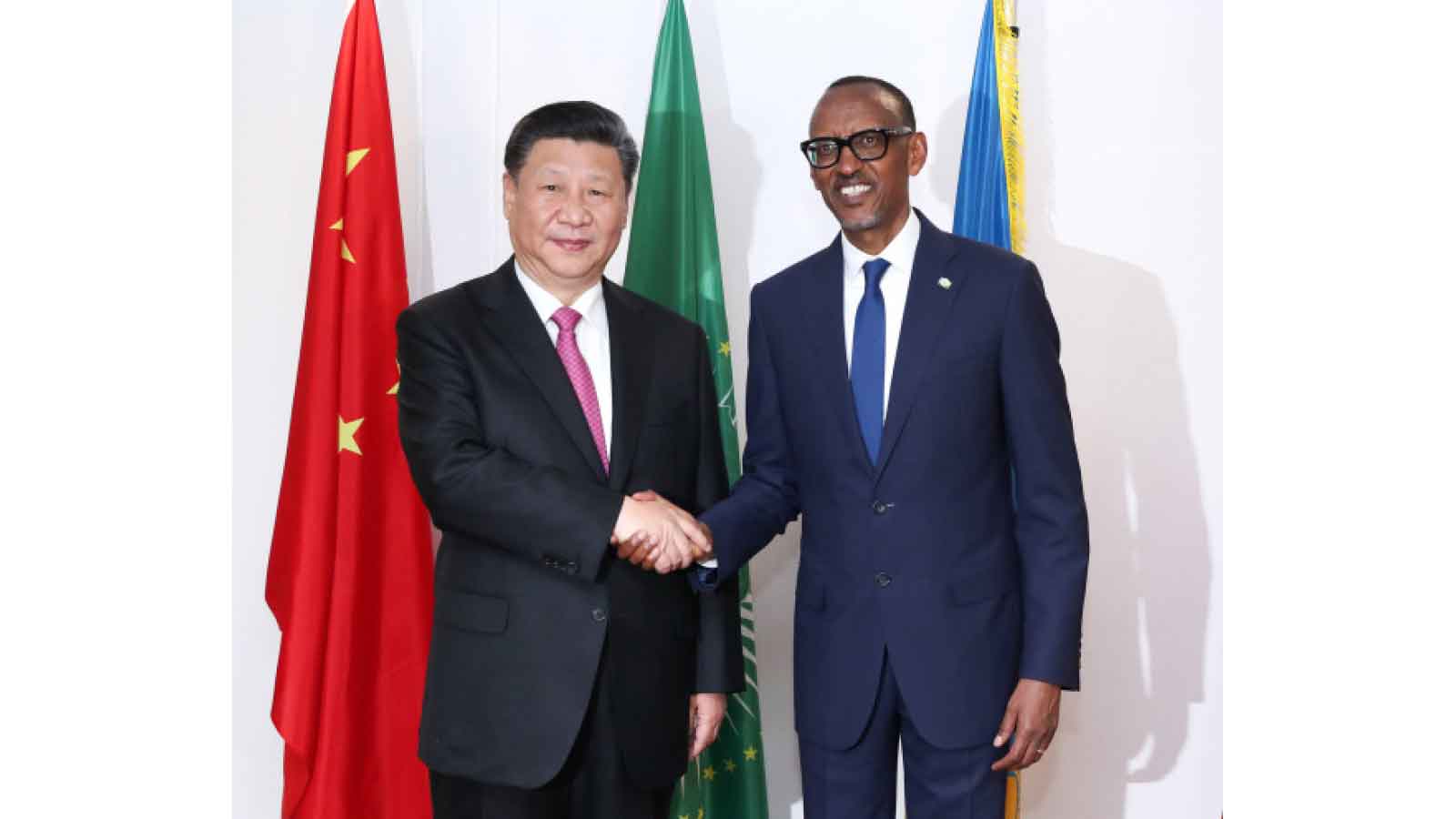
Darell Muchanda-Correspondent
ZIMBABWE stands at a defining constitutional moment.
Constitutional Amendment No. 3 Bill (2026) proposes extending presidential and parliamentary terms from five to seven years and refining aspects of executive tenure.
Far from being a mere legal adjustment, the amendment represents a strategic recalibration of governance timelines to match the scale of Zimbabwe’s developmental ambitions under the National Development Strategy 2.
The debate surrounding the reform has been vigorous – as it should be in any constitutional democracy.
Yet, when assessed through the lenses of governance stability, long-term planning and global comparative practice, the case for Amendment No. 3 emerges as both rational and forward-looking.
Zimbabwe is not charting unexplored territory.
Around the world, nations have restructured executive tenure frameworks to align leadership cycles with strategic national priorities.
In 2018, China removed presidential term limits, enabling sustained leadership during a period of technological transformation and economic restructuring under President Xi Jinping.
In 2020, Russia enacted constitutional reforms that reset presidential term counts for President Vladimir Putin, allowing continuity amid geopolitical recalibration.
Similarly, Azerbaijan (2009 and 2016) and Uzbekistan (2023) extended presidential terms from five to seven years to provide sufficient time for infrastructure expansion, institutional reform and economic diversification.
Closer to home, President Paul Kagame of Rwanda has served since April 22, 2000. Last year, he was re-elected to a fourth term in office with more than 99 percent of the vote.
In all likelihood, he will serve until 2034.
These cases illustrate a broader governance principle: longer executive mandates can facilitate policy continuity, shield development programmes from electoral turbulence and create space for structural transformation.
Contexts differ, but the logic of aligning constitutional timelines with national objectives is globally recognised.
Zimbabwe’s reform must be understood within the framework of long-term planning under NDS2.
Five-year electoral cycles often compress policy implementation into politically sensitive timelines, where mid-term campaigning begins almost as soon as governance begins.
A seven-year term provides greater stability in fiscal and macroeconomic planning; reduced frequency of costly election cycles; broader space to implement structural reforms in energy, agriculture, mining and industrialisation; and enhanced investor confidence grounded in predictable policy continuity.
For a country emerging from prolonged economic volatility, governance consistency is not a luxury – it is a prerequisite for sustainable growth.
Support for Amendment No. 3 is not confined to one political constituency.
The Confederation of Zimbabwe Retailers has publicly endorsed the reform, citing improved governance efficiency and long-term economic stability.
Notably, the Citizens Coalition for Change has also expressed support, interpreting the amendment as a mechanism to unlock economic momentum and institutional coherence.
Such cross-sector engagement signals that the conversation is not merely partisan.
It reflects a broader recognition that Zimbabwe’s structural challenges require extended policy horizons and sustained administrative focus.
Historical caution should inspire refined governance frameworks – not institutional paralysis.
The central question is not merely the duration of tenure, but the robustness, independence and effectiveness of accountability institutions that operate within that tenure.
Amendment No. 3 does not abolish democracy.
It adjusts the rhythm of democratic cycles to better correspond with developmental imperatives. Frequent electoral cycles generate policy discontinuity, fiscal uncertainty and political polarisation.
A longer term reduces perpetual campaign mode and enables leaders to focus on execution rather than short-term political optics.
Seven years is not indefinite rule; it is a calibrated extension designed to synchronise governance cycles with national transformation goals.
Constitutional Amendment No. 3 of 2026 is not a technical tweak.
It is a strategic decision about how Zimbabwe structures time, leadership and national ambition.
By extending presidential and parliamentary terms, Zimbabwe positions itself to deepen policy coherence, accelerate economic reform, strengthen institutional stability, reduce electoral fatigue and align governance cycles with long-term development frameworks.
This moment calls for measured constitutional evolution – not as a retreat from democracy, but as an affirmation of Zimbabwe’s commitment to stability, predictability and sustained progress.
Zimbabwe’s future demands governance that thinks beyond the next election cycle.
Amendment No. 3 offers precisely that: a longer runway for national transformation, anchored in constitutional legality and developmental vision.
Constitutions are living documents that speak to the aspirations of a people.
They can, therefore, be amended in the national interest.
To date, the US constitution has been amended 27 times, most recently in 1992.
Darell Muchanda is a political commentator.



