

 admin
admin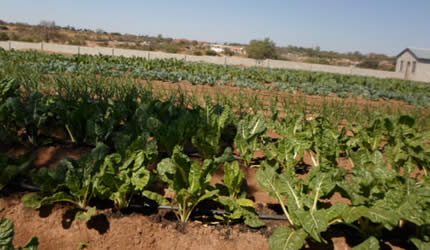
Bulawayo, and plants in a garden look crispy fresh confirming that they are receiving enough tender love.
The freshness of the plants that include spinach, cabbages, onions and tomatoes is just too tempting and will leave many vegetarians salivating. A greenhouse with fresh and tender juicy red tomatoes ready for harvesting stands tall in one corner.
This is the sight that welcome visitors and locals alike who visit a garden project, run by the Zimbabwe Parents of Handicapped Children’s Association Bulawayo branch.
When parents of children with cerebral palsy, autism and other severe disabilities with the help of the community started the project in 2011, many thought it would collapse given the water challenges faced by many in Zimbabwe’s second largest city.
But the project has defied all odds and become the envy of the society.
ZPHCA Mr Lovemore Chipatisa, the Finance manager said they started the gardening project as a way of main streaming disability into food security.
He said while often, people with disabilities are stigmatised and viewed as beggars, this garden project is proof that all things are possible, especially for those who work hard.
“Our clients include some of big supermarket chain stores in Zimbabwe. We hope to broaden and supply more people with our produce. We also plan to buy packaging material and a drier so that instead of selling fresh vegetables only, we will also add value.
“Vegetables also do not have a long shelf life so drying them would prevent wastage,” he said.
The project has 90 members, 60 of whom are parents of children with disabilities and 30 from the community. Some of the members are parents of disabled children who attend the Monica Brewer Day Care Centre opposite Mpilo Central Hospital in Bulawayo.
“We wanted the community to also have some sort of ownership of the project hence their involvement,” added Mr Chipatiso.
He said water challenges still haunt them as the single borehole they have is not enough and to add a second one in the first quarter of 2014. Pests wanting to get the first bite of the crispy green vegetables have also been stalking them. But despite these challenges, they soldier on and theirs is one of the success stories of people living with disabilities.
They are also a success story of how rehabilitation of children with disabilities and respite for their parents can change the face of disabilities.
In Bulawayo, the parents of disabled children are not only focusing on the garden project but also run a day care centre, Monica Brewer Day Care Centre (MBDCC).
Despite giving parents financial hope through farming, the centre has also become a place of respite for many for both disabled children and their loved ones.
MBDCC has been greatly assisting dis-abled children, mostly from poor settings and also offering relief to parents and care-givers so that they can engage in meaningful economic activities and be able to provide for their families.
The centre which was established in 2008 by six mothers of children with handicaps has now grown to cater for 60 kids.
Mrs Irene Mhunga said they have been providing support for families struggling under or perceived burden of caring for disabled children.
The parents, she said, bring their children to the centre every morning so that they have an opportunity to pursue their personal economic activities without having to worry about taking care of their disabled children during daytime.
Mothers of disabled children take turns to care for the children and some volunteers often assist.
Parents of children with disabilities speak of the important work of such institutions, which operate under difficult conditions because of lack of funding.
Mrs Soneni Sibanda, whose son Ephraim Chunda (12) has autism, said having her child at this centre where he can mingle and learn with other kids with similar conditions has helped.
“Ephraim would run everywhere and I always locked the gate at home. I could not leave him alone as he would turn the place upside down in seconds because he was hyperactive. I would do laundry or housework while strapping him to my back like a small baby,” she said.
She added: “Bringing him here has changed him a lot as he can now do things he could not do before. He can now feed himself and also go to the toilet alone.”
Mrs Sihle Ndlovu of Lobengula West, whose daughter Nomazulu has cerebral palsy, is also one relieved mother.
The widowed mother said her daughter can now use a wheelchair, something she could not do last year.
They started coming to MBDCC this year.
“She, however, needs help with the toilet. She can talk when she wants to relieve herself but needs someone to assist her,” she added.
While society has prescribed that caring for disabled children is a female duty, Mr Dennis Chanaiwa whose son Tanaka Keith (5) has cerebral palsy thinks otherwise.
Tanaka also comes to MBDCC and Chanaiwa visits him daily to also assist him and other children.
“His mother and I are no longer together but being involved in every part of his life a priority. His mother cannot be here since she works a day job. I am self-ra employed and have more time that is why I am always here,” he said.
He has noted many improvements since his son started coming to MBDCC.
“He could not stand up when he stayed at home but can now do so. He can also distinguish colours and I am very excited,” he added.
Fathers of handicapped children, Mr Chanaiwa says, should accept children God would have given them.
“Some fathers try to run away from the situation. What they do not know is that this worsens their children’s condition,” he said.
The centre has had its fair share of challenges. For instance, some parents sometimes cannot afford to pay the US$100 fees per term.
MBDCC supervisor Sibonginkosi Dave said they require US$1 000 for food, US$500 to pay water and electricity bills, over 300 diapers, a box of laundry bars among many others to keep the centre effectively running each month.
“Most of the children here require special food as they cannot chew. The food includes potatoes, butternuts, peanut butter, maize meal, cooking oil, chicken, mince, yoghurt, cool drinks, bananas and oranges,” she added.
Many Zimbabwean children with various disabilities narrate similar stories of the challenges they encounter daily.
The 2002 census puts the number of people with disabilities at 349 000 almost 25 percent of whom were under the age of 19 at the time of the census. The World Health Organisation data suggests that up to 10 percent of the total population of each country may have a disability; by this estimate more than 600 000 children in Zimbabwe may have a disability, however, this includes minor disabilities which do not significantly impair functioning, as well as more profound disability.
Unicef is this week expected to present findings of this challenge when they release State of the World Children’s Report 2013 whose theme is “Children with Disabilities”.
Unicef Executive Director Anthony Lake is expected to launch the report.
Too often, children with disabilities and their mothers experience stigma from birth and are more prone to exclusion, concealment, abandonment, institutionalisation and abuse. Some never have the opportunity to grow attend any form of school.
Compared to their peers, they are routinely denied access to health, education and social services. They are often excluded from opportunities to participate in their communities, and are more vulnerable to violence and abuse. HIV positive children with disabilities are less likely to receive treatment than non-disabled children (Akwara, et al 2010) while children with disabilities are less likely to go to school than their non-disabled peers and disabled girls are likely to find their access to education even more limited (Lang and Charowa 2007; Eide et al 2003).
“For children with disabilities this means systematically addressing and incorporating measures that challenge discrimination and promote equality of opportunity for children with disabilities into all programmatic, operational and organisational activities. Specialist assistance which ensures equity for all children in realising their rights will be offered.”
But with gardening projects for disabled children and their parents and day care centres like MBDCC offering relief to them, the global interest on disability, hopefully more success stories of how children with disabilities and their parents are making it will be told.
Feedback: [email protected]



 Online Reporter