Online Reporter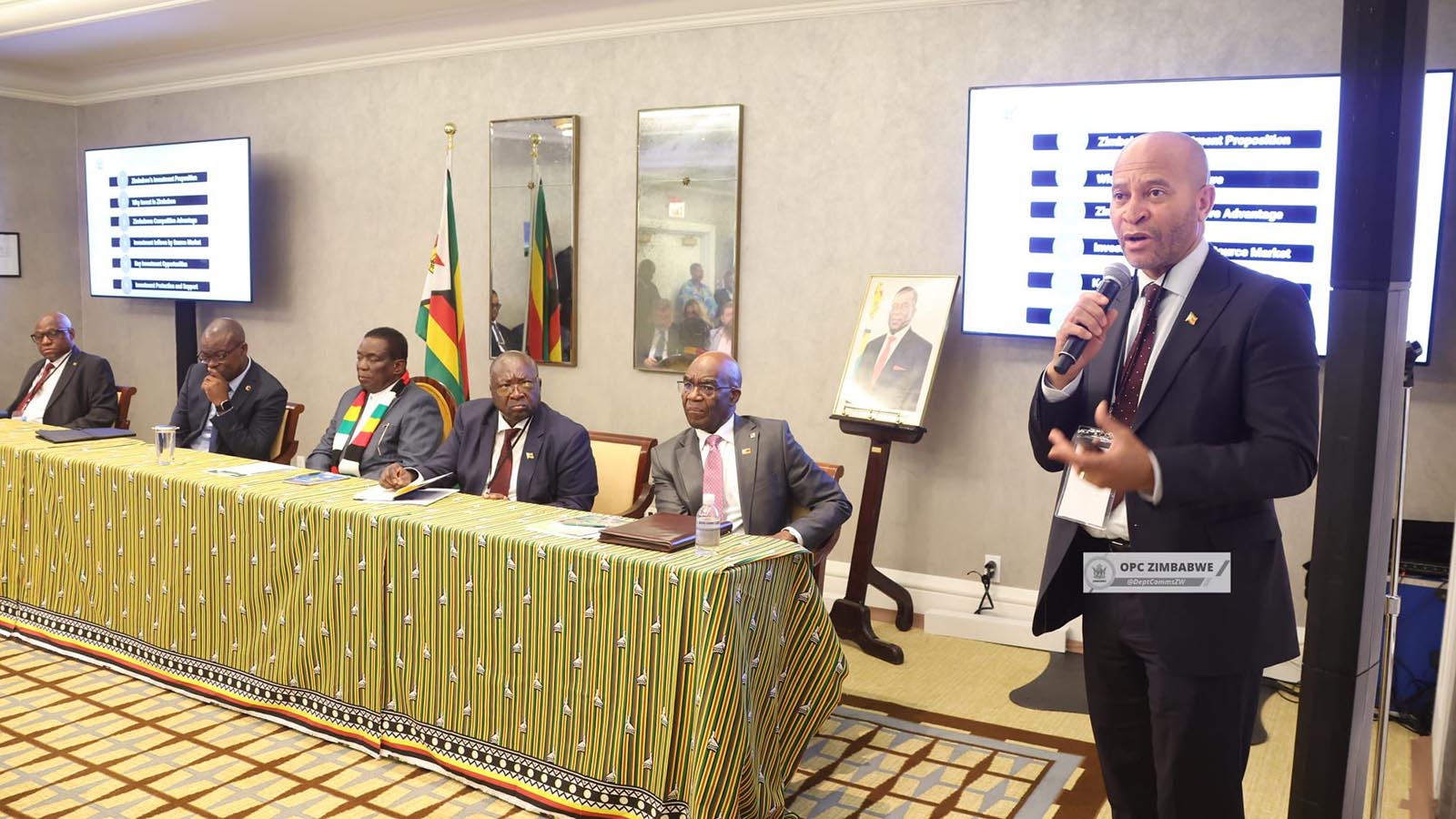
Investment promotion begins with a conversation, but its success is measured by what happens after investors leave the room. Zimbabwe’s growing presence at international business forums reflects an understanding of both sides of that equation. The country must make its opportunities visible to global capital, then provide the information, coordination and follow-up needed to turn interest into operating projects.
The Zimbabwe Business Forum, held in New York on the sidelines of the United Nations General Assembly, was an important part of that effort. It brought Zimbabwe’s investment, trade and tourism messages to an international audience at a time when businesses are reconsidering supply chains, markets and growth opportunities. Organised jointly by the Zimbabwe Investment and Development Agency (ZIDA), ZimTrade and the Zimbabwe Tourism Authority, the forum offered a coordinated account of what the country can produce, where investors can participate and why visitors should experience Zimbabwe.
That coordination matters. An investor considering an agro-processing facility needs to understand the availability of agricultural produce, access to power, the potential export market and the process of establishing a business. A tourism investor may be equally interested in transport links, local suppliers and the wider investment environment. By bringing the responsible institutions together, Zimbabwe can address related questions as part of a single national proposition.
The New York forum also carried the weight of high-level engagement. President Emmerson Mnangagwa addressed prospective investors, setting out Zimbabwe’s invitation to do business. Reports following the event described investor enquiries in response to the presentations. Such enquiries are a valuable opening, although they should be understood for what they are: the beginning of an investment process, rather than evidence of a completed investment.
The distinction is important for any country competing for capital. Investors attend forums to discover possibilities. They commit funds when a project has credible figures, a clear route to implementation and a team able to respond to detailed questions. Zimbabwe’s international engagements will therefore be strongest when each presentation leads to a practical next step: an investor meeting, access to project information, a site visit or a discussion with the relevant authorities.
This is the context in which Zimbabwe’s attention now turns to AFSIC – Investing in Africa, scheduled for 13–14 October 2026 in London. The event is designed to connect African opportunities with institutional investors, development finance institutions, funds and businesses. Its programme includes energy and agriculture, two sectors in which Zimbabwe has both substantial needs and the potential to create wider economic value.
The move from New York to London offers a useful progression. The UNGA Business Forum allowed Zimbabwe to present a broad national narrative. AFSIC offers space for more focused discussions with investors whose mandates may align with particular projects. Zimbabwe can use that setting to explain where capital is needed, how projects will generate returns and what support is available to move them forward.
Energy deserves a central place in that discussion because it affects the viability of investment across the economy. Reliable electricity supports mines, factories, hotels, digital businesses and farms. It also makes it possible to expand irrigation, preserve produce through cold storage and process agricultural output closer to where it is grown. Energy investment can therefore enable investment well beyond the power sector itself.
Agriculture presents an equally broad proposition. The opportunity extends from primary production to irrigation infrastructure, storage, processing, packaging and access to markets. Investors may see different entry points along that chain. Some will seek to finance production; others may be interested in the facilities and services that help producers reach consumers at home and abroad. Zimbabwe’s case will be stronger when those links are made clear through specific projects and commercial partnerships.
Promoting energy and agriculture together allows the country to show how investment in one sector can strengthen the other. Irrigation and cold chains require power. Agro-processing creates sustained demand for electricity while adding value to local produce. A project that combines these needs can offer a more convincing account of its market, costs and wider benefits than a proposal presented in isolation.
Zimbabwe has begun identifying opportunities to anchor these discussions. An investment mapping exercise undertaken by ZIDA and the United Nations Development Programme identified 31 priority opportunities requiring approximately US$535 million in financing. The figure helps illustrate the scale of the potential pipeline. Its practical value, however, will depend on how clearly each opportunity is presented to prospective investors and how effectively it is supported after an initial meeting.
A useful investor conversation should establish the basics quickly. What is the project intended to deliver? What work has already been completed? How much capital is required, and for what purpose? Who are the partners? What approvals or infrastructure are needed? Answering these questions gives investors a basis for deciding whether to investigate further. It also helps the country direct each opportunity towards financiers with the appropriate interests and appetite.
International promotion must be matched by attention to implementation at home. Investors who express interest abroad will eventually need to engage institutions, assess sites, test assumptions and make decisions within Zimbabwe. Responsive facilitation and clear communication at those stages can give substance to the promises made at an international forum. Each successful project can then become stronger evidence for the next investor considering the country.
Zimbabwe is right to carry its investment message into global spaces. The New York forum demonstrated the value of a coordinated national pitch, while AFSIC provides an opportunity to pursue targeted conversations around energy and agriculture. The next measure of progress is the quality of those conversations and the projects that emerge from them. When international visibility leads to reliable power, productive farms, value-added goods and jobs, Zimbabwe’s investment drive will have achieved its purpose where it counts most: at home. – Zimbabwe Investment Development Agency