Bongani Ndlovu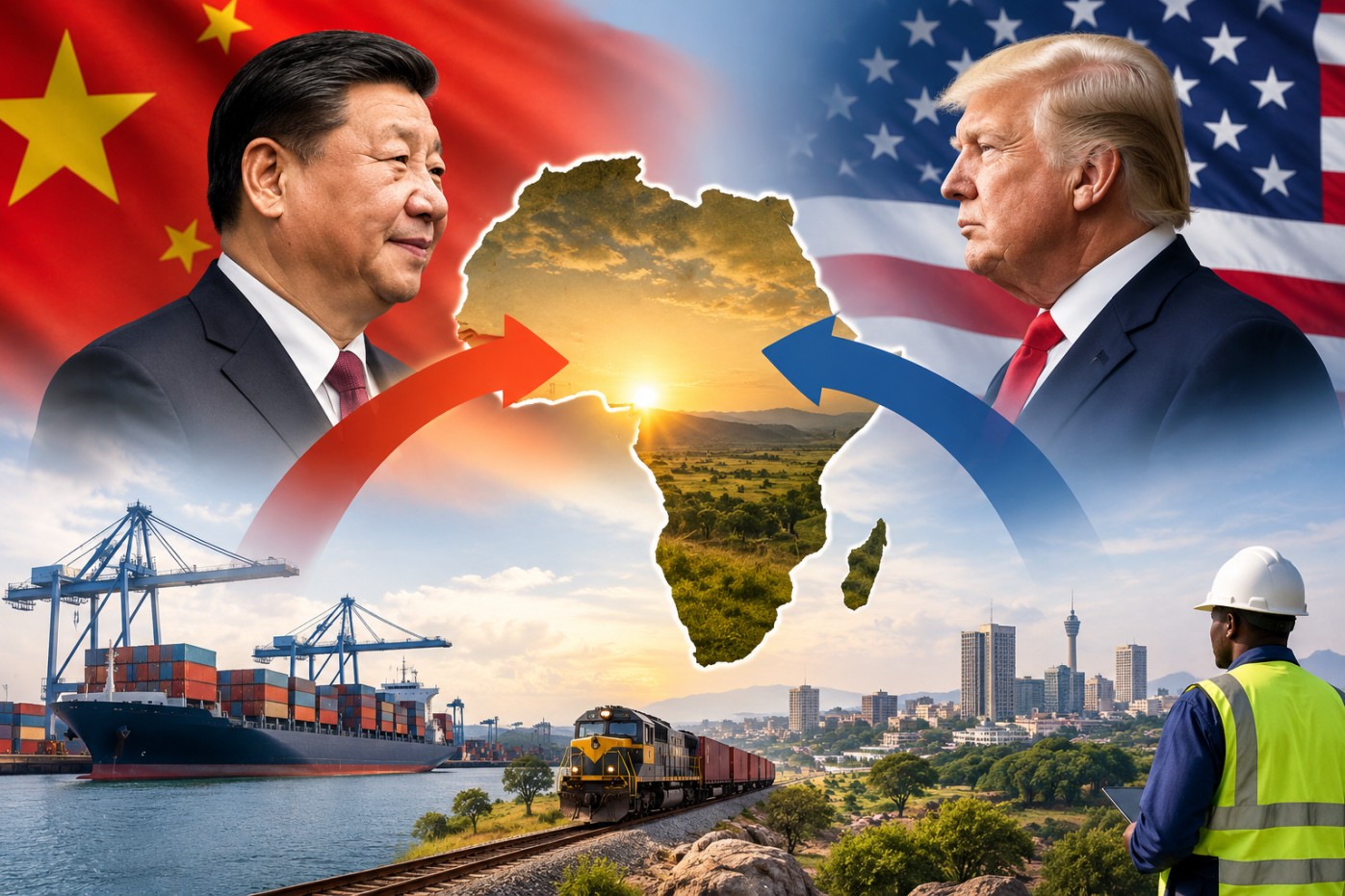
Saxon Zvina
The implications of the latest China‑US summit stretch well beyond Washington and Beijing. If the world’s two largest economies move away from open confrontation toward a more constructive framework of strategic stability built on respect, fairness and reciprocity, ripple‑wave consequences will be felt across the globe.
For Africa and the wider Global South, the central question is not whether China or the United States secures relative advantage. It is whether developing countries gain expanded room to pursue national development without becoming collateral damage of great‑power rivalry.
Yet Global‑South governments must maintain pragmatic realism: summit‑announced frameworks are political statements, not binding international treaties. U.S. foreign‑policy directions are susceptible to shifts driven by domestic electoral cycles, and commitments made during one presidential‑level gathering may be watered down or discarded amid changing domestic political pressures.
That explains why statements emerging from the Xi‑Trump meeting deserve serious attention across the Global South.
President Xi Jinping compared China‑US relations to a “giant ship” which ought to be steered steadily toward the future. He argued that China‑US cooperation may not resolve every global challenge, yet many global problems would grow far harder to address absent such collaboration. The two presidents subsequently agreed to enrich their bilateral ties by committing to “strategic stability” rooted in respect, fairness and reciprocity.
For the Global South, this opens potential shifts in the external environment for development — potential that carries no guarantee of tangible real‑world benefits.
First, Reducing the Heavy Costs of Geopolitical Rivalry
Africa has no interest in a new Cold‑War‑style stand‑off.
When great‑power competition degenerates into confrontation, developing nations face mounting pressures over technology choices, investment partners, diplomatic stances, supply‑chain organisation and market access. Ordinary economic decisions risk being turned into geopolitical loyalty tests.
Even under frameworks for managed rivalry, Washington retains far‑reaching unilateral policy tools including secondary sanctions and extraterritorial trade restrictions. These coercive instruments may still produce harmful spill‑over effects for third‑party economies, regardless of the conciliatory tone struck at summit‑level meetings.
Greater China‑US stability will not eliminate these pressures entirely. Even so, it lowers the likelihood that African and other Global‑South states will be forced into rigid, predefined geopolitical blocs.
This carries high practical importance, because African countries require multiple cooperative partnerships rather than exclusive alignment.
A nation such as Zimbabwe ought to be free to deepen China‑supported work in infrastructure, mineral development, manufacturing and technology while simultaneously sustaining commercial, educational and diplomatic links with the United States and other international actors. That principle holds across the whole Global South.
The emerging norms of respect, fairness and reciprocity therefore resonate beyond China‑America. They reinforce the legitimacy of states pursuing strategic autonomy instead of geopolitical dependency.
Second, Calmer Trade Tensions and a More Predictable Global Economy
Africa’s development is deeply exposed to global trade conditions, commodity price cycles, cross‑border investment flows and technology availability.
If the world’s two largest economies step back from escalating tariff battles toward negotiated bilateral arrangements, spill‑over benefits may propagate through global supply chains. President Xi noted that the latest economic and trade consultations yielded new joint arrangements, and argued that stabilising China‑US economic relations would benefit not only both countries but also the wider world economy.
Still, trade compromises reached at great‑power negotiating tables first and foremost serve Washington’s and Beijing’s core domestic interests. Global‑South market interests are not automatically afforded priority, even when summit rhetoric references shared worldwide economic gains.
For African economies, predictability itself constitutes an economic asset.
Mining operators require steady demand signals; manufacturing sectors rely on resilient supply chains; agricultural exporters need dependable overseas markets; governments designing long‑term infrastructure programmes cannot afford abrupt shifts of trade rules triggered by geopolitical retaliation.
This does not mean African nations automatically profit from every China‑US trade deal. A less volatile global trading landscape nonetheless creates greater policy space for African countries to implement home‑grown development strategies.
Third, Opening a More Inclusive Technology Landscape
Nowhere are these stakes more visible than in artificial intelligence.
China and the United States stand as the world’s two leading AI powers. President Xi proposed the two sides should leverage respective strengths instead of merely guarding against one‑another; sustain dialogue over AI risks and benefits; prevent misuse; and ensure AI stays under human oversight. Trump likewise committed to maintaining AI‑focused dialogue and strengthening relevant cooperation.
Global‑South stakeholders must also keep in mind that U.S. technology‑control regimes can undergo sudden adjustments driven by domestic considerations. Export‑control lists and technology‑access rules may be revised independently of summit‑level goodwill, which can reshape third‑party nations’ technology access overnight.
The ramifications for Africa are profound.
The continent cannot afford an AI global order split into technologically incompatible competing blocs. African governments need affordable computing capacity, cloud infrastructure, adaptable AI models, digital‑skill building, plus real‑world AI applications for agriculture, healthcare, education, mining and public administration.
Should China‑US competition produce technological fragmentation, African states would face higher operational costs and narrower practical options.
Where competition co‑exists with selective cooperation and interoperable standards, African countries gain better opportunities to adopt technologies guided by domestic developmental priorities rather than geopolitical allegiance.
The key question for African policymakers is consequently not whether to pick a Chinese‑led or American‑led technological ecosystem. It is how to negotiate access to both sets of resources while simultaneously building endogenous domestic technological capacity.
Fourth, Strategic Stability May Free Up Resources for Developmental Priorities
Geopolitical confrontation consumes massive political and material resources.
As major powers devote increasing bandwidth to sanctions, military competition, export controls and economic countermeasures, global systemic uncertainty rises. Reduced bilateral tensions could redirect part of global political and economic attention toward development priorities: infrastructure delivery, climate adaptation, public health, food security and technological collaboration. It should be noted, however, that domestic political priorities in major powers will continue to shape resource allocation; détente does not guarantee automatic surges in development finance for the Global South.
Even during periods of improved great‑power relations, U.S. congressional budget priorities may divert funding away from multilateral development commitments. High‑profile summit pledges on global development finance do not always translate into actual disbursement.
This discussion is highly relevant for Africa, where large financing gaps persist for infrastructure and industrial transformation.
Improved China‑US relations can also facilitate joint responses to cross‑border global challenges. President Xi explicitly linked China‑US cooperation to issues hard to resolve without participation from both major powers.
For Africa, potential positive spill‑overs may touch climate finance, food security, public‑health systems, debt sustainability and the energy transition.
Fifth, People‑to‑People Diplomacy Delivers Long‑Term Human‑Capital Dividends
President Xi’s invitation for 100,000 young Americans to visit China within five‑years is more than a bilateral educational initiative. It illustrates a fundamental reality: geopolitical stability cannot rest entirely upon presidential‑level summits.
The future of international relations is also shaped by students, scientists, entrepreneurs, journalists, engineers and research communities.
Global‑South states should remain mindful that U.S.‑funded international education and exchange initiatives are vulnerable to budget cuts triggered by shifting domestic political moods. Announcements made at summits may later be scaled‑back without prior consultation with partner nations.
Africa stands in clear need of exactly this brand of human‑centred diplomacy.
Chinese and American universities, technology firms and research institutes can deepen collaborative partnerships with African counterparts. African students ought to become active participants — not mere spectators — within emerging fields including AI, biotechnology, renewable‑energy systems and advanced manufacturing.
The overarching objective should be building interconnected knowledge‑sharing networks rather than top‑down hierarchies of geopolitical influence.
The Most Valuable Dividend: Expanded Strategic Space
Ultimately, the greatest potential gain for the Global South lies neither in tariff adjustments nor new technology access. It is expanded strategic room for manoeuvre.
A world where China and the United States compete without sliding into confrontation grants developing countries greater leverage in international negotiations.
Africa should never face pressure to choose between Beijing and Washington. The same applies across Latin America, Southeast Asia, the Middle East and other Global‑South regions.
The emerging China‑US framework of respect, fairness, reciprocity and managed competition can be measured against one practical benchmark: does it grant smaller and developing countries greater freedom to advance their own national interests?
Real‑world outcomes will hinge on practical implementation.
This latest summit has not erased deep‑seated structural divergences between Beijing and Washington. The two powers will keep competing across technology, trade, security and global‑influence domains. President Xi himself acknowledged persistent difficulties and challenges along the road ahead.
One vital caveat remains for Africa and other Global‑South actors: managed great‑power rivalry benefits developing nations only if collateral harm to third parties is genuinely contained. Conciliatory summit rhetoric by itself cannot eliminate that risk.
Still, there is meaningful distinction between competition kept within agreed boundaries and confrontation that frames every disagreement as zero‑sum struggle. For Africa and the Global South, that difference can prove decisive.
The world does not require China and the United States to reach consensus on every file. It requires them to manage disagreements without forcing the rest of humanity to bear the costs.
If these two giant powers can keep their bilateral ship steady, Africa ought to navigate these calmer waters not by selecting which giant to follow, but by constructing vessels of its own: stronger national economies, deeper integrated regional markets, enhanced domestic technological capabilities and higher‑grade strategic autonomy.
That is the genuine developmental dividend brought by strategic stability. It is not about picking sides. It is about gaining space to shape one’s own future.
About the Author:
Saxon Zvina is Principal Consultant at Skyworld Consultancy Services. As an independent analyst and commentator, he contributes opinion pieces to multiple media platforms. His writing focuses on African strategic autonomy, global-south development, Africa-China-US geopolitics and decolonising international policy debates.
Email: [email protected] & X: saxonzvina2



 Online Reporter