

 admin
admin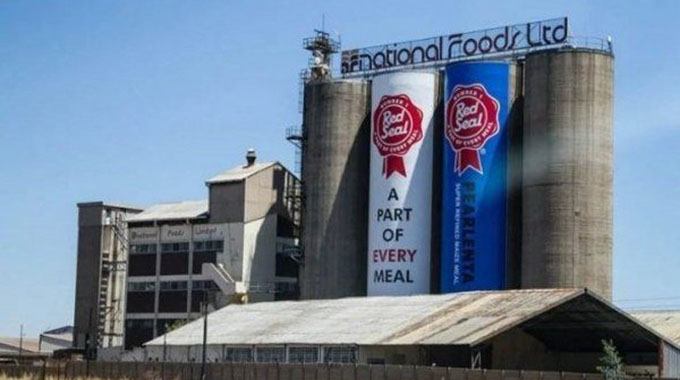
Enacy Mapakame
Analysts are upbeat on National Foods 2020 earnings performance on the back of an anticipated increased demand for grain as the country is likely to continue relying on imports, pushing companies with free funds to procure the commodity directly from source.
The obtaining inflationary pressures are also expected to result in revenue uplift from higher product pricing going forward.
Agriculture production remained depressed during the 2018/19 season on the back of bad weather.
Indications are that the country needs to import an estimated 800 000 tonnes of grain to ensure food sufficiency for both human consumption and livestock feed, a situation that normally sees companies like Natfoods thrive although this will not be smooth sailing due to foreign currency shortages.
“We are optimistic about performance going forward as we anticipate that the country will continue to rely on significant imports — which will likely compel Government to allow private sector players to import directly in most grains,” said stockbrokers IH Securities.
“We see some comparative advantage as National Foods tends to perform better under such circumstances in which they can leverage their balance sheet to import at scale, however, foreign currency shortages naturally pose a serious threat to the group and country’s capacity to import grain, creating some downside risk in volumes.”
Revenue is seen jumping 84 percent to $1,05 billion for financial year 2020.
The brokerage firm also projects lagged costs to catch up leading to margin pressure, which will trickle down from GP level, earnings before interest, tax, depreciation and amortisation (EBITDA) margin is anticipated to soften to 13,8 percent year-on-year translating to an EBITDA of $144,2 million.
The MCG division is seen experiencing some downside risk to volumes as consumer incomes continue to be eroded by inflation.
However, Snack and Treats volumes are likely to remain firm buoyed by new growth in recently introduced snacks and treats categories such as Popticorn and Iris creams.
Gross profit margins should soften to 25 percent from 33,9 percent in 2019 as the production costs continue to catch up after lagging behind in that year.
In line with the softening gross profit margin, says IH, EBITDA margins are anticipated to decline to 13,8 percent from the 14,5 percent recorded in FY19.
IH Securities sees equity accounted earnings from the Pure Oil business are growing circa 50 percent in FY20 sustained by upward price revisions despite lower volumes as foreign currency to import the business’ largest raw material — soya bean, is scarce.
After tax profit of $92,28 million is projected and a PAT margin of 9 percent. Management at Natfoods indicated efforts will be placed on reducing reliance on imported raw materials, which should see the group continue supporting agriculture.
Said IH: “Further to the Government interventions on pricing of products, the lift on the ban of importation of maize on licensed importers, enables the group to source directly as opposed to Grain Marketing Board (GMB) alone whom we believe may face capacity constraints. Given pressure on the fiscus, we are wary of Government’s ability to continue to provide the same level of subsidies through GMB relative to prior years.”
On the Zimbabwe Stock Exchange, Natfoods share price is projected to reach $12, which is an upside of 33 percent on Tuesday’s price. IH upgraded the counter to a buy recommendation.



 Online Reporter